


You may also like
-

Two figures Poster
Auguste Rodin · 1905 · Intimate figure study poster with fluid linework on warm beige paper
Poster from £9 · Framed from £16
-

Study of nude Poster
Auguste Rodin · 1890 · Expressive nude study art print with fluid line and warm watercolor washes
Poster from £9 · Framed from £16
-

Abstract Nude Poster
Auguste Rodin · 1875 · Expressive abstract nude art print with fluid contours and bold primary color accents
Poster from £9 · Framed from £16
-

Female Nude Poster
Carl Newman · 1917 · Expressive female nude art print with bold contour lines and warm color accents
Poster from £9 · Framed from £16


-

"Very nice Posters. The quality is amazing and we received it very quickly !"
-

"A shop to visit absolutely. Huge selection of posters. We spent more than an hour there !"
-

"Perfect to find gift. Price are very good. An they can frame and pack it on site"


About the Artist
Auguste Rodin, born in 1840, revolutionized French sculpture by focusing on the expressive potential of the human body. His innovative approach in the late nineteenth century marked a departure from academic traditions, emphasizing raw emotion and psychological depth. Rodin’s influence extended beyond his monumental sculptures, shaping the course of modern art through his sensitivity to gesture and form.
In addition to his large-scale works, Rodin produced numerous intimate studies that reveal his fascination with the subtleties of human interaction. These pieces offer a glimpse into his creative process and his enduring impact on both sculpture and drawing, making his work a cornerstone for those interested in famous artists and their artistic legacy.
The Artwork
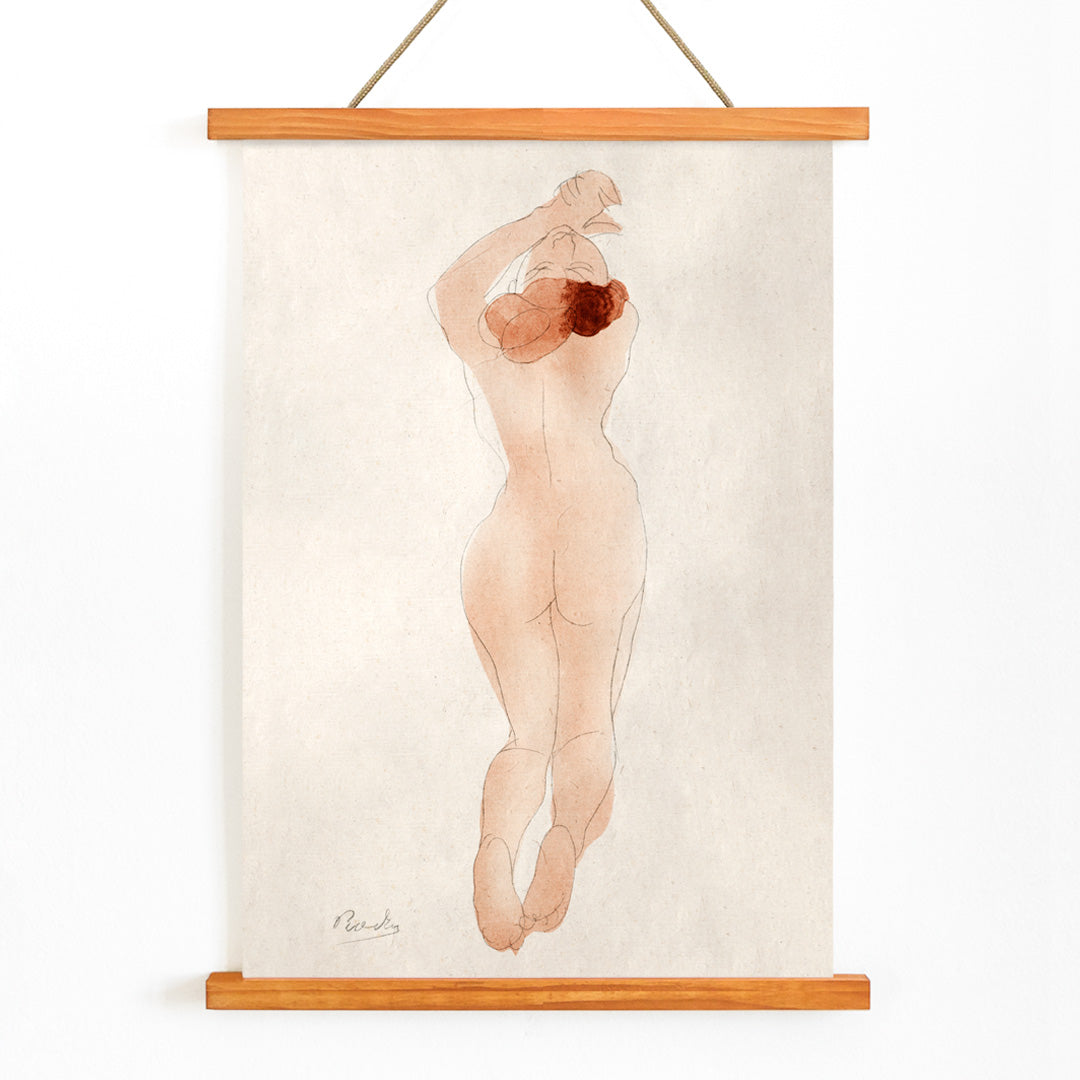
Created in the early 1880s, Caresse moi donc reflects a period in Paris when artists were drawn to themes of private intimacy and personal experience. Rather than grand allegory, Rodin’s study explores the gentle nuances of touch and connection, presenting a moment of closeness that feels both spontaneous and deeply observed.
This artwork was likely intended as a personal reflection or a gift, embodying the era’s fascination with the inner lives of its subjects. As part of the tradition of erotic art, it invites viewers to contemplate the emotional resonance of a simple, affectionate gesture rather than overt spectacle.
Style & Characteristics
The drawing is executed with a light, sketch-like quality, using fluid lines and minimal shading to define the figure. The composition leaves ample negative space, allowing the form to stand out clearly against the pale background. Subtle gradations of warm beige and soft brown lend the piece a vintage, serene atmosphere.
The restrained palette and absence of elaborate detail focus attention on the figure’s posture and the gentle act depicted. This understated approach creates an intimate mood, making the print well suited to a beige themed gallery wall or for collectors of classic figure studies.
In Interior Design
This fine art print brings a sense of quiet sophistication to bedrooms, dressing areas, or serene living spaces. Its gentle tones harmonize with natural materials like linen, oak, and brass, and it adapts easily to both contemporary and traditional interiors.
Pair it with neutral textiles and textured ceramics for a soft, inviting look, or set it against darker woods for a more dramatic effect. As a vintage-inspired piece, it complements classic art displays while offering a timeless sense of intimacy and calm.