


You may also like
-
Caresse moi donc Poster
Auguste Rodin · 1882 · Intimate nude figure art print capturing a quiet caress in flowing lines
Poster from £9 · Framed from £16
Regular price From £6.00Regular price -
Study of nude Poster
Auguste Rodin · 1890 · Expressive nude study art print with fluid line and warm watercolor washes
Poster from £9 · Framed from £16
Regular price From £6.00Regular price -
Abstract Nude Poster
Auguste Rodin · 1875 · Expressive abstract nude art print with fluid contours and bold primary color accents
Poster from £9 · Framed from £16
Regular price From £6.00Regular price -
Female Nude Poster
Carl Newman · 1917 · Expressive female nude art print with bold contour lines and warm color accents
Poster from £9 · Framed from £16
Regular price From £6.00Regular price


-

"Very nice Posters. The quality is amazing and we received it very quickly !"
-

"A shop to visit absolutely. Huge selection of posters. We spent more than an hour there !"
-

"Perfect to find gift. Price are very good. An they can frame and pack it on site"


About the Artist
Auguste Rodin was a pivotal French artist whose innovative approach helped redefine modern sculpture at the turn of the twentieth century. Renowned for his expressive surfaces and psychologically rich poses, Rodin was also a prolific draftsman, using drawing as a means to explore movement and the subtleties of human form. His works on paper often served as studies for sculpture or as independent explorations of gesture and emotion, offering a more intimate view into his creative process. Collectors interested in famous artists and the evolution of modern art will appreciate Rodin's unique contribution to both sculpture and drawing.
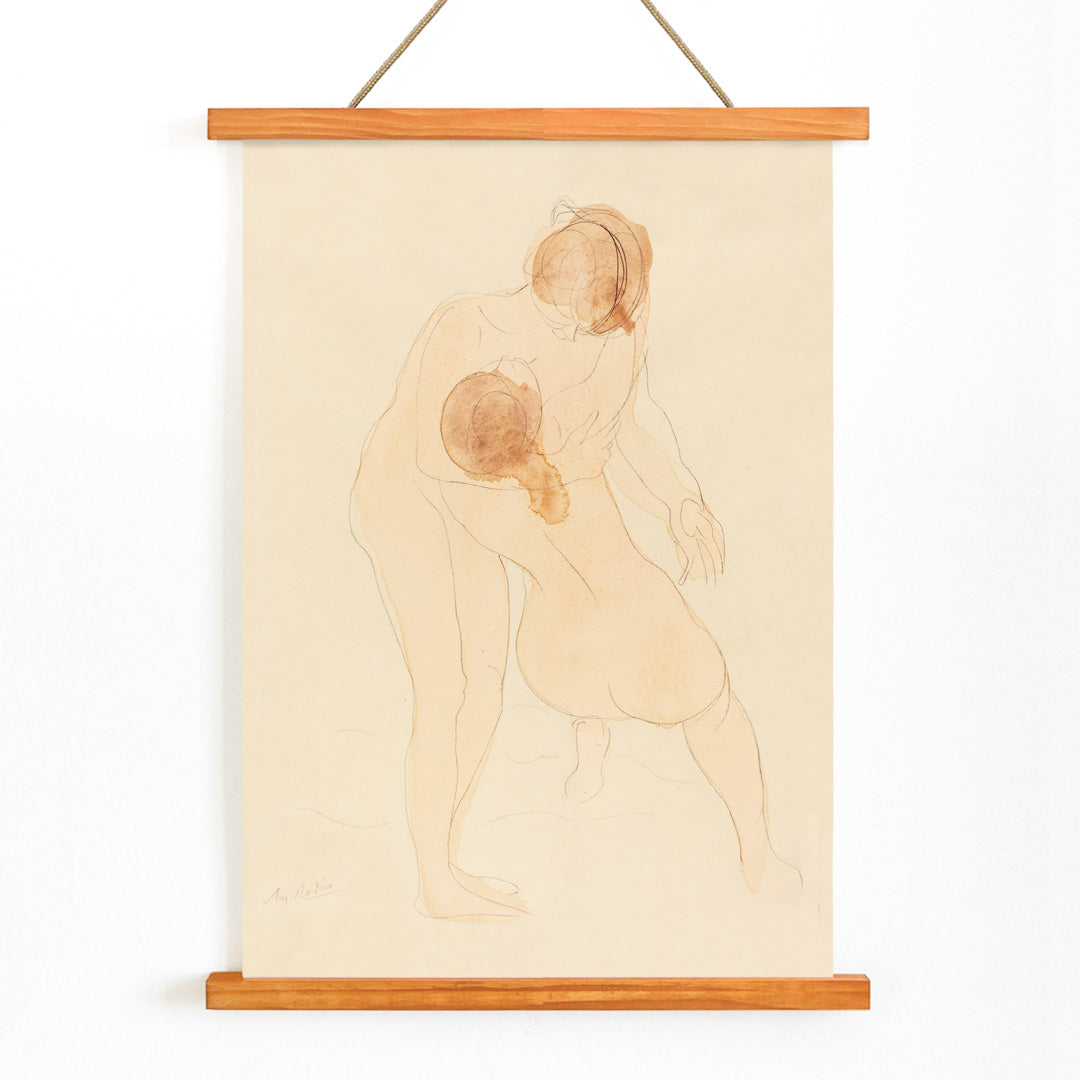
Created in 1905, this drawing comes from Rodin's mature period, a time when he prioritized spontaneity and emotional resonance over academic finish, reflecting broader shifts in European art of the era.
The Artwork
This piece, featuring two intertwined figures, embodies a moment when artists began to view the human body as an expression of inner life rather than a model of idealized form. For Rodin, drawing was a way to quickly capture fleeting poses and connections, preserving the immediacy of a gesture that might later inspire a sculpture or stand alone as a complete statement. The subject—a private, intimate encounter—suggests themes of trust, closeness, and the vulnerability inherent in human relationships, resonating with the emotional depth characteristic of Rodin's work.
Style & Characteristics
The composition centers on two human forms, rendered with fluid, confident lines that convey movement and tenderness. The background is left open, allowing the figures to stand out and giving the impression of a spontaneous studio sketch elevated to the status of fine art. The drawing appears on warm beige paper, with brown or sepia lines that evoke a sense of warmth and natural simplicity. The overall mood is contemplative and gentle, making this vintage print a subtle yet evocative addition to any collection.
In Interior Design
This vintage print is well-suited for bedrooms, dressing areas, or quiet corners where soft, human-scale imagery is desired. It complements minimalist, Japandi, and classic interiors, especially when paired with materials like linen, oak, and matte ceramics. For a harmonious look, consider combining it with other works from the beige collection. A slim mat and simple frame from the frames collection can enhance the delicacy of the drawing and keep the focus on the figures.