


You may also like
-

Two figures Poster
Auguste Rodin · 1905 · Intimate figure study poster with fluid linework on warm beige paper
Poster from £9 · Framed from £16
-

Caresse moi donc Poster
Auguste Rodin · 1882 · Intimate nude figure art print capturing a quiet caress in flowing lines
Poster from £9 · Framed from £16
-

Abstract Nude Poster
Auguste Rodin · 1875 · Expressive abstract nude art print with fluid contours and bold primary color accents
Poster from £9 · Framed from £16
-

Female Nude Poster
Carl Newman · 1917 · Expressive female nude art print with bold contour lines and warm color accents
Poster from £9 · Framed from £16


-

"Very nice Posters. The quality is amazing and we received it very quickly !"
-

"A shop to visit absolutely. Huge selection of posters. We spent more than an hour there !"
-

"Perfect to find gift. Price are very good. An they can frame and pack it on site"


About the Artist
Auguste Rodin, a pivotal figure in late 19th-century French art, revolutionized sculpture by focusing on the expressive potential of the human form. While celebrated for his monumental works in bronze and marble, Rodin was also a prolific draughtsman, producing thousands of drawings that reveal his fascination with movement, emotion, and the fleeting nature of gesture.
This 1890 study reflects Rodin’s dedication to understanding the body beyond academic conventions. For those interested in the evolution of modern figure art, Rodin’s works on paper provide an intimate window into his creative process and the shifting artistic values of his era. Explore more from masters in our famous artists wall art collection.
The Artwork
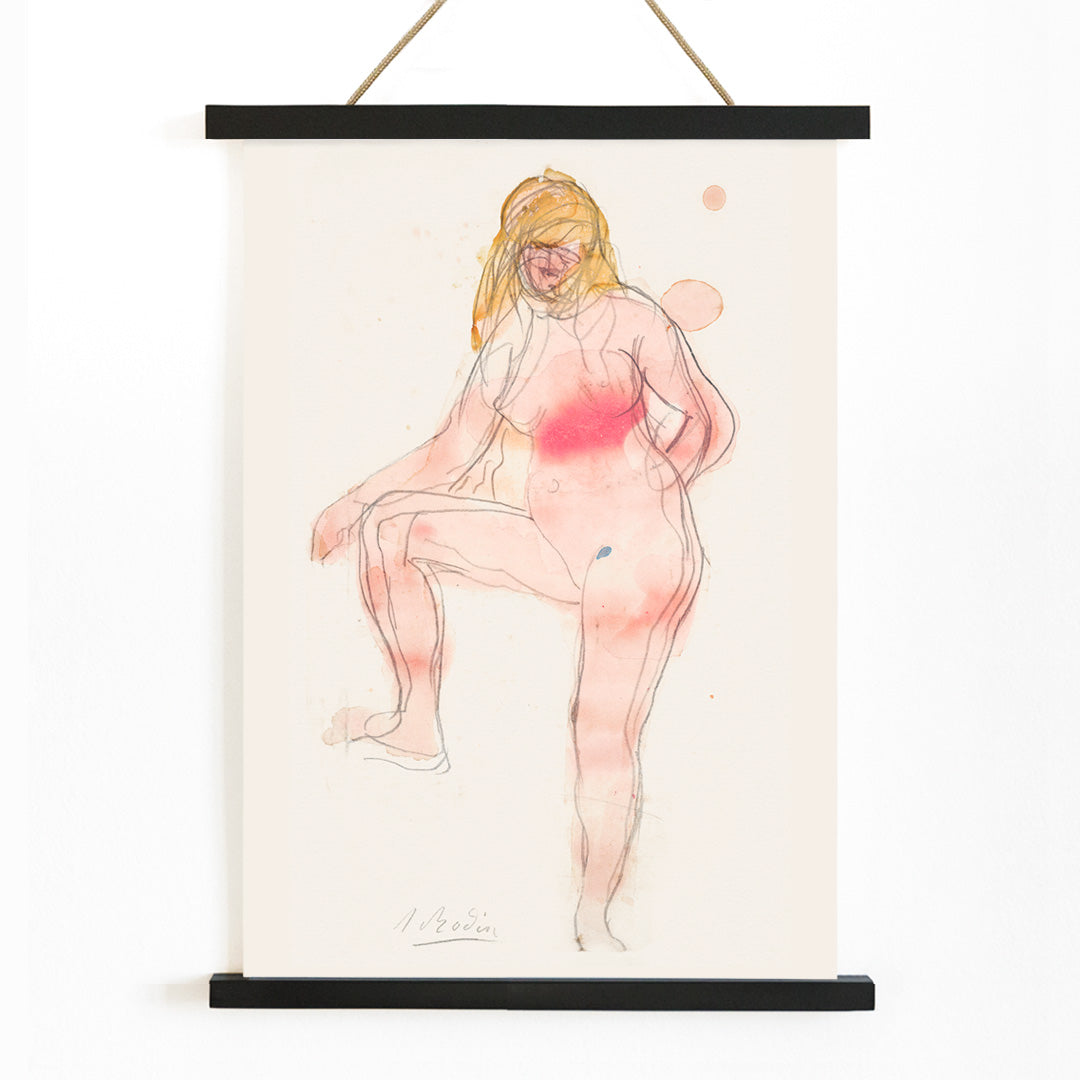
This nude study was created as part of Rodin’s ongoing exploration of the human figure, serving both as practice and as a means to capture the immediacy of a living presence. Unlike traditional academic nudes, Rodin’s drawing is less about idealized beauty and more about observing the individuality and vitality of his model in a spontaneous moment.
Produced during a period when artists were challenging established norms, the work embodies a transition toward modernism. It offers viewers a sense of direct observation and personal engagement, reflecting Rodin’s belief that art should express the inner life of its subject.
Style & Characteristics
The composition features a single nude figure, outlined with fluid, assured lines that emphasize gesture and movement over precise anatomical detail. Soft watercolor washes in warm, flesh-like tones gently model the form, allowing the white of the paper to illuminate the figure and create a sense of airiness.
Touches of blush and pale yellow add warmth and subtlety, contributing to an overall mood that is intimate and contemplative. The drawing’s simplicity and immediacy make it a refined example of late 19th-century figure study. If you appreciate this approach, you may also enjoy our erotic poster collection for more intimate works on paper.
In Interior Design
This art print lends a sense of quiet sophistication to bedrooms, dressing areas, or serene living spaces, where its gentle lines and soft palette can be appreciated up close. Its open composition pairs well with minimalist decor, line drawings, or sculptural accents.
To create harmony, echo the warm blush and yellow tones with neutral textiles, light woods, or creamy whites, and consider brass elements for added warmth. The piece integrates seamlessly with both classic and contemporary interiors, especially among thoughtfully curated classic art prints.