


You may also like
-
Loquats (Eriobotrya Japonica) Poster
Amanda Almira Newton · 1908 · Luminous loquat botanical print with warm orange fruit and crisp white space
Poster from £9 · Framed from £16
Regular price From £6.00Regular price -
Garcinia Mangostana Poster
Amanda Almira Newton · 1915 · Delicate mangosteen print featuring glossy green leaves and a split fruit with white pulp
Poster from £9 · Framed from £16
Regular price From £6.00Regular price -
Persimmons Poster
Amanda Almira Newton · 1923 · Delicate botanical print of ripe persimmons on a leafy branch against clean white space
Poster from £9 · Framed from £16
Regular price From £6.00Regular price -
Citrus Sinensis Poster
Amanda Almira Newton · 1916 · Luminous orange botanical print showing fruit, leaves, blossoms, and a clean cutaway
Poster from £9 · Framed from £16
Regular price From £6.00Regular price


-

"Very nice Posters. The quality is amazing and we received it very quickly !"
-

"A shop to visit absolutely. Huge selection of posters. We spent more than an hour there !"
-

"Perfect to find gift. Price are very good. An they can frame and pack it on site"


About the Artist
Amanda Almira Newton was an American botanical illustrator active in the early 20th century, admired for works that unite scientific clarity with quiet elegance. Her plant studies reflect a period when accurate images were essential tools for horticulture, agriculture, and education, long before color photography was widely practical.
Collectors who enjoy this balance of knowledge and beauty often explore more in Amanda Almira Newton prints and related natural history wall art.
The Artwork
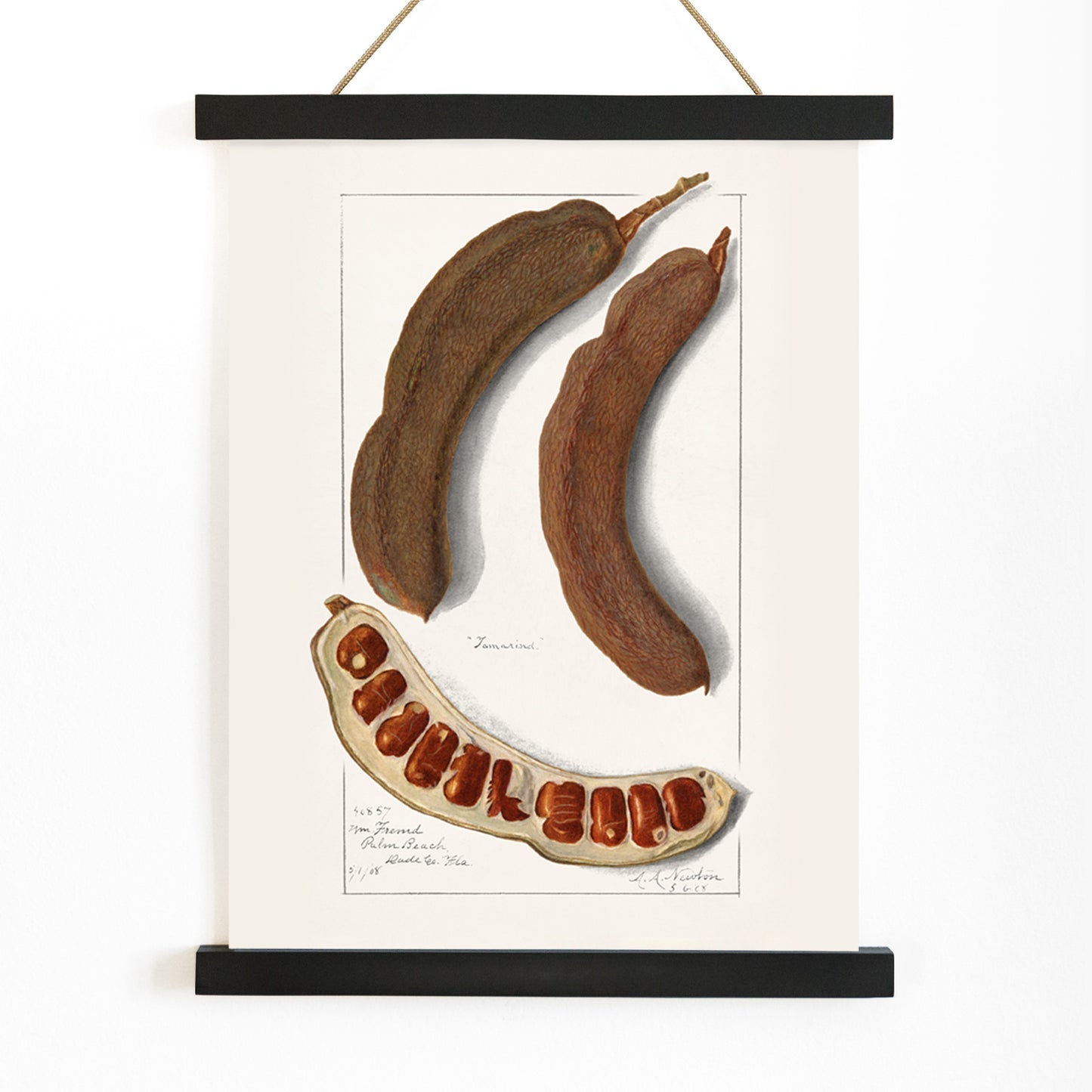
This 1908 illustration of Tamarindus indica was created at a time when botanical prints played a vital role in spreading knowledge about useful plants. The Indian tamarind, valued for its culinary uses and medicinal properties, was depicted to aid in identification and study, supporting both scientific research and practical cultivation. Such works were often commissioned by agricultural institutions to document economically important species for farmers, botanists, and educators.
Newton’s illustration reflects the era’s dedication to accuracy and the desire to make botanical knowledge accessible beyond academic circles.
Style & Characteristics
The artwork features a single tamarind branch, with delicate, feathery green leaves and several brown pods, set against a clean, off-white background. The composition is uncluttered, emphasizing the plant’s structure and natural form. Fine, precise lines and subtle shading create a sense of depth and realism, while the restrained color palette of soft greens and warm browns evokes a calm, archival atmosphere. The overall effect is both informative and aesthetically pleasing, characteristic of early 20th-century botanical illustration.
In Interior Design
This vintage botanical print lends a gentle, organic touch to kitchens, dining rooms, or studies, especially in spaces that celebrate natural materials and understated elegance. Its neutral tones pair well with light woods, linen, and ceramics, and it fits seamlessly into interiors inspired by nature or global food culture. For a harmonious display, consider grouping it with pieces from the botanical wall art or complementing earth tones from the brown tones collection.