


You may also like
-

Citrus nobilis Poster
Amanda Almira Newton · 1908 · Detailed mandarin botanical print with clean negative space and warm orange tones
Poster from £9 · Framed from £16
-

Persimmons Poster
Amanda Almira Newton · 1923 · Delicate botanical print of ripe persimmons on a leafy branch against clean white space
Poster from £9 · Framed from £16
-

Persimmon Poster
Amanda Almira Newton · 1916 · Delicate botanical print of persimmon fruit and glossy leaves on white
Poster from £9 · Framed from £16
-

Prunus Persica Poster
Amanda Almira Newton · 1911 · Delicate peach botanical print with ripening fruit and soft leaves on white ground
Poster from £9 · Framed from £16


-

"Very nice Posters. The quality is amazing and we received it very quickly !"
-

"A shop to visit absolutely. Huge selection of posters. We spent more than an hour there !"
-

"Perfect to find gift. Price are very good. An they can frame and pack it on site"


About the Artist
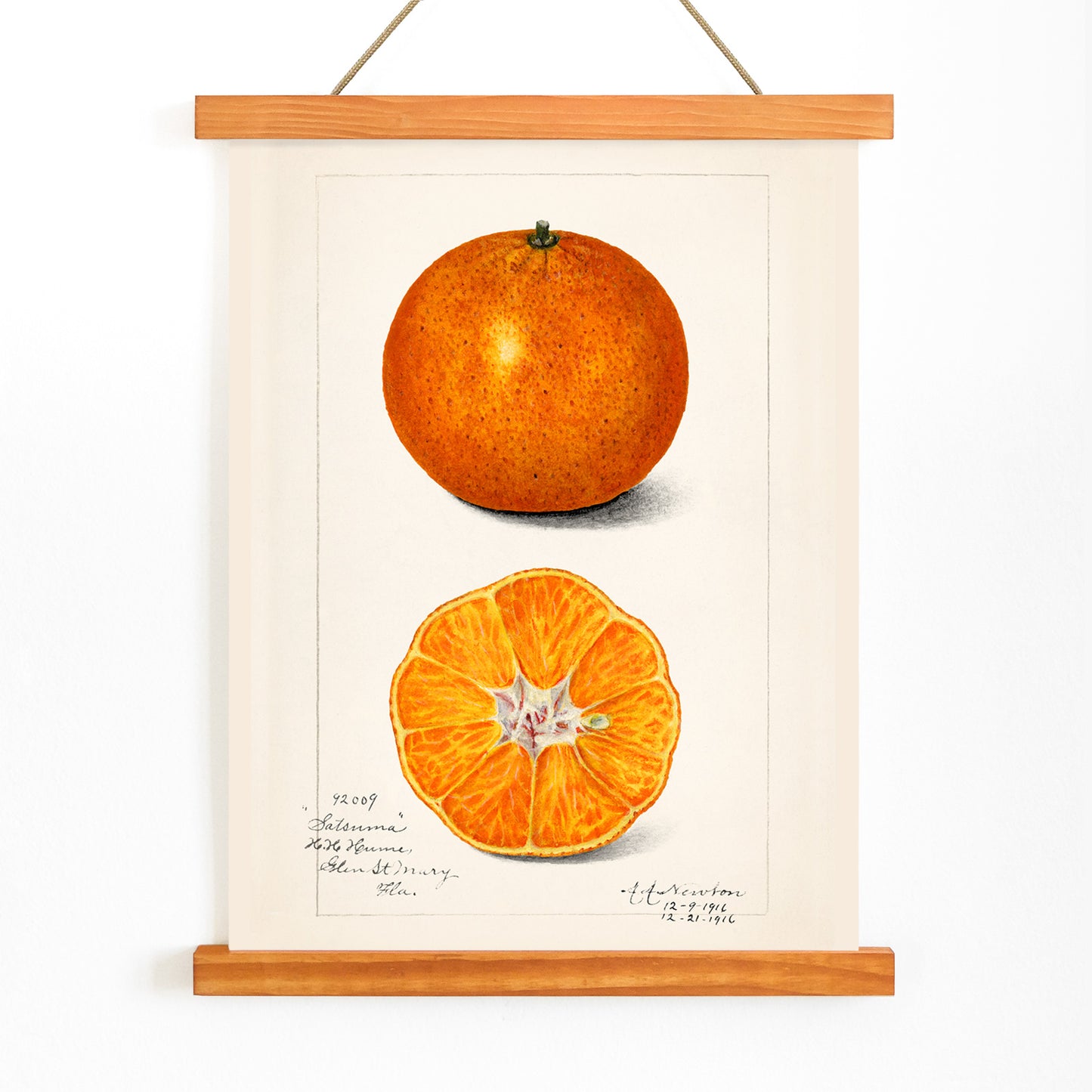
Amanda Almira Newton was an American botanical illustrator who worked for the United States Department of Agriculture in the early 20th century, producing meticulous watercolors for official records. Her practice sits at the intersection of art and agricultural science, where beauty is inseparable from accuracy and identification. Collectors value her sheets for their clarity and restraint, and this 1916 work is a refined example of vintage botanical art that continues to inspire appreciation for natural forms.
Explore more works in the Amanda Almira Newton collection, celebrated for fruit studies made with museum-level precision.
The Artwork
This illustration of Citrus sinensis was created at a time when documenting fruit varieties was essential for agricultural progress and trade. In 1916, detailed botanical illustrations like this served as vital references for growers, researchers, and archivists, capturing the subtle distinctions between cultivars. Newton’s work reflects a broader movement to catalog the natural world with scientific rigor, supporting both practical horticulture and the preservation of knowledge across regions and generations.
Such images transformed everyday produce into lasting records, bridging the gap between field observation and scientific communication.
Style & Characteristics
The composition presents an orange branch with ripe fruit, glossy green leaves, delicate white blossoms, and a precisely rendered cutaway revealing the segmented interior. Newton’s watercolor technique uses gentle gradients and crisp outlines to convey both the texture of citrus peel and the translucency of the fruit’s flesh. The clean white background isolates the subject, enhancing its clarity and making every detail easily visible.
The palette is dominated by vibrant orange and fresh green, accented by subtle yellow and white, creating a sunlit, naturalistic effect typical of classic botanical prints.
In Interior Design
This botanical print brings a sense of freshness and natural beauty to interiors, making it especially suited for kitchens, dining spaces, or breakfast nooks. Its luminous colors and airy composition complement both modern and traditional decor, and it stands out beautifully in a simple wood or black frame. The artwork’s scientific elegance also makes it a thoughtful addition to a study or home office.
Pair it with other fruit illustrations from the orange tones collection or explore curated kitchen wall art for a cohesive gallery display.