


You may also like
-

Indian fig opuntia cactus Poster
Unknown artist · 1899 · Detailed opuntia cactus botanical print with segmented green pads and a soft yellow bloom
Poster from £9 · Framed from £16
-

Cactus Opuntia Poster
Pierre-Joseph Redouté · 1816 · Elegant prickly pear cactus print with luminous yellow flower and crisp botanical detail
Poster from £9 · Framed from £16
-

Pear Cactus in Bloom Poster
Herman Saftleven the Younger · 1650 · Pear cactus print with segmented green pads and a delicate yellow flower
Poster from £9 · Framed from £16
-

Beehive cactus Poster
Unknown artist · 1899 · Detailed beehive cactus botanical print with soft green tones and delicate red flowers
Poster from £9 · Framed from £16


-

"Very nice Posters. The quality is amazing and we received it very quickly !"
-

"A shop to visit absolutely. Huge selection of posters. We spent more than an hour there !"
-

"Perfect to find gift. Price are very good. An they can frame and pack it on site"


About the Artist
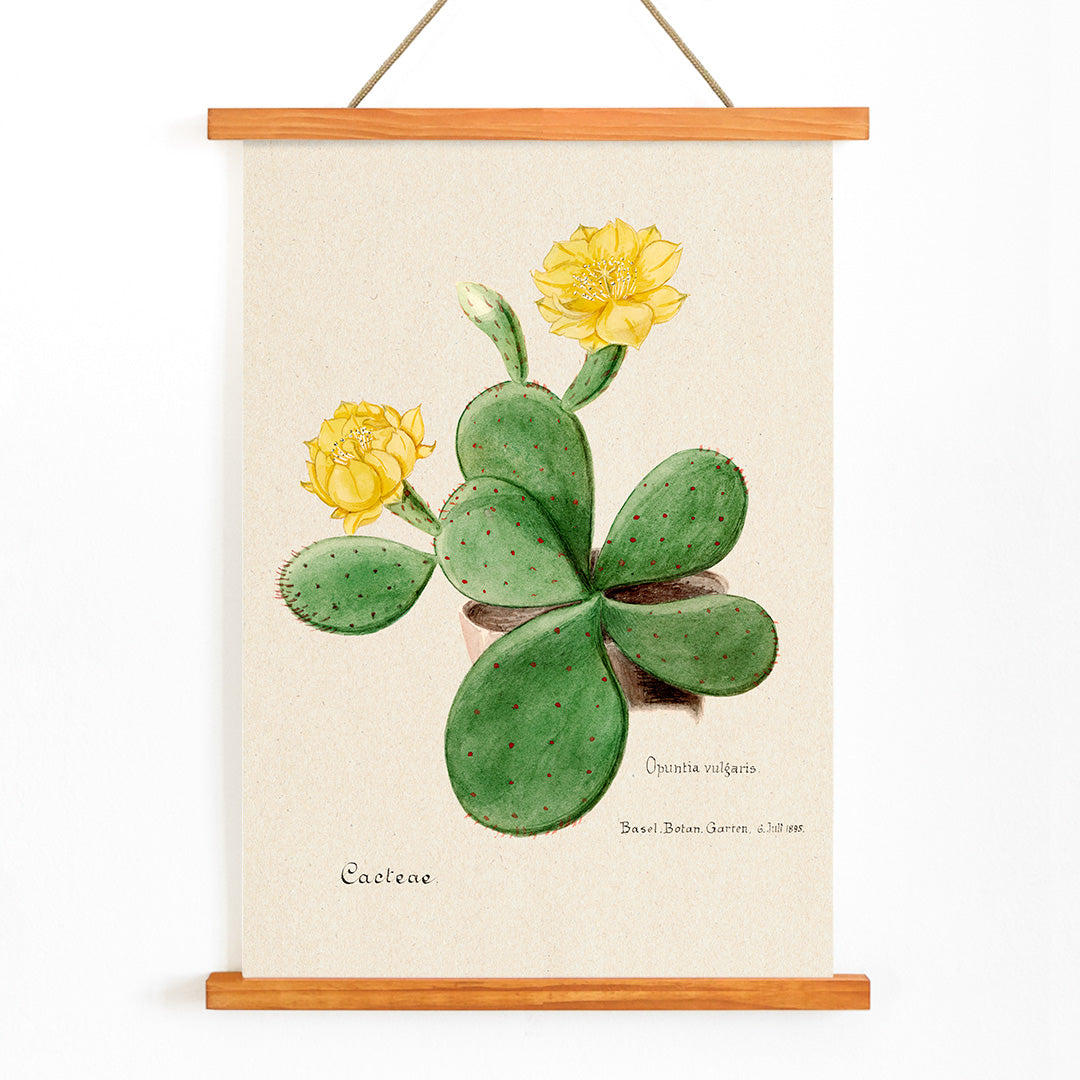
Created by an anonymous artist, this 1899 prickly pear study is rooted in the late nineteenth-century tradition of botanical illustration, when artists collaborated with scientists and horticulturists to document plant species for educational and reference purposes. These works supported the growing interest in botany and the need for accurate visual records in an era of exploration and scientific advancement.
Rather than focusing on personal expression, these vintage prints prioritized clarity and precision, serving as essential tools for students, collectors, and naturalists. If you are drawn to historic plant imagery, you may also appreciate our botanical prints and scientific illustration collections.
The Artwork
In 1899, illustrations of the prickly pear cactus provided valuable information for those interested in its uses as food, medicine, and ornamental plant across arid regions. This botanical plate was designed to capture the defining features of the species, offering a visual reference that complemented written descriptions and aided in identification.
The subject also symbolizes resilience, thriving in challenging environments where few other plants can survive. As a piece of vintage wall art, it evokes a spirit of discovery and the enduring fascination with the natural world, linking scientific inquiry with decorative beauty.
Style & Characteristics
This illustration presents the prickly pear cactus as a carefully observed specimen, highlighting its distinctive pads and vibrant yellow blossoms. The color palette is dominated by natural greens and warm yellows, set against a pale, neutral background that enhances the clarity of the subject.
Delicate linework and subtle shading reflect the artist's attention to botanical accuracy, while the balanced composition creates a serene and archival atmosphere. This vintage botanical print is especially striking when displayed in simple frames, allowing its refined details and airy layout to stand out.
In Interior Design
This prickly pear botanical print complements kitchens, dining rooms, studies, and sunlit hallways, adding a grounded and organic accent to the space. It pairs well with minimalist, Scandinavian, or vintage-inspired interiors, and harmonizes with natural wood and earthy textures.
For a cohesive look, echo its tones with sandy neutrals, soft greens, or warm yellows, or incorporate it into a gallery wall alongside other green wall art and beige tone prints.