


You may also like
-
Rainbow Pincushion cactus and Easter lily Poster
Unknown artist · 1899 · Detailed botanical print of cactus and lily contrasting spiny forms with soft white flowers
Poster from £9 · Framed from £16
Regular price From £6.00Regular price -
Assorted cacti Poster
Unknown artist · 1899 · Lively cactus botanical print with multiple forms and bright blossoms on clean paper
Poster from £9 · Framed from £16
Regular price From £6.00Regular price -
Indian fig opuntia cactus Poster
Unknown artist · 1899 · Detailed opuntia cactus botanical print with segmented green pads and a soft yellow bloom
Poster from £9 · Framed from £16
Regular price From £6.00Regular price -
Prickly Pear cactus Poster
Unknown artist · 1899 · Detailed prickly pear botanical print with yellow flowers and rounded green pads
Poster from £9 · Framed from £16
Regular price From £6.00Regular price


-

"Very nice Posters. The quality is amazing and we received it very quickly !"
-

"A shop to visit absolutely. Huge selection of posters. We spent more than an hour there !"
-

"Perfect to find gift. Price are very good. An they can frame and pack it on site"


About the Artist
Created by an anonymous artist, this 1899 botanical plate reflects the era when scientific illustration was essential for documenting and sharing plant discoveries. In the late 19th century, botanical artists played a crucial role in cataloging new species, especially as global exploration brought unfamiliar flora to European attention.
These illustrations circulated among botanists, horticulturists, and collectors, shaping the understanding of desert plants like cacti. Such works bridged the gap between science and art, providing both educational value and aesthetic enjoyment, much like other pieces in our botanical and science collections.
The Artwork
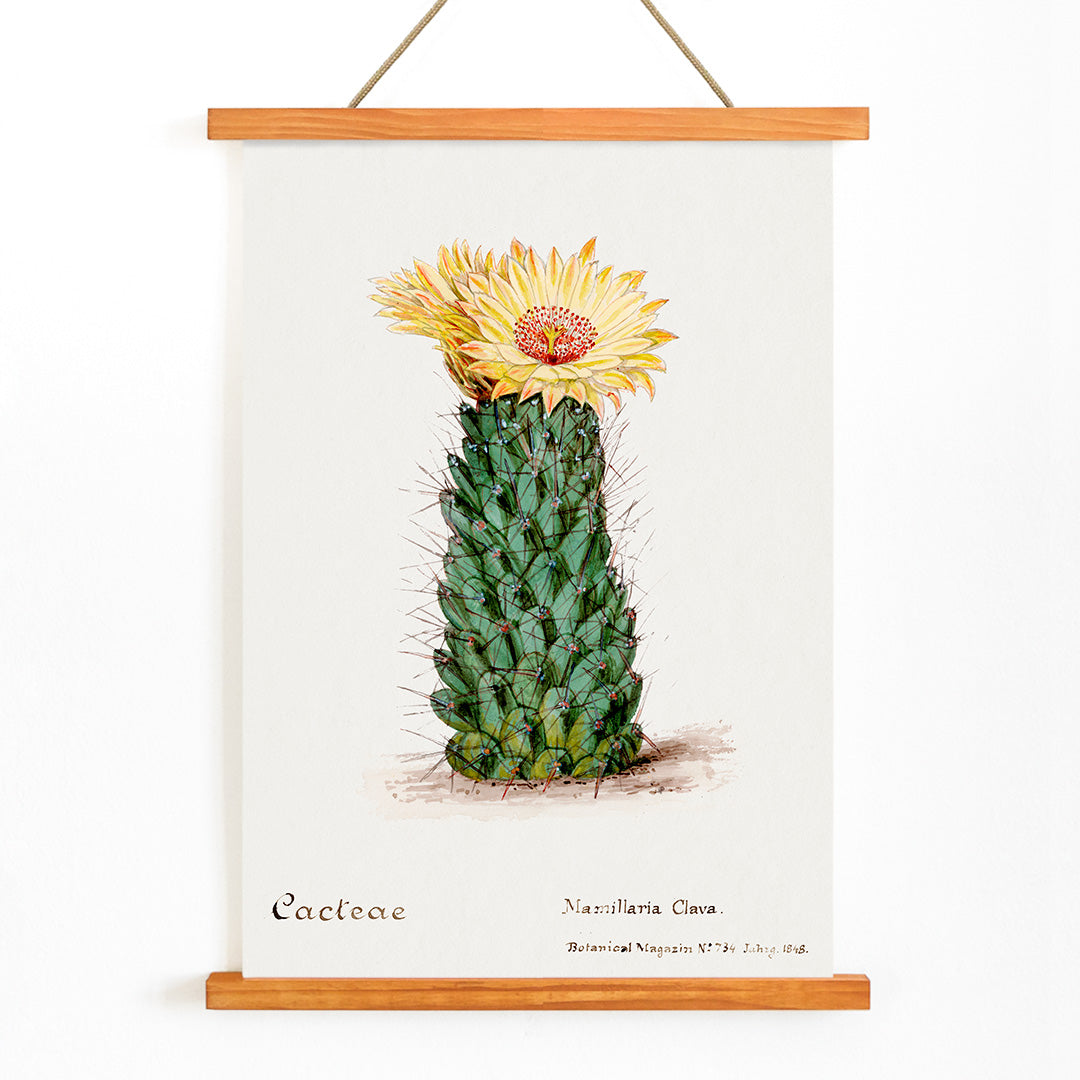
This plate features the beehive cactus, a subject of fascination during the late Victorian craze for exotic plants. At the time, cacti were prized for their unique forms and adaptability, and accurate illustrations were vital for classification and study. The print served as a reference for botanists and collectors, helping to distinguish species within the diverse Mammillaria group.
Beyond its scientific purpose, the artwork reflects the period’s spirit of discovery and the prestige associated with cultivating rare plants at home. It stands as a testament to the era’s blend of curiosity, scholarship, and appreciation for natural beauty, echoing themes found in our green-toned prints.
Style & Characteristics
The composition centers the cactus against a plain, cream-toned background, emphasizing its distinctive structure. Fine, precise linework captures the dense pattern of spines, while subtle shading adds depth and dimension to the plant’s rounded form. The palette is dominated by gentle greens, earthy browns, and touches of yellow, with small red accents highlighting the cactus’s flowers.
The overall effect is calm and focused, balancing scientific clarity with a sense of handcrafted warmth. The print’s understated elegance makes it suitable for both vintage-inspired and contemporary interiors, whether as a standalone piece or part of a curated botanical display.
In Interior Design
This botanical print brings a touch of natural serenity to spaces like kitchens, studies, or entryways. Its clean design pairs well with minimalist decor, light woods, and soft textiles, while the green and earthy tones can be echoed in accessories or plant arrangements.
For a cohesive look, combine it with other botanical or green-themed artworks in simple frames. The print’s timeless quality allows it to complement both modern and classic interiors, adding a subtle note of botanical interest.