


You may also like
-
Prickly Pear cactus Poster
Unknown artist · 1899 · Detailed prickly pear botanical print with yellow flowers and rounded green pads
Poster from £9 · Framed from £16
Regular price From £6.00Regular price -
Cactus Opuntia Poster
Pierre-Joseph Redouté · 1816 · Elegant prickly pear cactus print with luminous yellow flower and crisp botanical detail
Poster from £9 · Framed from £16
Regular price From £6.00Regular price -
Pear Cactus in Bloom Poster
Herman Saftleven the Younger · 1650 · Pear cactus print with segmented green pads and a delicate yellow flower
Poster from £9 · Framed from £16
Regular price From £6.00Regular price -
Beehive cactus Poster
Unknown artist · 1899 · Detailed beehive cactus botanical print with soft green tones and delicate red flowers
Poster from £9 · Framed from £16
Regular price From £6.00Regular price


-

"Very nice Posters. The quality is amazing and we received it very quickly !"
-

"A shop to visit absolutely. Huge selection of posters. We spent more than an hour there !"
-

"Perfect to find gift. Price are very good. An they can frame and pack it on site"


About the Artist
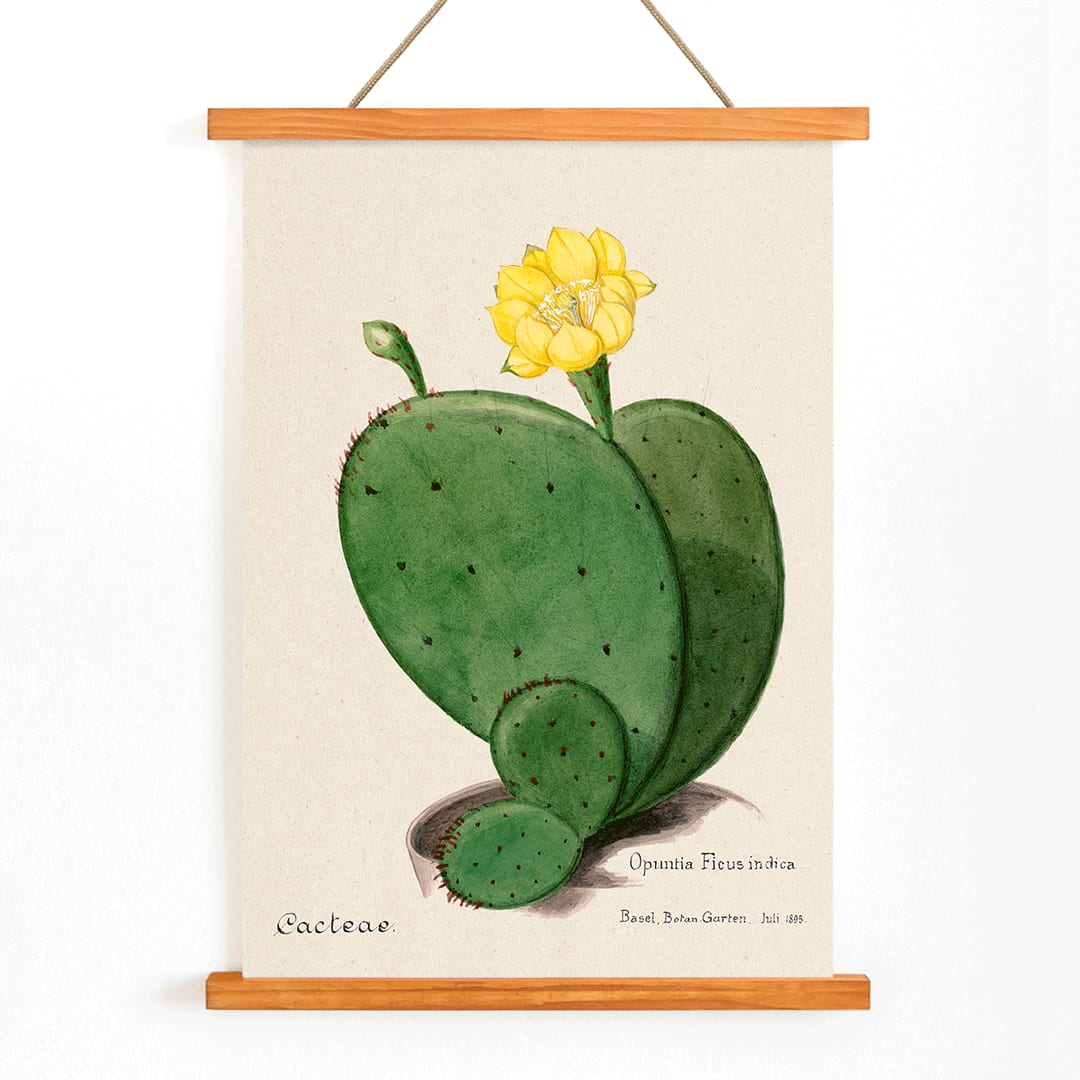
Created by an anonymous artist, this 1899 botanical illustration reflects the late nineteenth-century tradition of printed plant studies made for education, collecting, and reference. Many such plates were produced for atlases and scientific periodicals, where clarity mattered as much as beauty.
That balance between art and observation places this work close to the world of scientific illustration prints, where a single specimen becomes a complete visual document. As a vintage botanical print, it carries the quiet authority of the archive into contemporary interiors.
The Artwork
Indian fig, also known as opuntia, traveled widely with trade and cultivation, valued for its resilience in dry climates and its practical uses. By the end of the 1800s, plant cataloging had become an international language, connecting gardens, farms, and academic collections through shared images.
This illustration belongs to that moment of curiosity and classification, presenting the cactus as a subject worthy of careful study rather than a mere curiosity. It evokes the era when printed plates helped standardize plant knowledge across borders, reflecting a time when scientific documentation shaped our understanding of the natural world.
Style & Characteristics
The composition centers the opuntia cactus on an open, pale ground, giving the plant space to read clearly at a distance. Green pads and a soft yellow bloom stand out against beige paper tones, with crisp dark linework and delicate shading that suggest a printed plate finished with careful color.
The overall mood is calm, orderly, and slightly nostalgic, ideal for a gallery wall that mixes decorative art with natural history. If you enjoy earthy palettes, explore more green tone wall art and beige vintage prints that complement this refined botanical look.
In Interior Design
This botanical art print suits kitchens, dining areas, and home offices, where its clean structure adds focus without visual noise. It works especially well in modern, Japandi, and classic interiors that appreciate quiet detail, and it pairs naturally with wood, linen, and stone textures.
For color harmony, echo its greens with plants or ceramics, and pick up the yellow note in small accents such as textiles or lampshades. Framed simply, it becomes timeless wall art for nature lovers and design minimalists alike, fitting seamlessly into curated botanical wall art displays.