


You may also like
-

Rattail Cactus Poster
Unknown artist · 1899 · Elegant rattail cactus print with trailing green stems and red pink blossoms
Poster from £9 · Framed from £16
-

Rainbow Pincushion cactus and Easter lily Poster
Unknown artist · 1899 · Detailed botanical print of cactus and lily contrasting spiny forms with soft white flowers
Poster from £9 · Framed from £16
-

Assorted cacti Poster
Unknown artist · 1899 · Lively cactus botanical print with multiple forms and bright blossoms on clean paper
Poster from £9 · Framed from £16
-

Prickly Pear cactus Poster
Unknown artist · 1899 · Detailed prickly pear botanical print with yellow flowers and rounded green pads
Poster from £9 · Framed from £16


-

"Very nice Posters. The quality is amazing and we received it very quickly !"
-

"A shop to visit absolutely. Huge selection of posters. We spent more than an hour there !"
-

"Perfect to find gift. Price are very good. An they can frame and pack it on site"


About the Artist
Created by an anonymous artist, this 1899 botanical plate is rooted in the tradition of late nineteenth-century natural history illustration. During this period, botanical artists played a crucial role in documenting the expanding diversity of cultivated and wild plants, supporting both scientific study and the growing enthusiasm for horticulture across Europe.
These illustrations were essential tools for botanists, gardeners, and educators, offering a reliable visual reference at a time when photography was still in its infancy. If you are interested in the intersection of art and science, discover more botanical prints and science posters and prints in the MORYARTY collection.
The Artwork
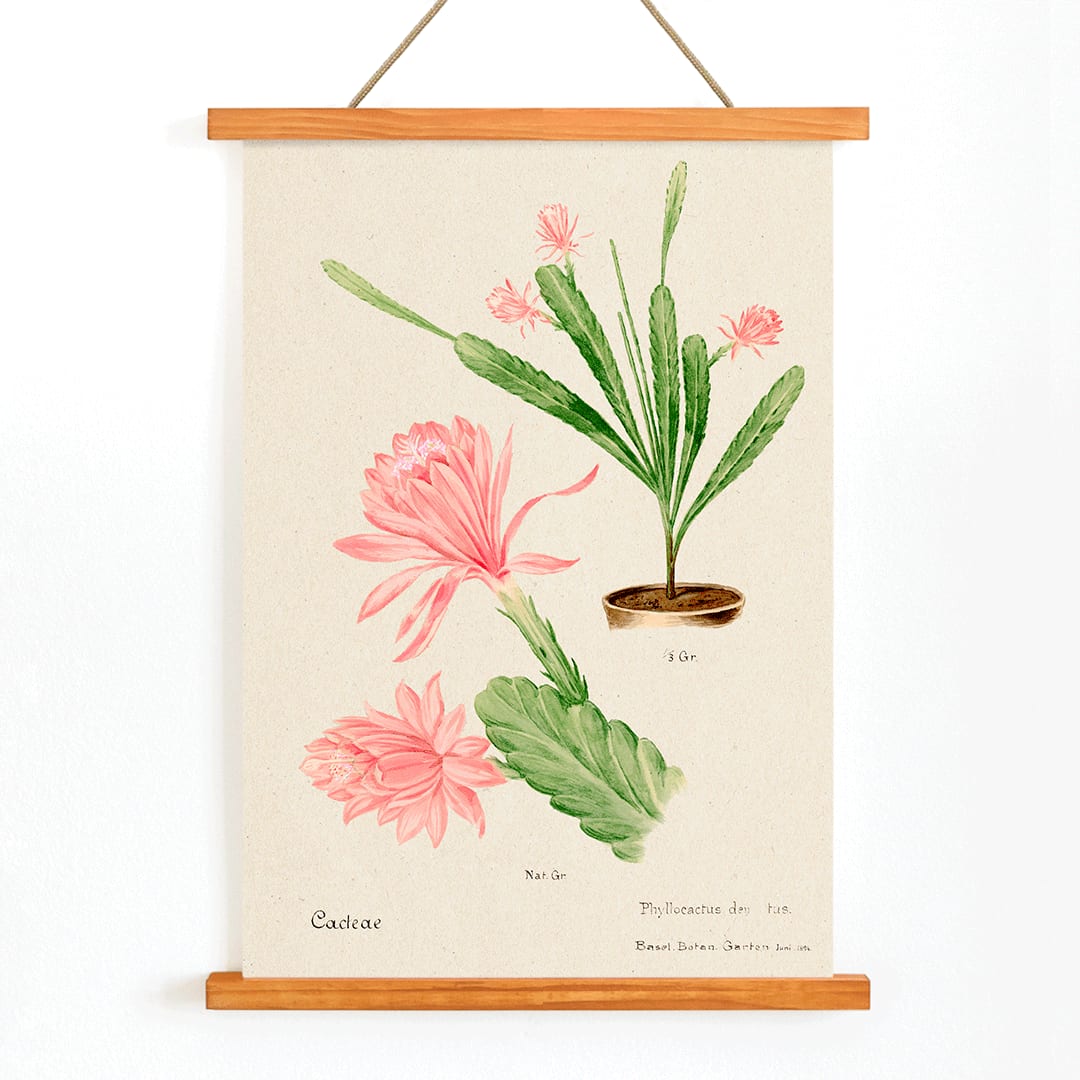
This plate features the German empress cactus, reflecting the era's fascination with exotic plants and the rise of cactus collecting in Europe. As glasshouses made it possible to cultivate desert species far from their native habitats, cacti with striking blooms became symbols of botanical curiosity and status among collectors.
Intended for identification and study, the artwork provides a clear and informative view of the plant, supporting both scientific comparison and appreciation of its unique form. It stands as a testament to the period when botanical illustration bridged leisure, education, and scientific advancement.
Style & Characteristics
The composition is straightforward and precise, with the cactus and its blossoms rendered in fine lines and subtle shading. The plant is set against a clean, open background, allowing its structure and details to be easily observed.
Soft pink flowers, fresh green pads, and a warm beige paper tone create a gentle, harmonious palette. The overall mood is calm and refined, balancing decorative appeal with the clarity required for botanical study—an ideal vintage print for those who appreciate both beauty and accuracy.
In Interior Design
This botanical print brings a touch of natural elegance to kitchens, home offices, or hallways, where its delicate colors and precise lines add freshness without overwhelming the space. It complements Scandinavian, modern classic, and cottage interiors, and works well as part of a gallery wall featuring nature-inspired art.
Pair it with pale woods, brass accents, and linen textures, or echo its hues with blush ceramics and green plants. For a cohesive look, explore related pink tone wall art and beige neutral prints to maintain a light, inviting atmosphere.