


You may also like
-
German empress cactus Poster
Unknown artist · 1899 · Delicate pink flowering cactus print with crisp botanical detail on warm beige ground
Poster from £9 · Framed from £16
Regular price From £6.00Regular price -
Rainbow Pincushion cactus and Easter lily Poster
Unknown artist · 1899 · Detailed botanical print of cactus and lily contrasting spiny forms with soft white flowers
Poster from £9 · Framed from £16
Regular price From £6.00Regular price -
Assorted cacti Poster
Unknown artist · 1899 · Lively cactus botanical print with multiple forms and bright blossoms on clean paper
Poster from £9 · Framed from £16
Regular price From £6.00Regular price -
Cactus Opuntia Poster
Pierre-Joseph Redouté · 1816 · Elegant prickly pear cactus print with luminous yellow flower and crisp botanical detail
Poster from £9 · Framed from £16
Regular price From £6.00Regular price


-

"Very nice Posters. The quality is amazing and we received it very quickly !"
-

"A shop to visit absolutely. Huge selection of posters. We spent more than an hour there !"
-

"Perfect to find gift. Price are very good. An they can frame and pack it on site"


About the Artist
Created by an anonymous artist, this 1899 illustration is rooted in the late Victorian era's fascination with botanical discovery and documentation. During this period, the growing popularity of horticulture and plant collecting inspired artists and scientists to collaborate on detailed reference works. Such illustrations were essential for sharing knowledge about exotic species newly introduced to European collections, making them accessible to gardeners and enthusiasts alike.
These botanical plates served both scientific and aesthetic purposes, bridging the gap between natural history and decorative arts. Their enduring appeal lies in their ability to capture the wonder and precision of a time when each plant was a marvel to be studied and admired.
The Artwork
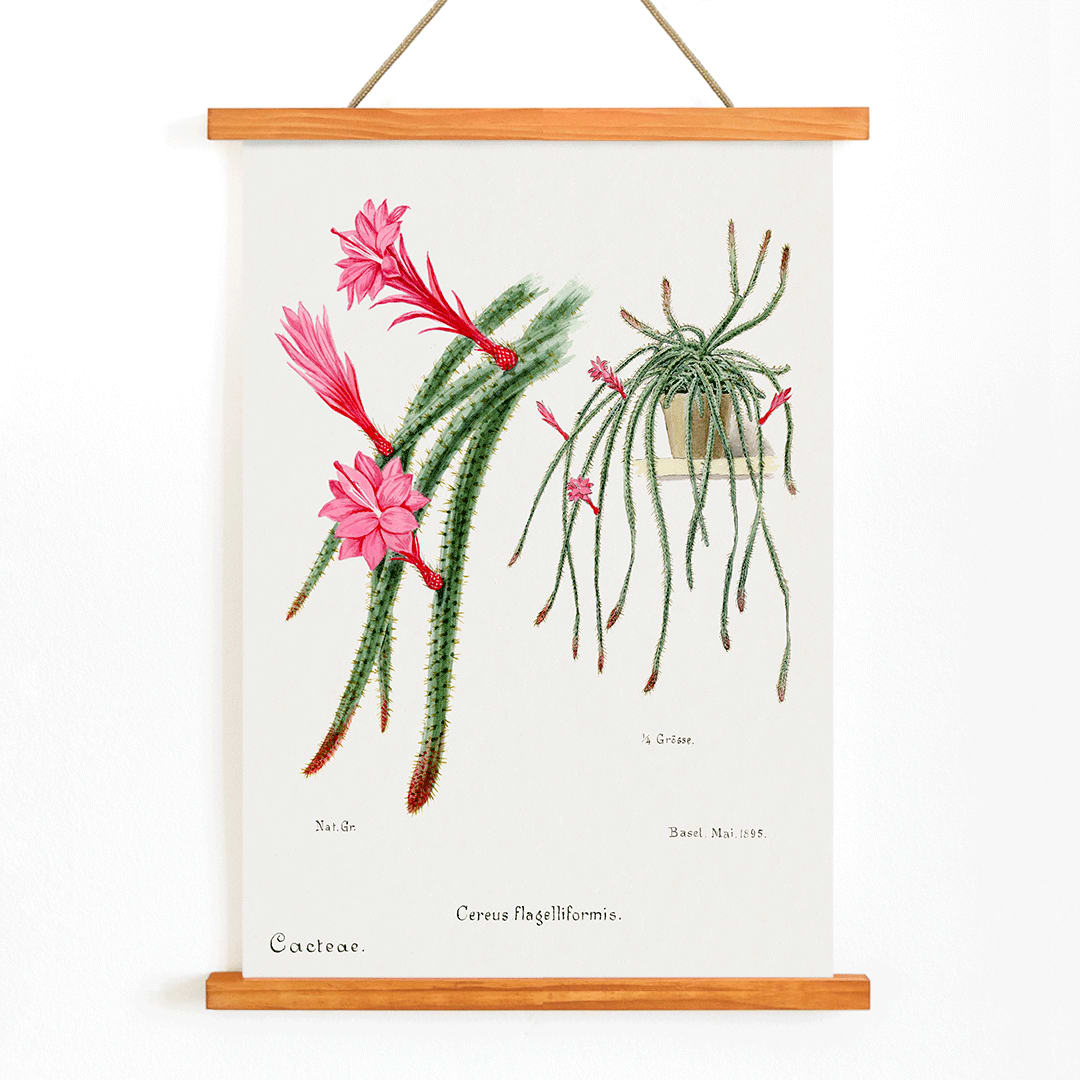
The rattail cactus, featured in this plate, was a prized specimen among Victorian collectors, celebrated for its unusual trailing stems and vibrant blossoms. This artwork was created as a reference tool, allowing viewers to appreciate the plant's distinctive form and fleeting flowers long after the bloom had faded. It reflects the era's desire to preserve and share the beauty of rare species through meticulous illustration.
Beyond its scientific function, the piece embodies a quiet reverence for resilience and the rewards of patient cultivation, echoing the values of Victorian gardening culture.
Style & Characteristics
The illustration presents the cactus against a pale background, with slender, cascading green stems rendered in fine detail. The segmented structure is carefully depicted, while the blossoms stand out in vivid red and pink tones, drawing the eye to their delicate forms.
Subtle shading and precise linework lend the image a sense of depth and clarity. The overall effect is airy and balanced, characteristic of classic botanical art and scientific illustration, making it a timeless choice for those who appreciate natural beauty in art.
In Interior Design
This vintage botanical print brings a touch of nature's elegance to spaces such as kitchens, hallways, or home offices. Its gentle palette and refined composition complement interiors with light woods, natural textiles, and minimalist decor.
For a harmonious look, pair it with other botanical prints or incorporate accents in green and pink. It works beautifully as part of a gallery wall or as a standalone piece in both modern and traditional settings.