


You may also like
-

Tarzan the Ape Man Poster
Eric Rohman · 1933 · Dramatic jungle poster featuring Tarzan carrying Jane through lush green foliage
Poster from £9 · Framed from £16
-

He Who Gets Slapped Poster
Eric Rohman · 1925 · Stark silent film clown poster with dramatic black white red and blue contrasts
Poster from £9 · Framed from £16
-

Where East is East Poster
Eric Rohman · 1929 · Dramatic movie poster of Lupe Velez playing a string instrument in vivid red and yellow
Poster from £9 · Framed from £16
-

The Cocoanuts Poster
Eric Rohman · 1929 · Art Deco swimmer movie poster with bold coastal colors and crisp, playful lettering
Poster from £9 · Framed from £16


-

"Very nice Posters. The quality is amazing and we received it very quickly !"
-

"A shop to visit absolutely. Huge selection of posters. We spent more than an hour there !"
-

"Perfect to find gift. Price are very good. An they can frame and pack it on site"


About the Artist
Eric Rohman was a Swedish graphic artist active in the early twentieth century, a period when European poster design was rapidly evolving. His work captures the spirit of an era when lithographic posters were central to public life, shaping the visual language of advertising for sports, cinema, and nightlife. Rohman’s posters are known for their immediate impact and clarity, standing out among other notable advertising posters of the time.
He excelled at distilling moments of drama and excitement into striking visual statements, using composition and typography to command attention from afar.
The Artwork
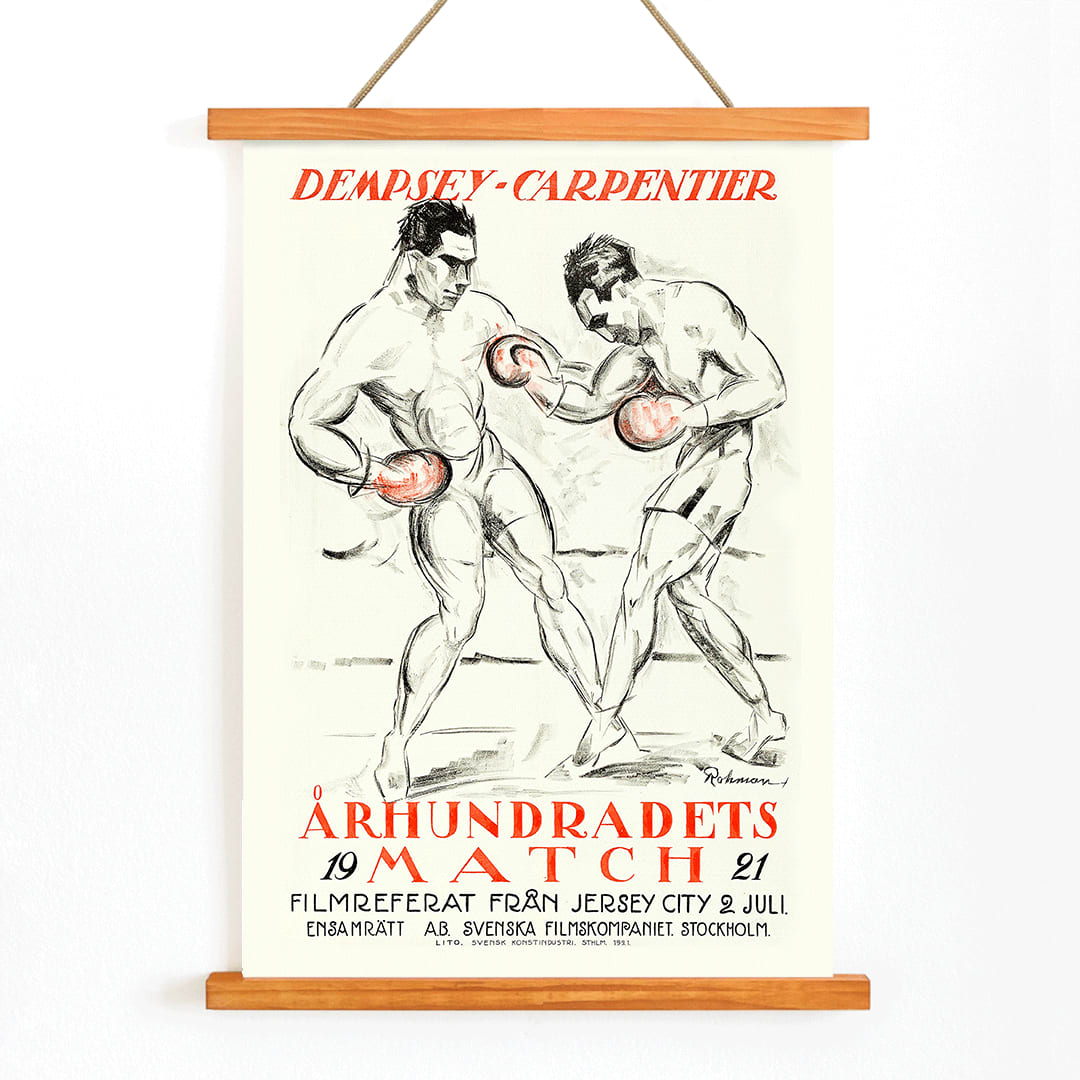
This boxing poster, created during the heyday of professional boxing in the 1920s, reflects a time when major matches became cultural events promoted through bold visual media. Posters like this were designed to generate excitement, announce upcoming bouts, and draw crowds to the venue. In this context, sports posters served as both advertisements and symbols of fandom, connecting viewers to the spectacle and energy of the ring.
The piece embodies the intersection of athletic celebrity and the rise of mass media in early twentieth-century Europe.
Style & Characteristics
The artwork features a high-contrast palette of black and white, punctuated by assertive red accents that heighten its dramatic effect. The composition centers on a simplified, dynamic figure of a boxer, with bold, graphic lettering that amplifies the sense of action. Subtle gray tones provide depth while maintaining a crisp, graphic quality.
The overall mood is tense and energetic, making it a compelling example of black and white wall art with a vivid touch of color. Its horizontal layout also aligns well with other horizontal posters from the era.
In Interior Design
This vintage boxing poster makes a striking statement in spaces such as home offices, gyms, or modern living rooms, especially those with minimalist or industrial decor. It pairs well with matte black accents, leather furnishings, and clean white walls, while the red highlights can be echoed in accessories for cohesion. Collectors of sports history and vintage graphic design will appreciate its bold presence and historical resonance.