


You may also like
-

Green Botanical pattern Poster
Owen Jones · 1867 · Victorian botanical print with rhythmic green foliage and bright floral accents
Poster from £9 · Framed from £16
-

Red floral pattern Poster
Owen Jones · 1912 · Ornamental floral poster with white blossoms and scrolling vines on deep red
Poster from £9 · Framed from £16
-

Flower pattern Poster
Owen Jones · 1912 · Refined floral pattern poster with crisp symmetry in red and blue on white
Poster from £9 · Framed from £16
-

Chinese botanical illustration Poster
Owen Jones · 1897 · Decorative Chinese botanical print with stylized blossoms and balanced ornamental symmetry
Poster from £9 · Framed from £16


-

"Very nice Posters. The quality is amazing and we received it very quickly !"
-

"A shop to visit absolutely. Huge selection of posters. We spent more than an hour there !"
-

"Perfect to find gift. Price are very good. An they can frame and pack it on site"


About the Artist
Owen Jones was a pioneering British architect and designer, celebrated for his influential role in Victorian design reform. His landmark work, The Grammar of Ornament, set out principles for decorative arts that balanced historical research with the possibilities of modern manufacturing. Jones’s theories on pattern, structure, and color harmony shaped the direction of nineteenth-century design and inspired later movements such as Arts and Crafts.
His legacy endures in the ornamental clarity and disciplined beauty of his patterns, which continue to serve as touchstones for those interested in the evolution of decorative art. For admirers of refined Victorian design, Jones’s work remains a testament to the era’s creative ambition.
The Artwork
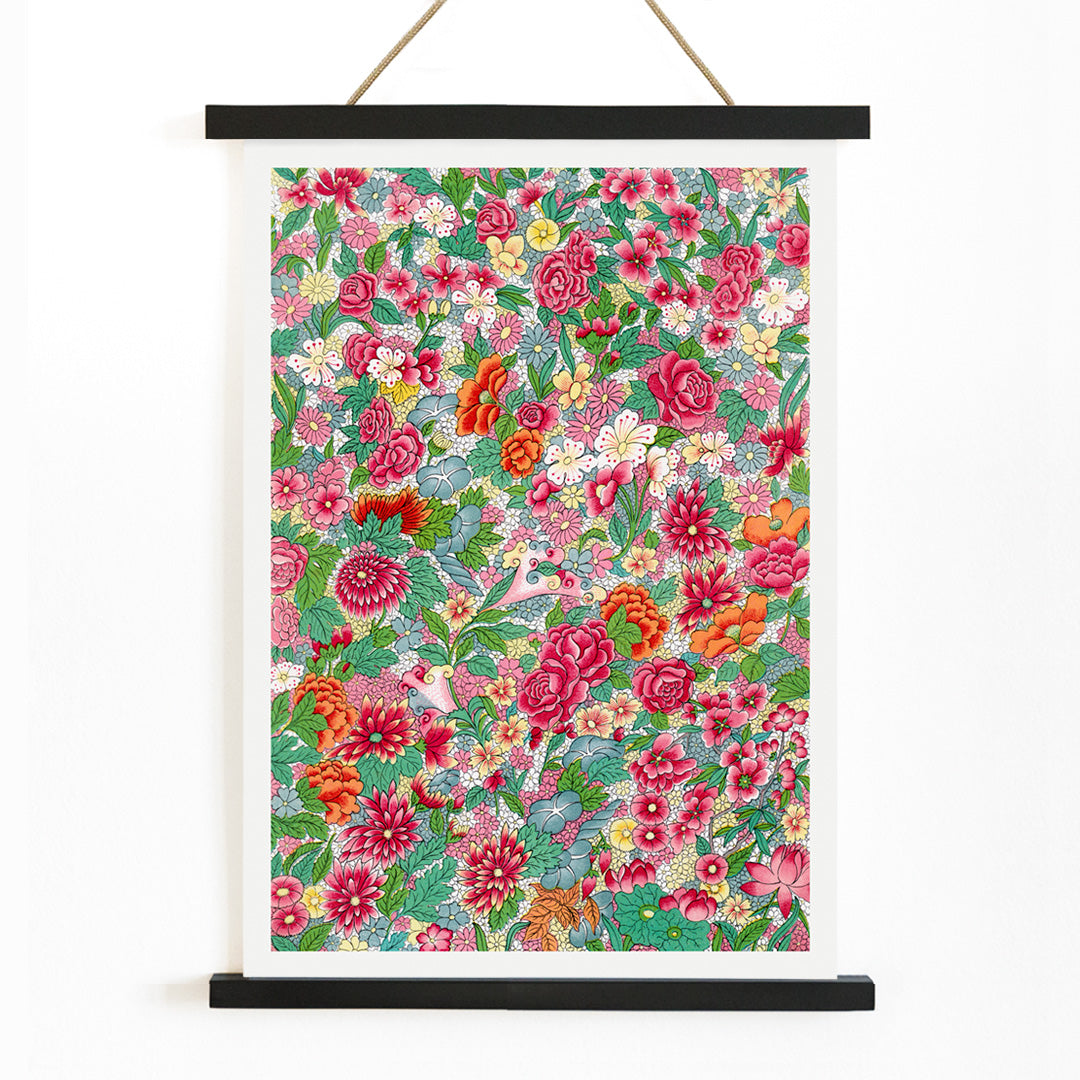
Produced in 1867, this floral pattern emerged during a period when British designers sought to elevate everyday objects through artful ornament. The design was intended as a model for wallpapers, textiles, and book covers, reflecting the Victorian belief that good design could enhance daily life and cultivate public taste.
Floral motifs were especially popular, offering a way to bring the order of nature into interior spaces while demonstrating cultural sophistication. This pattern exemplifies the nineteenth-century mission to educate and inspire through exemplary design. Discover more in our botanical prints and classic art collections.
Style & Characteristics
The artwork features a meticulously structured repeat of stylized flowers and foliage, arranged in a harmonious, rhythmic grid. Curving leaves and blossoms interweave to create a surface that feels both architectural and organic, with each element precisely balanced for visual clarity.
The palette is distinctly Victorian, with vivid reds, greens, pinks, yellows, blues, and crisp white accents providing lively contrast. The overall effect is cheerful and sophisticated, offering a sense of cultivated energy that enlivens any space.
In Interior Design
This art print brings a vibrant touch to living rooms, hallways, or dining areas, where its pattern can set a refined yet lively tone. It complements both traditional and contemporary interiors, especially when paired with warm woods, brass accents, or minimalist furnishings that allow the design to stand out.
For a cohesive look, echo select colors from the print in textiles or accessories, while keeping larger surfaces neutral. This piece also pairs beautifully with Arts and Crafts-inspired decor and makes a natural companion to our William Morris collection and other heritage patterns.