


You may also like
-

Colorful flower pattern Poster
Owen Jones · 1867 · Vibrant floral poster with rhythmic Victorian ornament and crisp, repeating symmetry
Poster from £9 · Framed from £16
-

Flower pattern Poster
Owen Jones · 1912 · Refined floral pattern poster with crisp symmetry in red and blue on white
Poster from £9 · Framed from £16
-

Red floral pattern Poster
Owen Jones · 1912 · Ornamental floral poster with white blossoms and scrolling vines on deep red
Poster from £9 · Framed from £16
-

Chinese botanical illustration Poster
Owen Jones · 1897 · Decorative Chinese botanical print with stylized blossoms and balanced ornamental symmetry
Poster from £9 · Framed from £16


-

"Very nice Posters. The quality is amazing and we received it very quickly !"
-

"A shop to visit absolutely. Huge selection of posters. We spent more than an hour there !"
-

"Perfect to find gift. Price are very good. An they can frame and pack it on site"


About the Artist
Owen Jones was a pioneering British architect, designer, and theorist whose influence shaped Victorian approaches to pattern, color, and ornamentation. His seminal work, The Grammar of Ornament, advocated for the study of global decorative traditions and the disciplined application of color theory, leaving a lasting mark on nineteenth-century design education.
Jones’s vision extended beyond books, inspiring generations of designers to blend historical motifs with modern sensibilities. His pattern designs, such as this example, reflect a belief in the power of ornament to elevate everyday life and connect domestic interiors to broader artistic and cultural movements.
The Artwork
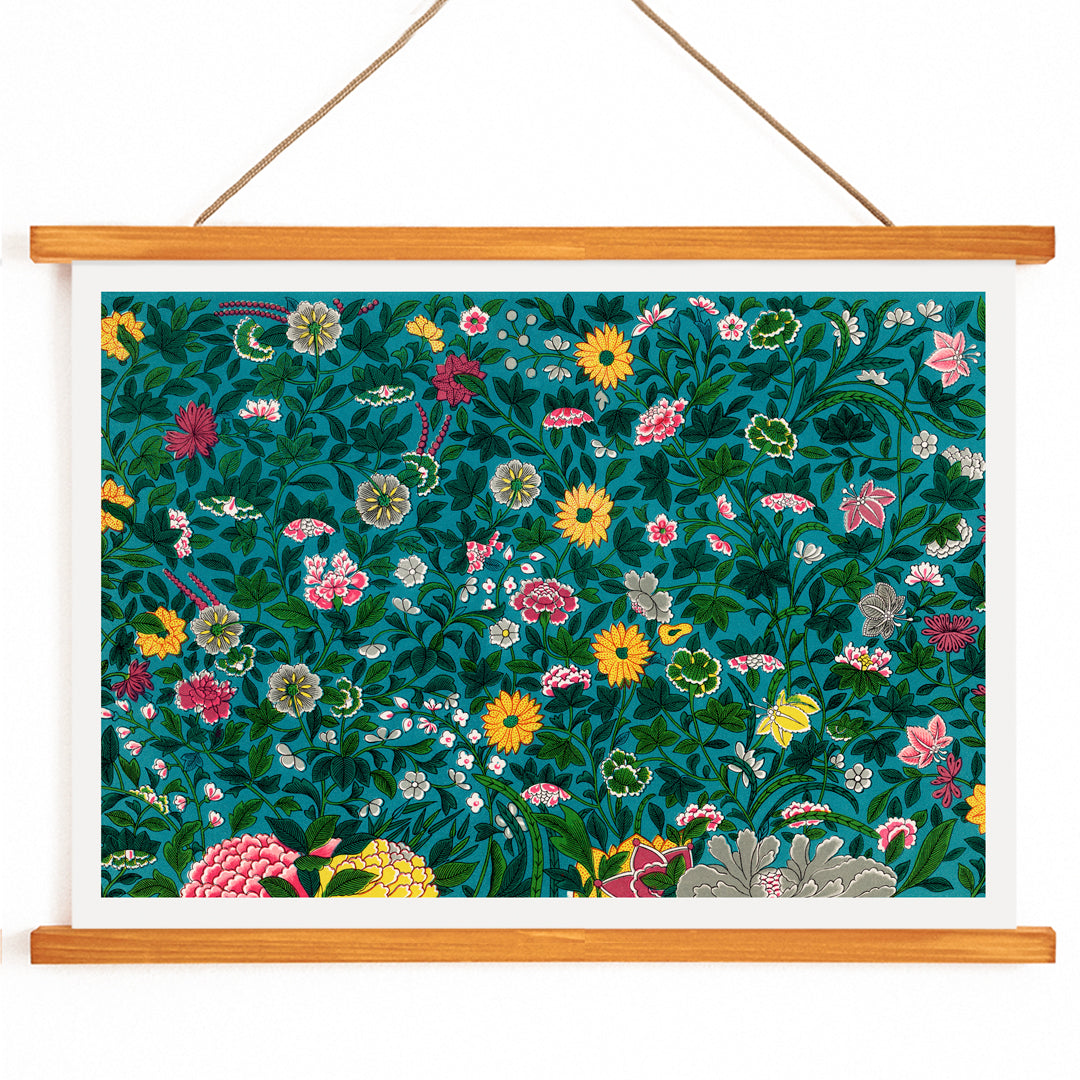
Produced in 1867, this botanical pattern plate emerged during a period of rapid industrialization and design reform in Britain. Such plates were circulated as teaching tools and design references, guiding the creation of wallpapers, textiles, and architectural details for a society eager to balance progress with beauty.
This artwork embodies the Victorian fascination with nature’s order, translating organic forms into a harmonious, repeatable pattern. It served as a model for artisans and manufacturers, illustrating how natural motifs could be adapted for decorative use in the modern home and reflecting the era’s commitment to education and aesthetic refinement. Explore more in our classic art and botanical collections.
Style & Characteristics
The design features interlocking green foliage and stylized floral elements arranged in a seamless, rhythmic repeat. The composition emphasizes symmetry and clarity, with bold outlines and flat areas of color that ensure the pattern remains visually striking both up close and from a distance.
The palette is dominated by deep and mid greens, accented with touches of yellow and soft pink, lending the piece a fresh yet composed atmosphere. The overall effect is one of balance and vitality, characteristic of nineteenth-century ornamental design and well suited to a range of interior styles.
In Interior Design
This vintage botanical print brings a sense of calm energy and organic structure to living rooms, bedrooms, or hallways. Its green tones pair beautifully with natural materials like wood, rattan, and brass, making it versatile for both classic and contemporary interiors.
To enhance its impact, echo the greens with houseplants or ceramics, and introduce cream or blush textiles to highlight the subtle accents. For a curated look, combine it with other nature-inspired pieces from the green tones or botanical collections.