


You may also like
-
Zoologischer Garten Poster
Ludwig Hohlwein · 1912 · Striking Munich zoo poster featuring a bold striped big cat and crisp lettering
Poster from £9 · Framed from £16
Regular price From £6.00Regular price -
Zoologischer Garten Poster
Julius Klinger · 1910 · Elegant flamingo poster with Art Nouveau lettering and airy architectural framing
Poster from £9 · Framed from £16
Regular price From £6.00Regular price -
Le Flammant Poster
Edouard Travies · 1853 · Elegant flamingo vintage print with soft grey water and coral accents
Poster from £9 · Framed from £16
Regular price From £6.00Regular price -
Swing into books Poster
Unknown artist · 1964 · Playful Book Week poster of a reading child swinging from a flamingo
Poster from £9 · Framed from £16
Regular price From £6.00Regular price


-

"Very nice Posters. The quality is amazing and we received it very quickly !"
-

"A shop to visit absolutely. Huge selection of posters. We spent more than an hour there !"
-

"Perfect to find gift. Price are very good. An they can frame and pack it on site"


About the Artist
Ludwig Hohlwein was a leading figure in early twentieth-century German poster art, based in Munich and renowned for his innovative approach to graphic design. His work bridged the clarity of Plakatstil with the emerging trends of modernist reduction, producing instantly recognizable images that have influenced generations of designers. Hohlwein's posters are celebrated for their ability to convey a message with striking simplicity and elegance, making them enduring icons of visual culture.
For more graphic classics from this era, explore our vintage advertising posters and curated classic art selection.
The Artwork
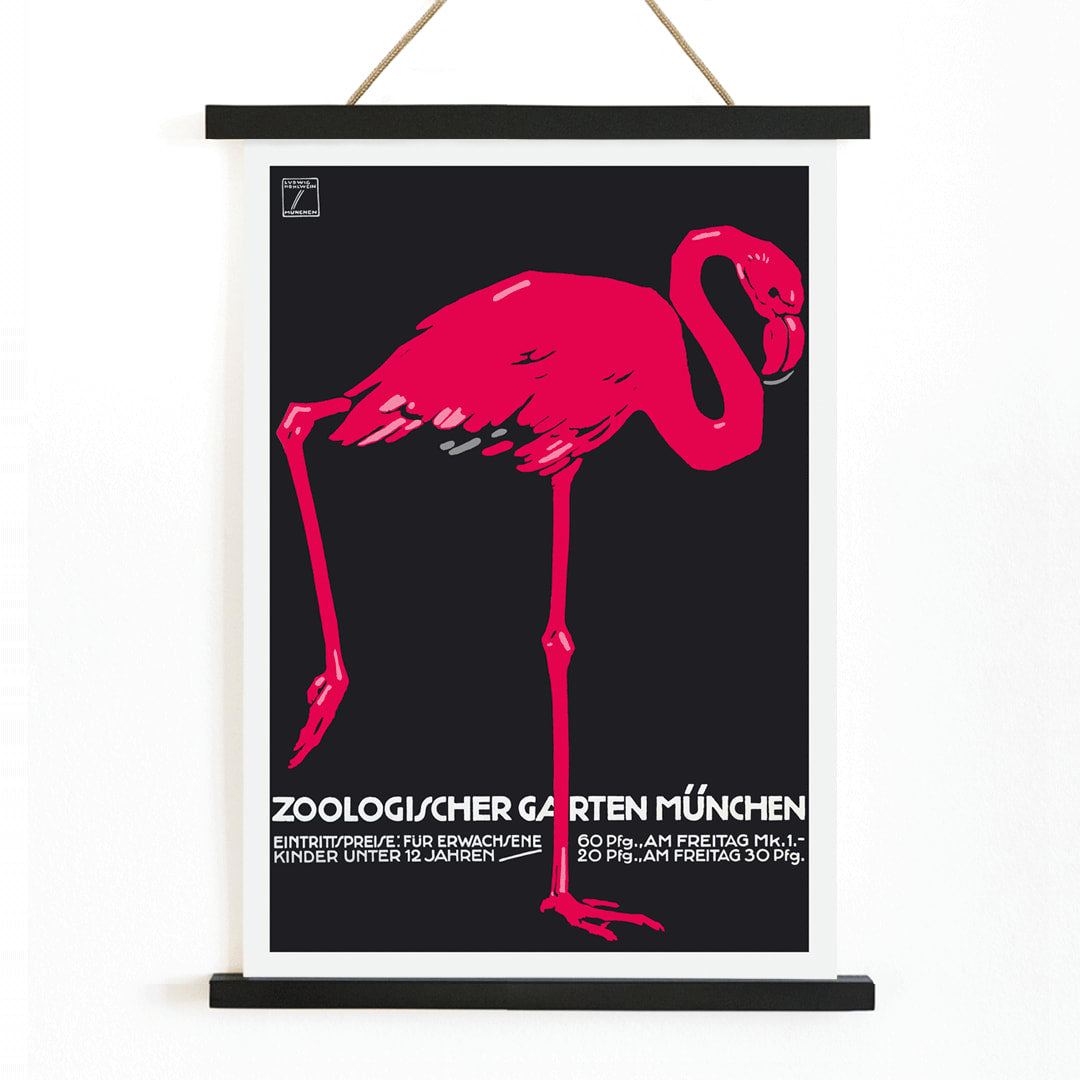
Commissioned in 1930 for the Zoologischer Garten München, this poster reflects a time when urban zoos positioned themselves as centers of education and leisure. The flamingo, chosen for its exotic allure and graceful form, served as a symbol of the zoo’s appeal to a modern audience seeking both entertainment and cultural enrichment. In the context of interwar Germany, such posters played a role in shaping civic identity and promoting public engagement with nature and science.
This vintage zoo poster captures the spirit of an era when bold graphic design was essential for public institutions to reach and inspire a broad audience.
Style & Characteristics
The design features a single flamingo rendered in a vivid pink silhouette against a deep black background, with crisp white text providing contrast and clarity. Hohlwein’s technique emphasizes strong shapes and minimal detail, focusing attention on the elegant curve of the bird’s neck and the striking color contrast. The composition is both modern and timeless, embodying the principles of early twentieth-century poster art with its clean lines and graphic impact.
The overall mood is sophisticated and quietly dramatic, making it a compelling choice for interiors that value bold, uncluttered visuals.
In Interior Design
This flamingo poster serves as a striking focal point in living rooms, hallways, or creative workspaces, especially those with a minimalist or mid-century aesthetic. The black, white, and pink palette integrates seamlessly with monochrome schemes and pairs well with metallic accents or natural wood finishes.
For a cohesive look, consider combining it with other animal wall art or building a color story with curated pink prints for a contemporary, design-forward interior.