


You may also like
-

Das kleine Witzblatt Poster
Julius Klinger · 1901 · Advertising poster as a bold vintage print in black and orange
Poster from £9 · Framed from £16
-

Costüm-Verleih Germania Poster
Julius Klinger · 1909 · Costume rental poster with bold abstract circles and Berlin lettering
Poster from £9 · Framed from £16
-

Hollerbaum und Schmidt Poster
Julius Klinger · 1910 · Spiraling advertising poster with a small suited figure and bold red-blue bands
Poster from £9 · Framed from £16
-

Lustige Blatter Badenummer Poster
Julius Klinger · 1911 · Striped swimsuit poster with Art Nouveau leaves and bathing-number lettering
Poster from £9 · Framed from £16


-

"Very nice Posters. The quality is amazing and we received it very quickly !"
-

"A shop to visit absolutely. Huge selection of posters. We spent more than an hour there !"
-

"Perfect to find gift. Price are very good. An they can frame and pack it on site"


About the Artist
Julius Klinger was an Austrian graphic artist and poster designer active in the early twentieth century, renowned for transforming advertising into a form of decorative art. Working at the intersection of Jugendstil and the emerging modernist poster movement, he was known for his clear silhouettes, bold compositions, and instantly recognizable imagery.
His work played a key role in shaping the visual language of commercial art, blending wit and elegance to create memorable public images. Klinger's posters are now valued by collectors for their strong design sensibility and historical significance within the evolution of graphic art.
The Artwork
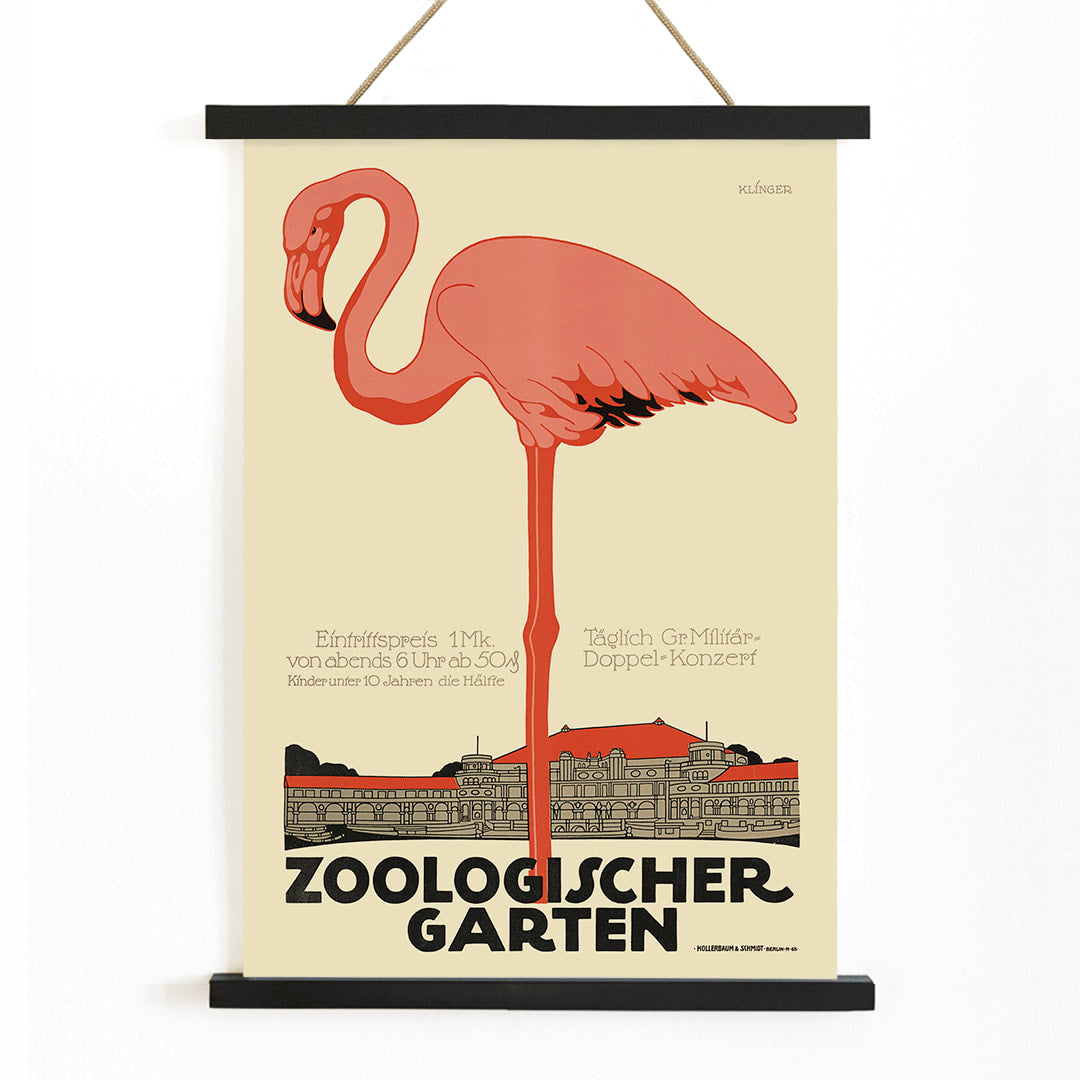
Created during a period when urban zoos symbolized civic progress and cosmopolitan leisure, Zoologischer Garten was designed to promote the zoo as a sophisticated destination. Around 1910, such posters reflected the growing popularity of zoological gardens as places where the public could experience exotic animals and refined architecture within the city.
This artwork served as a promotional piece, elevating the idea of a zoo visit into a fashionable urban outing. As part of early twentieth-century advertising posters, it demonstrates how graphic design shaped perceptions of leisure and modernity in public life.
Style & Characteristics
The poster features a poised flamingo at its center, rendered with the clarity and elegance characteristic of Klinger's best work. Architectural motifs and stylized Art Nouveau lettering frame the bird, ensuring both visual harmony and clear communication.
The color palette combines warm beige and cream backgrounds with striking black, vivid red, and soft pink accents that highlight the flamingo. The use of flat color fields, crisp outlines, and generous negative space creates a calm, sophisticated atmosphere. This refined approach to animal imagery makes it a standout among animal wall art and vintage posters of the era.
In Interior Design
This vintage zoo poster brings a touch of early twentieth-century elegance to living rooms, entryways, studies, or creative workspaces. Its strong lines and balanced composition complement modern, minimalist, or eclectic interiors, and it can also add a whimsical yet refined accent to a child's room.
Pair it with neutral walls, black or red accents, and subtle blush tones in textiles for a cohesive look. A simple mat and slim frame will preserve its crisp design; discover frames that enhance its proportions and vintage appeal.