


You may also like
-

Chest Muscles Poster
Reijer Stolk · 1930 · Crisp anatomical scientific print mapping chest musculature with clean black linework on beige
Poster from £9 · Framed from £16
-

Roman head with helmet Poster
Gerrit Willem Dijsselhof · 1900 · Refined Roman helmet head art print drawn in graphite with sculptural classical calm
Poster from £9 · Framed from £16
-

Glute Muscles Poster
Reijer Jan Stolk · 1930 · Precise anatomical scientific print mapping glute muscles in crisp black line on beige
Poster from £9 · Framed from £16
-

Plaster Hand Poster
Dankvart Dreyer · 1829 · Academic hand study art print with soft shading on warm beige paper
Poster from £9 · Framed from £16


-

"Very nice Posters. The quality is amazing and we received it very quickly !"
-

"A shop to visit absolutely. Huge selection of posters. We spent more than an hour there !"
-

"Perfect to find gift. Price are very good. An they can frame and pack it on site"


About the Artist
Jan Veth (1864–1925) was a Dutch painter, draftsman, and art critic renowned for his insightful portraiture and refined drawing technique. Active during a period of artistic transition in the Netherlands, Veth combined a modern psychological approach with a reverence for classical traditions and academic training.
He was influential in shaping Dutch art discourse and contributed to the revival of drawing as a foundational skill among artists of his generation. His studies often reflect a deep engagement with the art of antiquity and the values of disciplined observation.
The Artwork
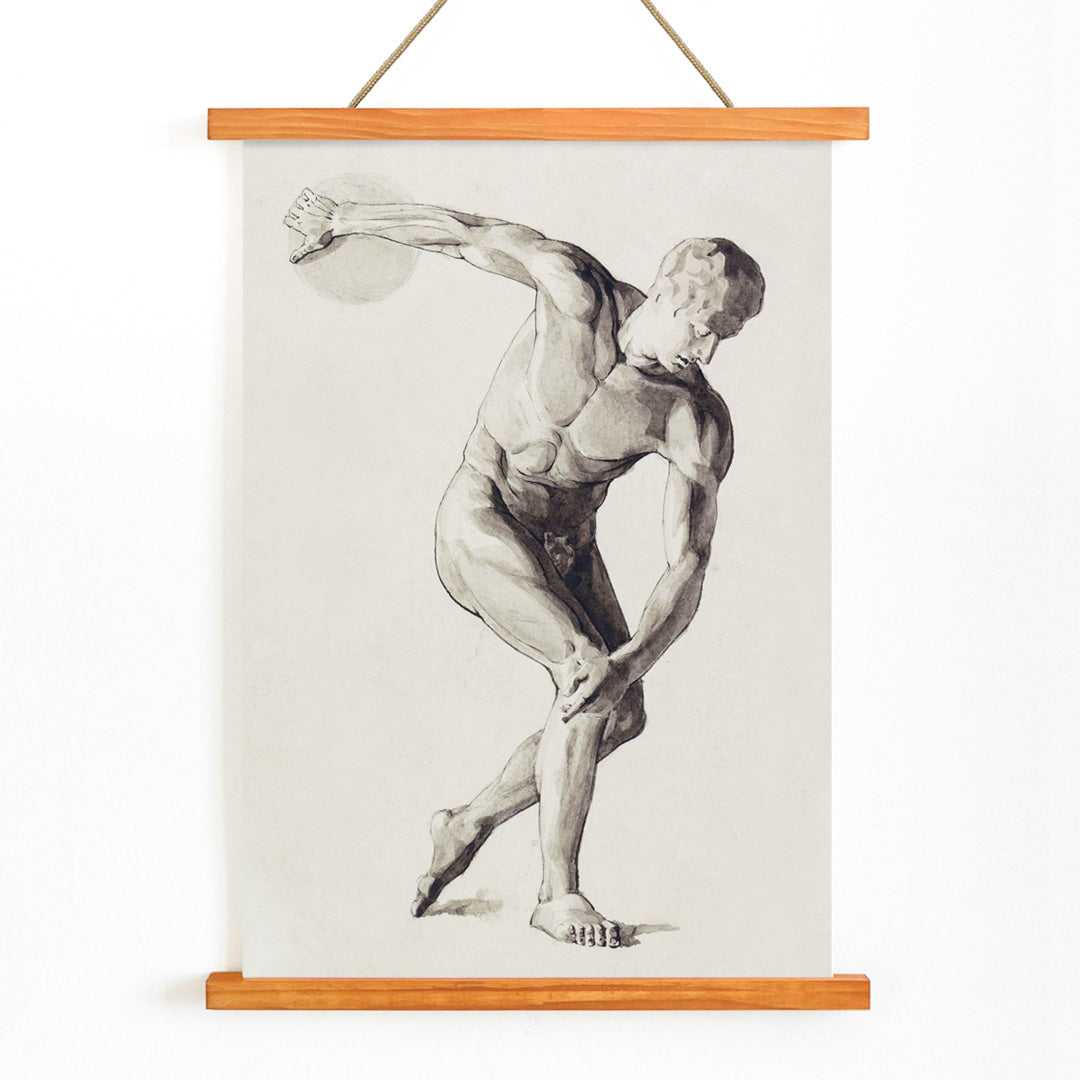
This figure study of a discus thrower draws inspiration from ancient Greek athletics, a subject long admired for its embodiment of idealized human form and disciplined movement. Created in 1912, the work reflects early twentieth-century interest in classical motifs, when artists and academies looked to the past for models of proportion, strength, and grace.
By focusing on the poised moment before the discus is released, Veth transforms a sporting act into a meditation on balance and potential energy. The artwork serves as both homage to classical sculpture and a testament to the enduring relevance of academic drawing in modern art education.
Style & Characteristics
Executed in a restrained monochrome palette, the print uses white paper and subtle grey tones to sculpt the figure with clarity and precision. The composition is defined by generous negative space, allowing the athlete’s form to stand out with calm focus, reminiscent of atelier studies.
Clean contours and carefully graded shading emphasize the anatomy and dynamic tension of the pose, creating a sense of poised energy. The understated finish and graphic quality make it an excellent fit for black and white wall art and for those who appreciate a quiet, contemplative aesthetic. For more inspiration, see grey toned posters and classic art prints.
In Interior Design
This classical art print lends sophistication to a living room, study, or minimalist bedroom, where its focus on form and balance enhances serene interiors. It pairs beautifully with modern, Scandinavian, or Japandi styles, and can also complement traditional settings when framed simply.
Combine it with limestone whites, concrete greys, or black accents for a cohesive look, or soften the effect with warmer neutrals. Its timeless subject matter and elegant execution make it a versatile addition to curated gallery walls.