


You may also like
-

Nihon chikurui zufu Pl.08 Poster
Yasuyoshi Shirasawa · 1912 · Serene bamboo print with fine linework and soft green washes on beige paper
Poster from £9 · Framed from £16
-

Nihon chikurui zufu Pl.11 Poster
Yasuyoshi Shirasawa · 1912 · Japanese bamboo botanical print with slender stalks and airy leaves on cream
Poster from £9 · Framed from £16
-

Collection of leaves Poster
Shirley Hibberd · 1855 · Delicate botanical print presenting varied leaf forms with fine veins on warm ivory paper
Poster from £9 · Framed from £16
-

Bush cane Poster
Pierre-Joseph Redouté · 1805 · Graceful bush cane botanical print with slender leaves and delicate pale blooms
Poster from £9 · Framed from £16


-

"Very nice Posters. The quality is amazing and we received it very quickly !"
-

"A shop to visit absolutely. Huge selection of posters. We spent more than an hour there !"
-

"Perfect to find gift. Price are very good. An they can frame and pack it on site"


About the Artist
Yasuyoshi Shirasawa was a Japanese botanist and illustrator active in the early twentieth century, a period when botanical illustration played a vital role in scientific communication and education. His meticulous approach combined scientific observation with artistic clarity, resulting in works that continue to be valued by both scholars and art enthusiasts.
Shirasawa's legacy lies in his ability to capture botanical detail with both precision and aesthetic restraint. For those interested in the intersection of science and art, explore our science prints and curated botanical wall art collections for more vintage botanical traditions.
The Artwork
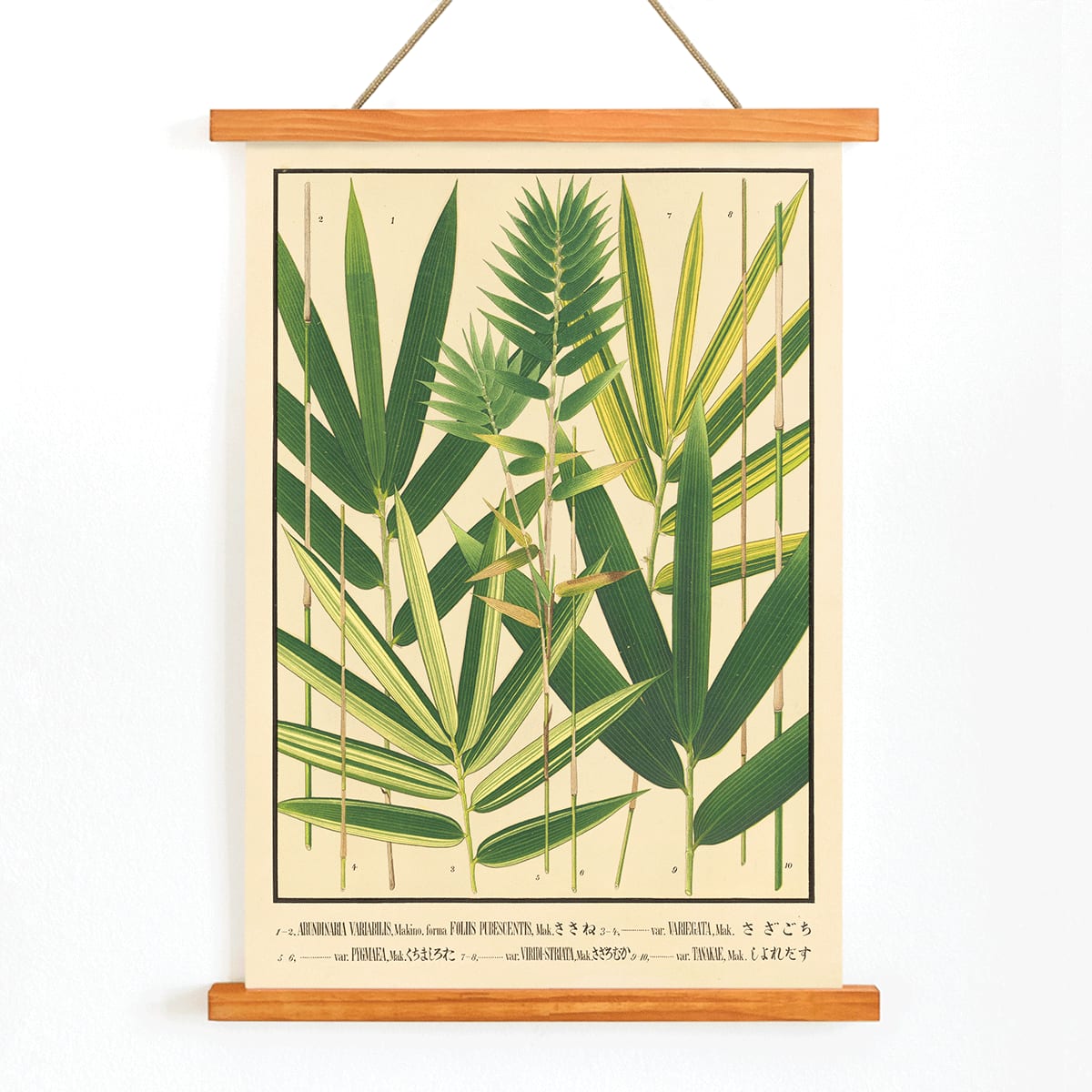
Nihon chikurui zufu is a Japanese botanical compendium dedicated to bamboo, produced during a time when documenting native plant species was essential for the advancement of botany and forestry in Japan. Plate 06 was created to aid in the identification and comparison of bamboo varieties, serving as an educational resource for students, researchers, and horticulturists.
Beyond its scientific function, bamboo holds deep cultural significance in Japan, symbolizing resilience and adaptability. This vintage botanical print reflects both the practical and symbolic roles of bamboo, illustrating how botanical art can bridge scientific inquiry and cultural meaning.
Style & Characteristics
This botanical print features a restrained composition, allowing the bamboo to take center stage. Delicate linework defines the slender stems and elongated leaves, rendered with clarity and balance. The image is set against a pale, paper-like background with subtle beige undertones, enhancing the natural greens of the plant.
The overall mood is tranquil and contemplative, with an emphasis on simplicity and elegance characteristic of Japanese natural history illustration. The print's refined aesthetic makes it versatile for both minimalist and traditional interiors.
In Interior Design
This bamboo botanical print introduces a sense of calm and order to interiors, ideal for living rooms, bedrooms, or serene workspaces. It pairs well with light wood furnishings, linen fabrics, and ceramic accents, and can be displayed alone or within a curated gallery wall.
To create visual harmony, complement the print's greens with indoor plants or muted textiles, and echo the warm paper tones with oak or rattan elements. For a cohesive display, combine it with Japanese and Asian inspired wall art or build a tonal arrangement from our green themed prints.