


You may also like
-

Red Leaves at Yunoyama Onsen Poster
Osaka and Nagoya Rail Agency · 1930 · Stylized autumn travel poster with scarlet maple leaves over a tranquil onsen valley
Poster from £9 · Framed from £16
-

Autumn in Nagoya Poster
Nagoya Tourism Bureau · 1930 · Atmospheric travel poster of Nagoya Castle framed by vivid autumn foliage
Poster from £9 · Framed from £16
-

Lac d’Annecy 2 Poster
François-Charles Cachoud · 1902 · Serene lake poster with a solitary boat and soft Alpine twilight hues
Poster from £9 · Framed from £16
-

New York Central System Poster
Leslie Ragan · 1920 · Art Deco New York harbor poster with a sharp skyline and cool blue green tones
Poster from £9 · Framed from £16


-

"Very nice Posters. The quality is amazing and we received it very quickly !"
-

"A shop to visit absolutely. Huge selection of posters. We spent more than an hour there !"
-

"Perfect to find gift. Price are very good. An they can frame and pack it on site"


About the Artist
Frank Hazell was an American illustrator and graphic artist active in the early twentieth century, a period when commercial posters played a central role in shaping public perceptions of places and institutions. Hazell’s work reflects the era’s emphasis on making destinations memorable through bold, accessible imagery, contributing to the visual culture of American travel and education.
His posters were part of a larger movement that celebrated regional identity and national pride, aligning with the rise of collectible vintage advertising posters that promoted travel, tourism, and civic achievement.
The Artwork
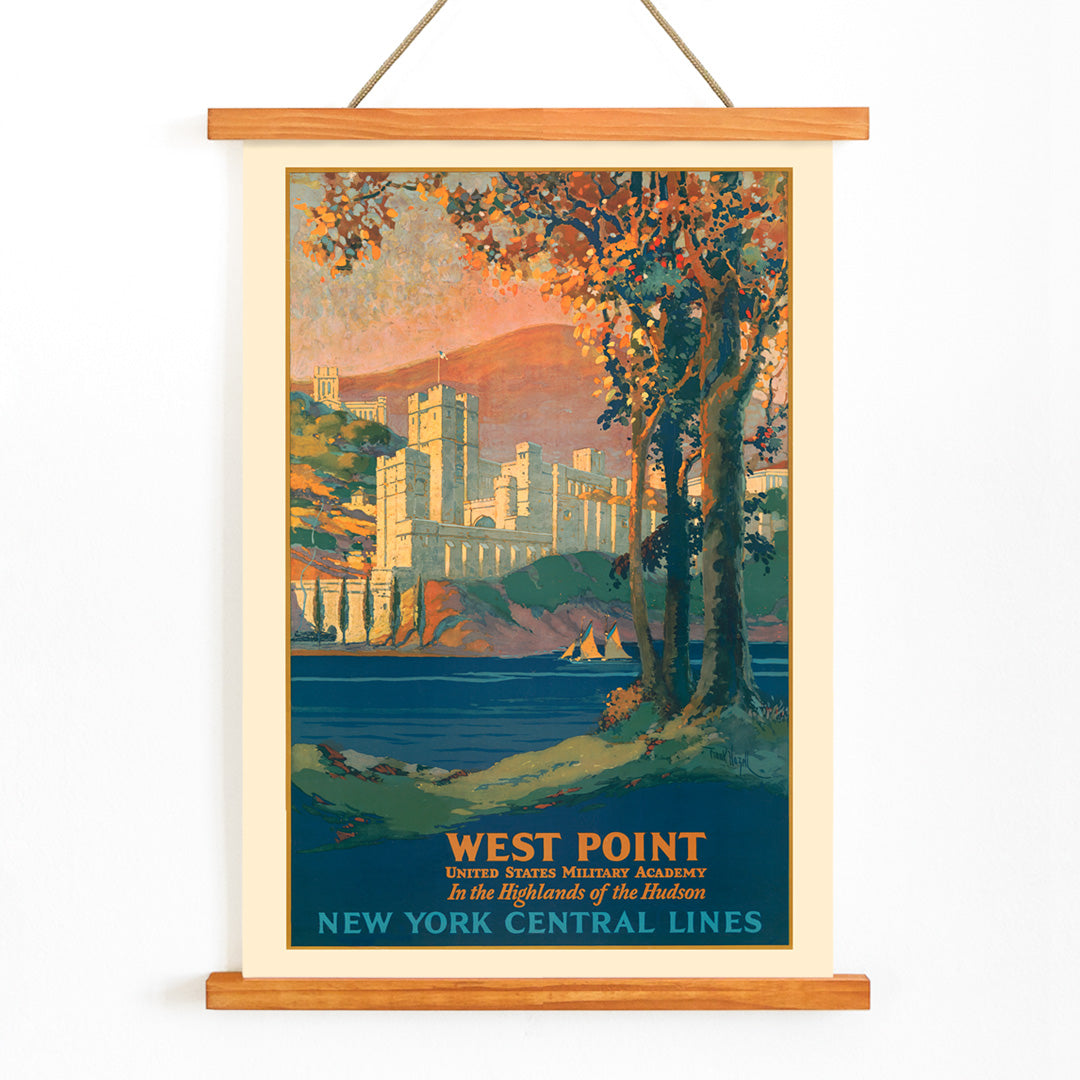
This 1920 poster presents the United States Military Academy at West Point as both a revered institution and a scenic landmark within the Hudson Highlands. Created during a time when American landmarks were being mythologized through print, the artwork was intended to inspire admiration and curiosity among viewers—whether prospective students, alumni, or travelers drawn to the region’s history and landscape.
By depicting West Point in this way, Hazell’s poster contributed to the broader trend of using visual art to foster a sense of national heritage and regional pride, making such sites part of the collective imagination. The print stands alongside other iconic representations of American destinations found in early twentieth-century landscape art.
Style & Characteristics
The poster features simplified architectural forms and bold color blocks, ensuring the buildings and landscape are easily recognizable from a distance. The composition frames the stone structures of West Point with vibrant autumn foliage, creating a dynamic interplay between the built environment and the natural setting of the Hudson River valley.
The color palette combines cool blues of the river and sky with warm oranges, yellows, and greens of the trees, set against the neutral tones of the academy’s stonework. This approach lends the image a crisp, uplifting, and nostalgic mood, characteristic of American travel posters from the era and appealing to those who appreciate blue-toned wall art and regional scenes.
In Interior Design
This West Point poster serves as a striking focal point in studies, offices, entryways, or living rooms, especially in classic or modern traditional interiors. Its clear lines and bold colors allow it to stand out on a gallery wall featuring travel or Americana themes.
The artwork pairs well with warm woods, brass, or leather for a collegiate atmosphere, or can be integrated with neutral textiles and blue accents for a serene, cohesive look. It is well-suited for those who value historic American landmarks and sophisticated, timeless decor.