


You may also like
-

Indian Tamarind Poster
Amanda Almira Newton · 1908 · Delicate tamarind botanical print featuring airy leaves and warm brown pods on cream
Poster from £9 · Framed from £16
-

Prunus Persica Poster
Amanda Almira Newton · 1911 · Delicate peach botanical print with ripening fruit and soft leaves on white ground
Poster from £9 · Framed from £16
-

Pyrus Communis 2 Poster
Amanda Almira Newton · 1908 · Delicate pear botanical print with warm yellow skin, red blush, and crisp leaves
Poster from £9 · Framed from £16
-

Avocado (Persea) Poster
Amanda Almira Newton · 1916 · Detailed avocado botanical print featuring ripe fruit halves and glossy green leaves
Poster from £9 · Framed from £16


-

"Very nice Posters. The quality is amazing and we received it very quickly !"
-

"A shop to visit absolutely. Huge selection of posters. We spent more than an hour there !"
-

"Perfect to find gift. Price are very good. An they can frame and pack it on site"


About the Artist
Amanda Almira Newton was an American botanical illustrator renowned for her contributions to early 20th-century agricultural documentation. Her work supported the efforts of the U.S. Department of Agriculture, providing scientifically accurate illustrations that aided in plant identification and education. Newton's illustrations bridged the gap between scientific necessity and artistic refinement, making her a respected figure among both botanists and art enthusiasts.
Her legacy endures in collections of Amanda Almira Newton prints, where her ability to capture the essence of everyday flora continues to inspire those interested in botanical history and vintage illustration.
The Artwork
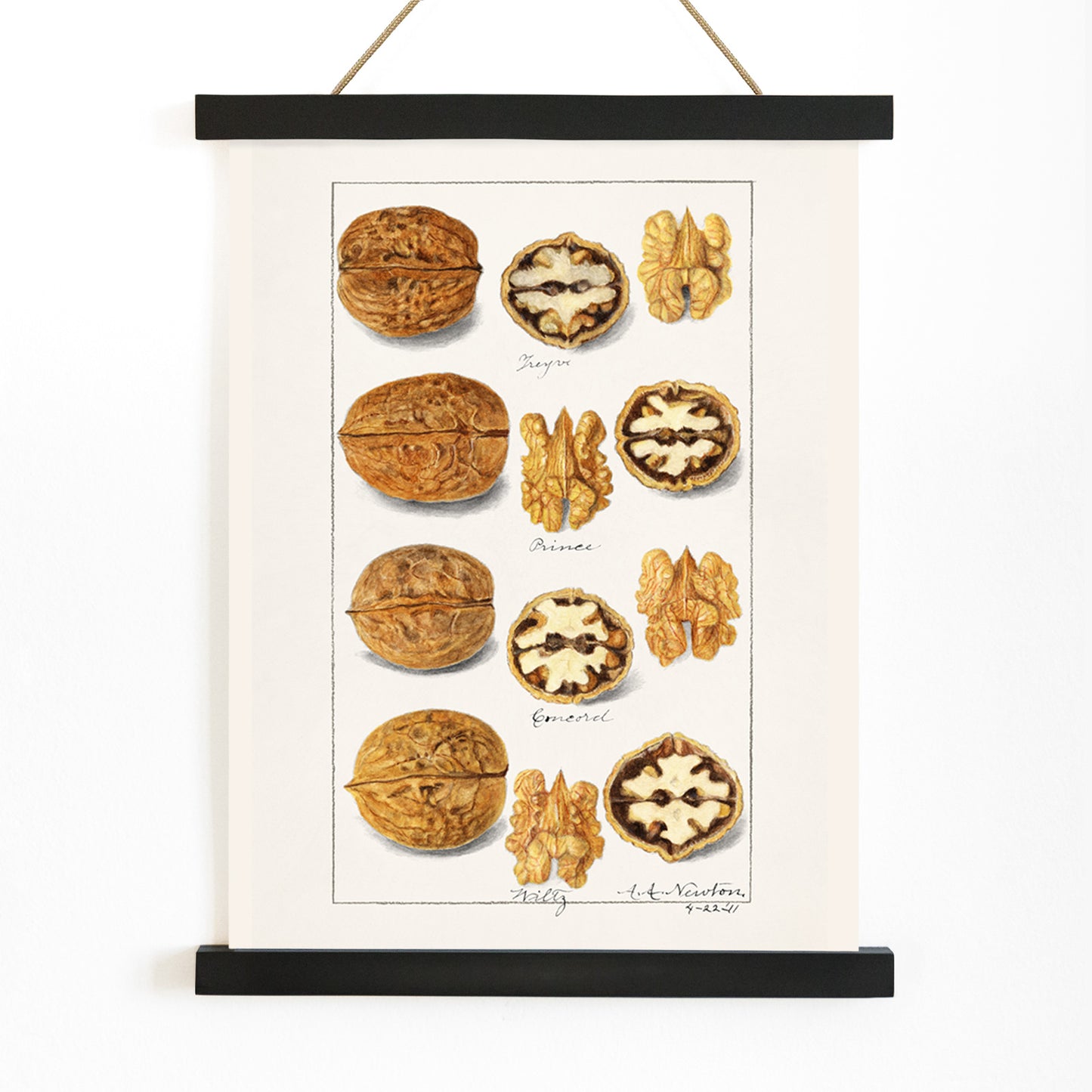
This 1911 study of walnuts was created during a period when botanical illustration played a crucial role in documenting and classifying agricultural varieties. Such works were essential for farmers, horticulturists, and scientists seeking to distinguish between cultivars and understand plant characteristics. The illustration not only served as a reference tool but also reflected the era's appreciation for the natural abundance found in common crops.
By focusing on the walnut—a staple in both kitchen and orchard—Newton's artwork highlights themes of nourishment, seasonal cycles, and the quiet beauty of cultivated plants. The print embodies the early 20th-century drive to bring order and clarity to the natural world through careful observation and record-keeping.
Style & Characteristics
The composition is arranged in the manner of a scientific plate, with whole walnuts, cracked shells, and leafy branches displayed against a pale, uncluttered background. The palette features warm browns, muted greens, and creamy off-whites, emphasizing the natural textures of the nuts and foliage.
Newton's fine linework and subtle shading lend the print a sense of quiet precision, avoiding dramatic flourishes in favor of clarity and calm. The overall mood is gentle and contemplative, making this botanical print appealing to admirers of vintage scientific illustration and botanical posters.
In Interior Design
This walnut print is well suited to kitchens, dining spaces, and home offices where a touch of natural history brings warmth and interest. Its understated palette pairs beautifully with wood, linen, and stone, fitting seamlessly into modern farmhouse, classic, or Scandinavian interiors.
For a harmonious look, combine it with creamy whites, warm browns, and other earth tones, or display it alongside other food-themed art from the kitchen wall decor collection for a curated gallery wall with a botanical focus.