


You may also like
-

Red Lips Poster
Ikko Tanaka · 1972 · High-contrast poster featuring a stylized face and vivid red lips
Poster from £9 · Framed from £16
-

The Actor Kawarazaki Gonjuro Poster
Utagawa Kunisada II · 1864 · Dramatic kabuki actor art print with bold costume patterns and intense gaze
Poster from £9 · Framed from £16
-

Kagekiyo Poster
Torii Kiyotada VII · 1893 · Dramatic kabuki ghost poster featuring a fierce actor portrait and bold theatrical lines
Poster from £9 · Framed from £16
-

Often Playing Roles Poster
Toyohara Kunichika · 1880 · Dramatic kabuki samurai poster with intense gaze, patterned costume, and bold red accents
Poster from £9 · Framed from £16


-

"Very nice Posters. The quality is amazing and we received it very quickly !"
-

"A shop to visit absolutely. Huge selection of posters. We spent more than an hour there !"
-

"Perfect to find gift. Price are very good. An they can frame and pack it on site"


About the Artist
Ikko Tanaka was a landmark figure in postwar Japanese graphic design, renowned for fusing international modernism with traditional Japanese aesthetics. His career encompassed posters, branding, and editorial work, where he distilled complex cultural references into striking, memorable symbols. Tanaka’s disciplined approach to typography and his innovative use of negative space have made his work a reference point for collectors of famous artists in graphic design and for those interested in the evolution of modern poster art.
The Artwork
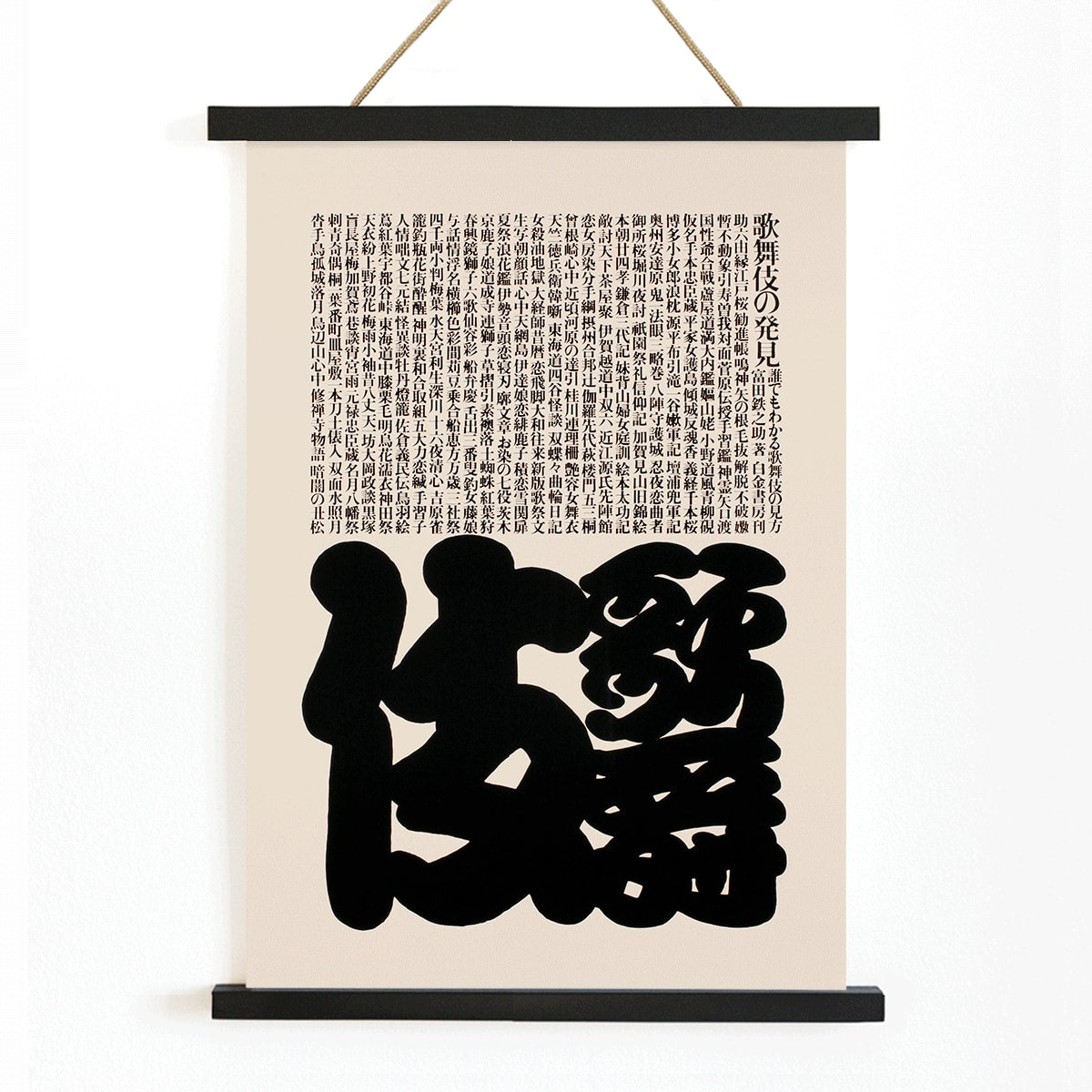
Created in 1974, Tanaka’s Kabuki poster emerged during a period when Japanese design was gaining international recognition. Rather than depicting a theatrical scene, Tanaka abstracted the essence of Kabuki theater into a mask-like form, capturing the spirit of the art through graphic reduction. The poster reflects a broader movement in 1970s Japan to reinterpret cultural heritage through the lens of contemporary design, making traditional motifs accessible to a global audience.
Style & Characteristics
The poster is defined by its minimalism: bold black shapes and stylized typography are set against a warm beige background. The composition is carefully balanced, with the negative space playing an active role in the design. The mask motif is rendered in a way that feels both modern and timeless, while the overall effect is dramatic yet restrained. This aesthetic aligns with minimalist posters and black and white prints, offering a visually arresting statement that remains understated.
In Interior Design
This vintage poster serves as a striking focal point in contemporary interiors, especially when paired with pale woods, black frames, or neutral textures. Its graphic clarity makes it suitable for modern living rooms, entryways, or offices. The design also complements collections of Japanese and Oriental wall art, particularly in serene spaces that echo its beige and black palette.