


You may also like
-

Mount Sabine Poster
Charles Hamilton Smith · 1830 · Dramatic polar seascape vintage print featuring a sailing ship drifting between towering ice
Poster from £9 · Framed from £16
-

Friendly Cove Poster
Charles Hamilton Smith · 1830 · Serene coastal art print with anchored sailboats, wooded hills, and soft sea light
Poster from £9 · Framed from £16
-

Portage in Hoarfrost River Poster
Charles Hamilton Smith · 1830 · Serene river landscape poster with hoarfrost haze and rugged cliffs
Poster from £9 · Framed from £16
-

Quintel do Brula Poster
Charles Hamilton Smith · 1835 · Peaceful pastoral art print with sunlit fields, farmhouse silhouettes, and open blue sky
Poster from £9 · Framed from £16


-

"Very nice Posters. The quality is amazing and we received it very quickly !"
-

"A shop to visit absolutely. Huge selection of posters. We spent more than an hour there !"
-

"Perfect to find gift. Price are very good. An they can frame and pack it on site"


About the Artist
Charles Hamilton Smith was a British artist and naturalist active in the early 19th century, recognized for his ability to combine scientific observation with artistic sensitivity. His work often bridged the gap between exploration and education, making distant or unfamiliar landscapes accessible to a curious public. Smith contributed to the era’s fascination with travel and discovery, producing images that documented both the known and the mysterious corners of the world. This approach placed him among the notable creators of classic art prints that captured the spirit of their time.
His illustrations remain valued for their balance of accuracy and atmosphere, appealing to collectors interested in the history of exploration and natural history.
The Artwork
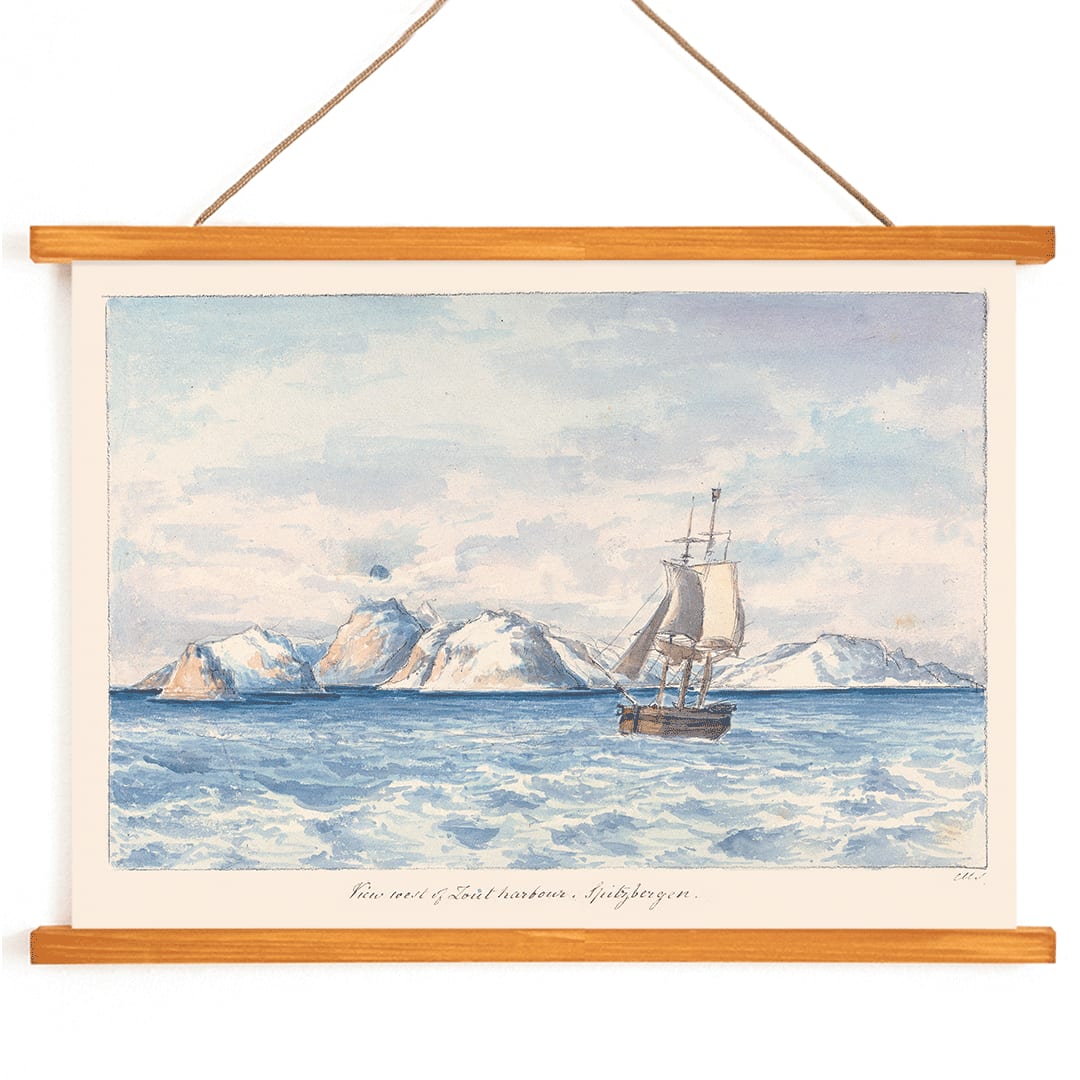
This 1830 depiction of Lout Harbour reflects the period’s growing interest in Arctic exploration and maritime navigation. Created during a time when polar expeditions were widely reported and discussed, the artwork served as both a visual record and an imaginative entry point into the remote northern world. Such images helped satisfy public curiosity about uncharted territories, offering a glimpse into the challenges and allure of high-latitude travel. The scene invites viewers to consider the isolation and adventure faced by sailors venturing into icy waters.
It naturally complements other works in the sea and ocean wall art collection, which celebrate the enduring fascination with maritime journeys.
Style & Characteristics
The composition centers on a tranquil expanse of water, leading the eye toward dramatic, snow-capped mountains that dominate the background. A single sailboat glides across the surface, emphasizing the scale and solitude of the Arctic environment. The color palette is cool and understated, featuring whites, pale blues, and muted browns set against the natural beige of the paper. Fine linework and gentle washes lend the scene a delicate, almost ethereal quality, while the overall mood remains calm and contemplative.
This restrained approach gives the print a timeless elegance, making it a subtle yet striking example of 19th-century maritime art.
In Interior Design
This artwork brings a sense of quiet focus to living rooms, studies, or bedrooms, especially when used as a vintage Arctic seascape poster in a coastal or minimalist setting. Its cool tones pair well with light woods, linen fabrics, and soft metallic accents, fitting both modern and traditional interiors. To echo its palette, consider slate blue or sandy beige accessories for a harmonious look. The piece also works beautifully alongside other blue tone prints to create a serene, cohesive gallery wall.