


You may also like
-

Irises Poster
Vincent van Gogh · 1890 · Expressive iris art print with swirling brushwork and bold blue blooms
Poster from £9 · Framed from £16
-

Portrait of Joseph Roulin Poster
Vincent van Gogh · 1889 · Expressive portrait poster of Joseph Roulin with bold brushwork and floral backdrop
Poster from £9 · Framed from £16
-

Self-Portrait Poster
Vincent van Gogh · 1887 · Vivid self-portrait art print with swirling blue background and striking orange beard
Poster from £9 · Framed from £16
-

A world of flowers Poster
Unknown artist · 1964 · Cheerful floral poster combining bold petals and leafy shapes in sunny mid-century style
Poster from £9 · Framed from £16


-

"Very nice Posters. The quality is amazing and we received it very quickly !"
-

"A shop to visit absolutely. Huge selection of posters. We spent more than an hour there !"
-

"Perfect to find gift. Price are very good. An they can frame and pack it on site"


About the Artist
Vincent van Gogh was a Dutch Post-Impressionist painter whose expressive use of color and brushwork transformed the art world. In the final years of his life, Van Gogh often turned to still life subjects, especially flowers, as a means of exploring emotional renewal and the cycles of nature. His floral paintings, including his celebrated studies of roses, are now considered central to the story of modern art and are often sought after by those beginning a collection of famous artists or seeking a connection to art history.
Van Gogh’s floral works reflect his desire to find solace and hope in the everyday, and they continue to resonate with viewers who appreciate both beauty and depth.
The Artwork
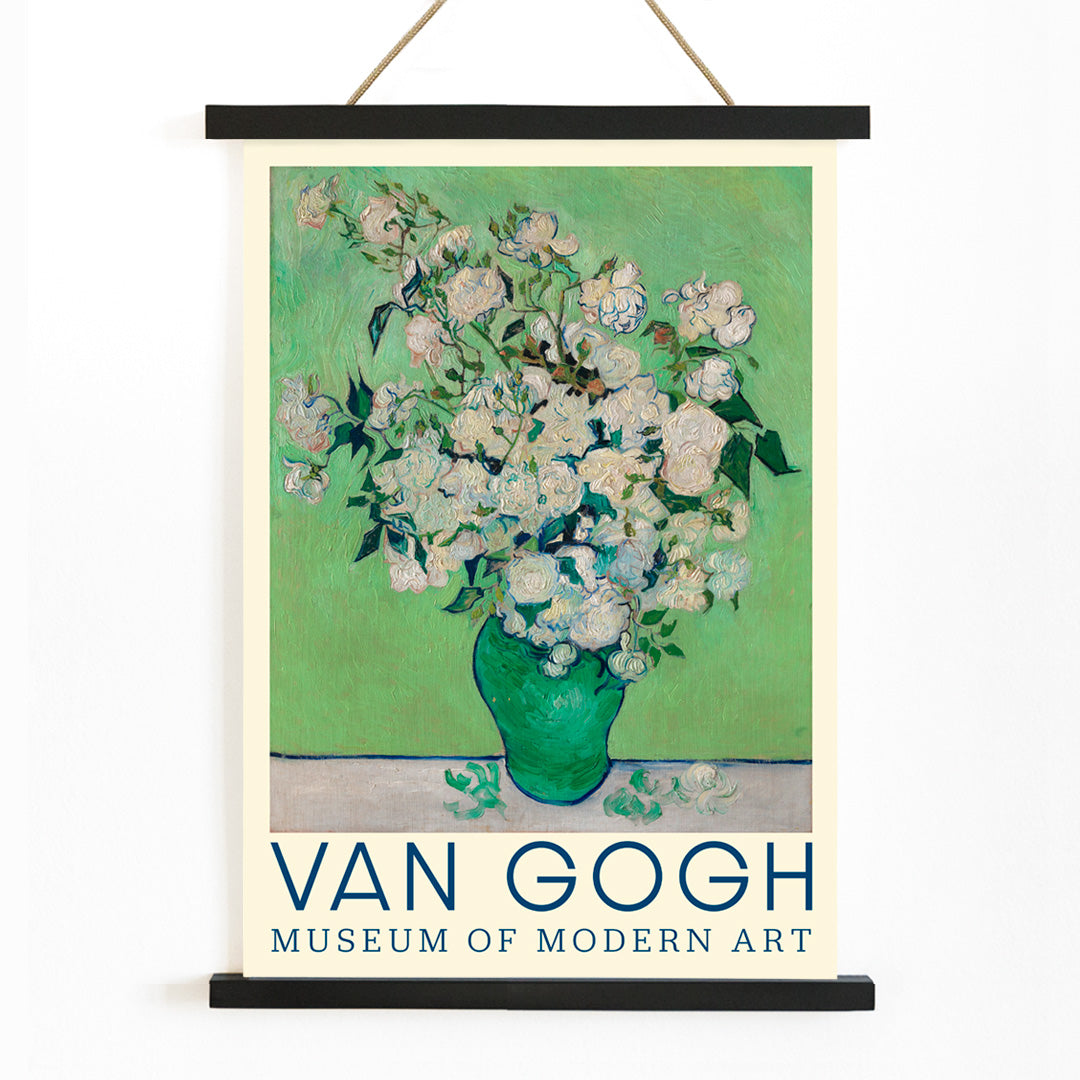
Painted during Van Gogh’s last spring in 1890, Roses captures a moment of quiet optimism as he immersed himself in the gardens of Auvers-sur-Oise. For Van Gogh, still lifes like this were a meditative practice, offering a way to focus his thoughts and observe the fleeting beauty of nature. The bouquet of roses, freshly cut and arranged, symbolizes renewal and the simple joys that sustained him during a period of personal recovery.
This artwork stands as a testament to Van Gogh’s enduring fascination with the natural world and his ability to find meaning in everyday subjects, inviting viewers to pause and reflect on the gentle rhythms of life.
Style & Characteristics
The composition features a lush bouquet of pale white roses, densely clustered in a vase and surrounded by abundant green leaves. Van Gogh’s signature brushwork is bold and textured, with swirling, energetic strokes that give the flowers and foliage a sense of movement and vitality. The background is rendered in cool blue-green tones, enhancing the fresh, tranquil atmosphere of the scene.
The palette is dominated by soft greens and whites, with subtle blue highlights that evoke a springtime mood. This harmonious blend of colors makes the print especially well-suited for interiors featuring white and green accents.
In Interior Design
This Roses art print brings a sense of calm and natural elegance to living rooms, bedrooms, or entryways, particularly where gentle light can highlight its airy tones. It pairs beautifully with light wood furnishings, linen fabrics, and simple ceramics, bridging traditional and contemporary styles. For a curated gallery wall, it complements other classic art and refined botanical prints.
The artwork’s serene color scheme enhances sage, cream, and muted blue palettes, making it an ideal choice for those seeking timeless decorative art with a museum-quality presence.