


You may also like
-

Strawberry chromolithograph Poster
Abraham Jacobus Wendel · 1879 · Vivid strawberry print with crisp botanical detail and ripe fruit presence
Poster from £9 · Framed from £16
-

Citrus Limonium Poster
Charles Dessalines D Orbigny · 1849 · Detailed lemon botanical print with fruit, blossoms, and glossy leaves on cream
Poster from £9 · Framed from £16
-

Citrus Poster
Pierre-Joseph Redouté · 1810 · Delicate citrus botanical print with ripening fruit, blossoms, and glossy leaves on cream
Poster from £9 · Framed from £16
-

Fragaria Poster
Amanda Almira Newton · 1912 · Detailed strawberry botanical print with ripe fruit and leafy stems on white
Poster from £9 · Framed from £16


-

"Very nice Posters. The quality is amazing and we received it very quickly !"
-

"A shop to visit absolutely. Huge selection of posters. We spent more than an hour there !"
-

"Perfect to find gift. Price are very good. An they can frame and pack it on site"


About the Artist
Abraham Jacobus Wendel was a prominent botanical illustrator of the late nineteenth century, a period when scientific illustration played a vital role in horticultural education and publishing. His detailed chromolithographs were valued by botanists, gardeners, and collectors, bridging the worlds of scientific study and decorative art. Wendel’s work reflects the era’s fascination with cataloguing plant life and sharing knowledge through beautifully rendered images.
His illustrations, known for their clarity and accuracy, contributed to the growing popularity of botanical prints in domestic interiors. If you appreciate the intersection of art and science, explore our science art prints for more vintage botanical plates.
The Artwork
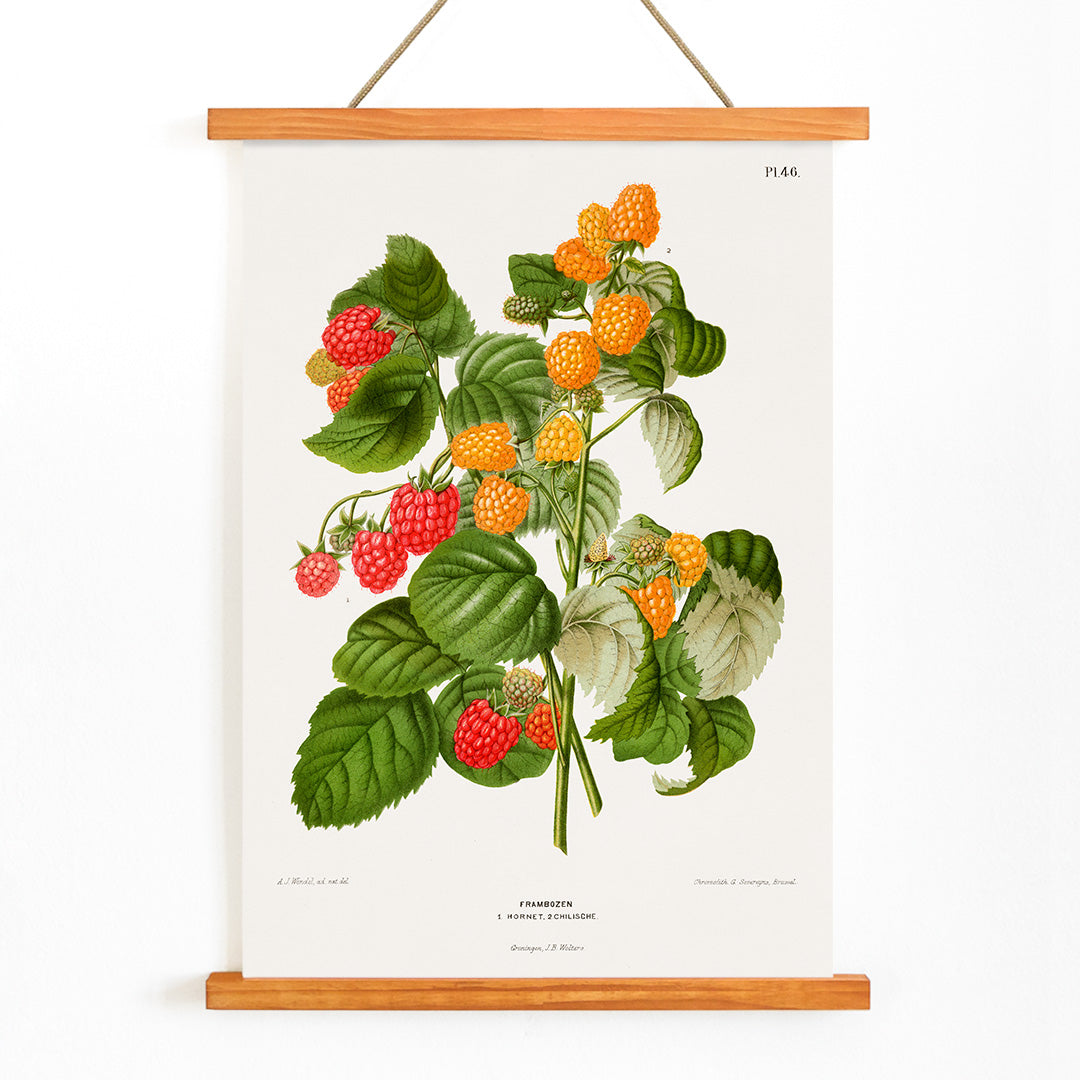
This 1879 raspberry chromolithograph was created during a time when fruit cultivation and home gardening were flourishing across Europe. Such illustrations were not only practical references for identifying plant varieties but also educational tools in botanical studies and horticultural guides. The raspberry, a familiar and beloved fruit, is depicted here as both a symbol of seasonal abundance and a subject of scientific interest.
By presenting the raspberry in this way, the print captures the spirit of nineteenth-century enthusiasm for nature and the desire to bring elements of the garden into everyday life. For more plant-themed imagery, visit our botanical prints collection.
Style & Characteristics
The artwork features a central raspberry cane with clusters of ripe red berries and serrated green leaves, set against a clean, pale background. The chromolithographic technique allows for subtle gradations of color, giving the fruit a sense of volume and the foliage a crisp, lifelike texture.
Vivid reds and fresh greens dominate the composition, accented by touches of yellow and orange that highlight the natural ripeness of the berries. The overall effect is precise yet inviting, blending scientific accuracy with an appealing, decorative quality suitable for display in any setting.
In Interior Design
This vintage print introduces a gentle botanical touch to interiors, especially in spaces where food and gathering are central, such as kitchens, dining rooms, or breakfast nooks. It also complements home offices or studies for those who appreciate botanical illustration.
Pair it with light wood furnishings, stone surfaces, or muted green textiles to echo the natural palette. For a curated display, combine it with other fruit or herb prints from our kitchen posters collection for a harmonious, relaxed arrangement.