


You may also like
-

Rose-hill Parakeet Poster
Elizabeth Gould · 1825 · Detailed parakeet print with bright plumage perched on delicate branches
Poster from £9 · Framed from £16
-

Two parakeets Poster
Oliver Goldsmith · 1774 · Two parakeets vintage print with vivid green plumage and delicate natural history detail
Poster from £9 · Framed from £16
-

Euphema Splendida Poster
Unknown artist · 1848 · Detailed parakeet print with three birds perched among leafy branches
Poster from £9 · Framed from £16
-

Pardalotus Xanthopygius Poster
Unknown artist · 1838 · Delicate pardalote print with three birds perched on eucalyptus branches in soft natural tones
Poster from £9 · Framed from £16


-

"Very nice Posters. The quality is amazing and we received it very quickly !"
-

"A shop to visit absolutely. Huge selection of posters. We spent more than an hour there !"
-

"Perfect to find gift. Price are very good. An they can frame and pack it on site"


About the Artist
By an unknown artist, this 1873 bird plate exemplifies the Victorian era's fascination with cataloguing the natural world. During this period, ornithological illustrations played a crucial role in scientific education, as explorers and naturalists documented species from distant continents. Such plates were often commissioned for encyclopedic works, serving both as reference material and as objects of aesthetic appreciation in European homes and libraries.
Today, this print stands as a testament to the intersection of art and science in the 19th century, reflecting the meticulous standards of draughtsmanship and the period’s enthusiasm for global discovery. It pairs naturally with other scientific illustration prints and curated selections of nature art from the same era.
The Artwork
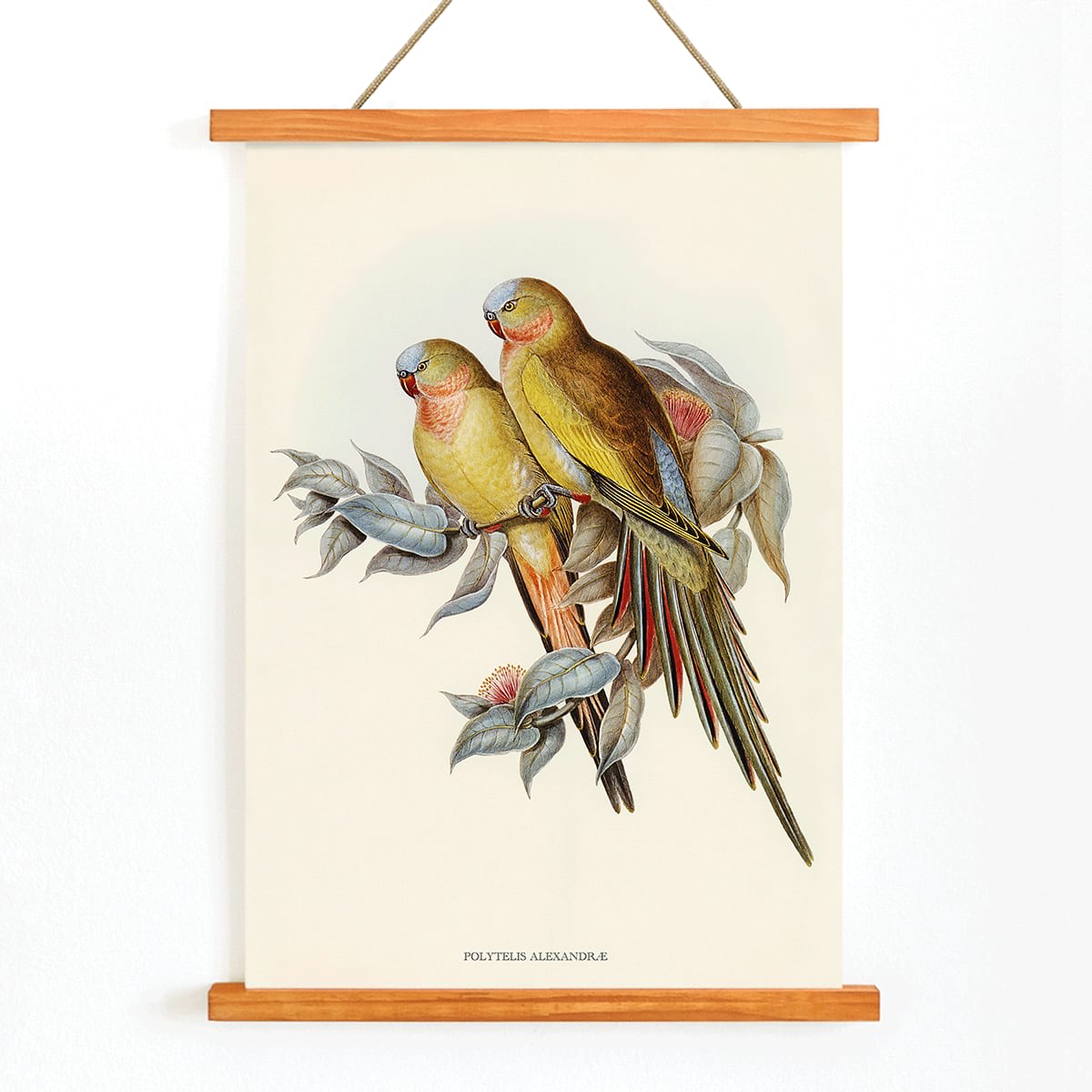
Polytelis alexandrae, the Princess Parrot, is depicted here during a time when European interest in Australian wildlife was at its peak. Expeditions to Australia brought back vivid accounts and specimens, which artists then translated into detailed plates for scientific study. This image was intended to help readers identify the species, providing visual cues for plumage, posture, and anatomy before the advent of color photography.
The inclusion of the Latin name situates the bird within the scientific taxonomy of its day, while the composition underscores the parrot’s exotic origins and the allure of distant landscapes. As a vintage parakeet print, it reflects the prestige associated with natural history collections and the era’s broader fascination with avian diversity.
Style & Characteristics
The artwork features two long-tailed parakeets perched on a slender branch, rendered with precise outlines and delicate, hand-applied color. The birds’ plumage is dominated by fresh greens, complemented by touches of rose pink and soft yellow, while the branch is depicted in muted browns. The background remains uncluttered, allowing the viewer to focus on the birds’ elegant forms and subtle feather details.
The overall mood is calm and attentive, characteristic of 19th-century ornithological illustration. This antique bird print balances scientific clarity with decorative appeal, making it especially attractive for admirers of vintage animal wall art.
In Interior Design
This refined art print lends a touch of natural history sophistication to studies, hallways, or living rooms. Its open composition and gentle palette suit both contemporary and traditional interiors, including Scandinavian-inspired and eclectic gallery walls.
For harmonious styling, consider pairing it with wooden frames and textiles in sage, olive, or muted gold. It also complements botanical wall art and other vintage nature prints, offering timeless charm for collectors and design enthusiasts alike.