


You may also like
-
Pyrus Communis 2 Poster
Amanda Almira Newton · 1908 · Delicate pear botanical print with warm yellow skin, red blush, and crisp leaves
Poster from £9 · Framed from £16
Regular price From £6.00Regular price -
Prunus Persica Poster
Amanda Almira Newton · 1911 · Delicate peach botanical print with ripening fruit and soft leaves on white ground
Poster from £9 · Framed from £16
Regular price From £6.00Regular price -
Malus Domestica Poster
Amanda Almira Newton · 1913 · Delicate apple botanical print with whole fruit, leafy stem, and a sliced cross section
Poster from £9 · Framed from £16
Regular price From £6.00Regular price -
Lemons (Citrus Limon) Poster
Ellen Isham Schutt · 1908 · Luminous lemon botanical print with crisp fruit forms and fresh green foliage
Poster from £9 · Framed from £16
Regular price From £6.00Regular price


-

"Very nice Posters. The quality is amazing and we received it very quickly !"
-

"A shop to visit absolutely. Huge selection of posters. We spent more than an hour there !"
-

"Perfect to find gift. Price are very good. An they can frame and pack it on site"


About the Artist
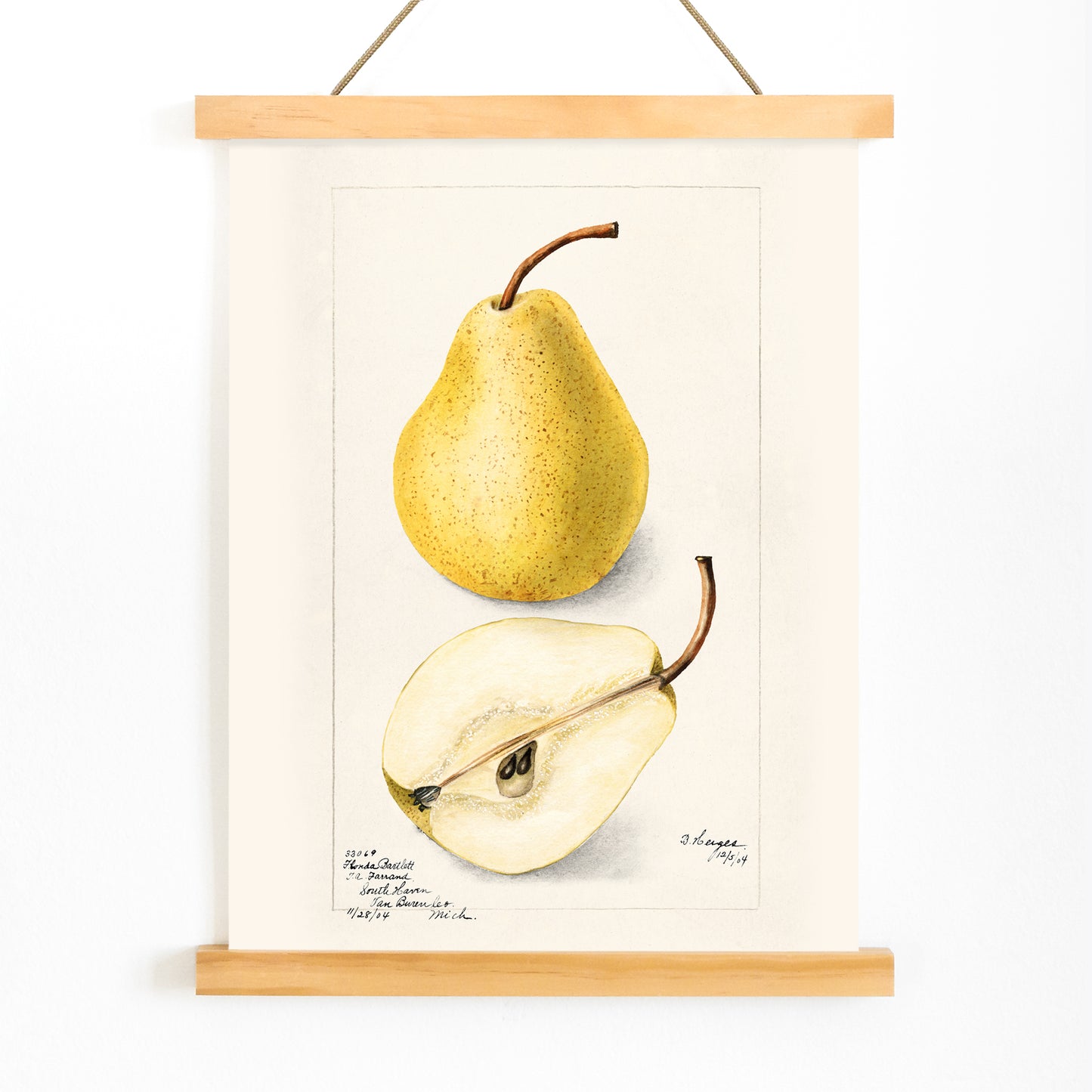
Bertha Heiges is credited for this 1904 botanical illustration of Pyrus communis, created during a period when scientific illustration played a vital role in documenting fruit varieties for horticultural and agricultural reference. Heiges contributed to a tradition where art and botanical science worked hand in hand, supporting the growing interest in plant identification and cultivation at the turn of the twentieth century.
Her illustrations are now appreciated as vintage art, valued for their blend of accuracy and quiet beauty that bridges the worlds of natural history and home aesthetics.
The Artwork
Pyrus communis, the European pear, has long been a symbol of orchard culture and seasonal abundance. In 1904, illustrations like this were commissioned for agricultural bulletins and educational portfolios, serving as essential visual guides for growers and students. The artwork reflects a time when botanical prints were both practical tools and objects of admiration, elevating everyday fruits to subjects worthy of close study.
This piece invites viewers to appreciate the pear not just as food, but as part of a broader story of cultivation, regional tradition, and the beauty of the natural world.
Style & Characteristics
The illustration features a cluster of ripe pears with attached green leaves, rendered against a bright, uncluttered background. Delicate outlines and soft, naturalistic shading give the fruit a lifelike presence, while the composition’s clarity ensures each detail is easy to observe.
The palette is dominated by warm yellows and browns in the fruit, complemented by fresh green foliage and subtle neutral tones. This creates a gentle, airy mood typical of classic botanical prints, making the image both inviting and refined.
In Interior Design
This vintage botanical print is ideal for kitchens, dining spaces, and breakfast nooks, where its orchard theme enhances a sense of warmth and hospitality. It pairs beautifully with kitchen wall art and other botanical prints for a harmonious display.
In both modern and rustic interiors, the natural fruit tones complement cream walls, light woods, and linen or ceramic accents. For a cohesive palette, combine it with pieces from the yellow toned posters collection or other soft, earthy decor.