


You may also like
-

Harp Patent Poster
G.B. Durkee · 1890 · Crisp harp vintage print featuring precise patent diagrams and elegant archival typography
Poster from £9 · Framed from £16
-

Turntable Patent Poster
Robert M. Like · 1977 · Technical turntable patent poster with labeled diagrams and clean black linework
Poster from £9 · Framed from £16
-

Cassette Player Patent Poster
Sujanani · 1985 · Crisp cassette player patent poster with precise black linework on warm beige background
Poster from £9 · Framed from £16
-

Audio Tape Patent Poster
US Patents · 1969 · Cassette tape vintage print featuring precise technical diagrams and labeled components
Poster from £9 · Framed from £16


-

"Very nice Posters. The quality is amazing and we received it very quickly !"
-

"A shop to visit absolutely. Huge selection of posters. We spent more than an hour there !"
-

"Perfect to find gift. Price are very good. An they can frame and pack it on site"


About the Artist
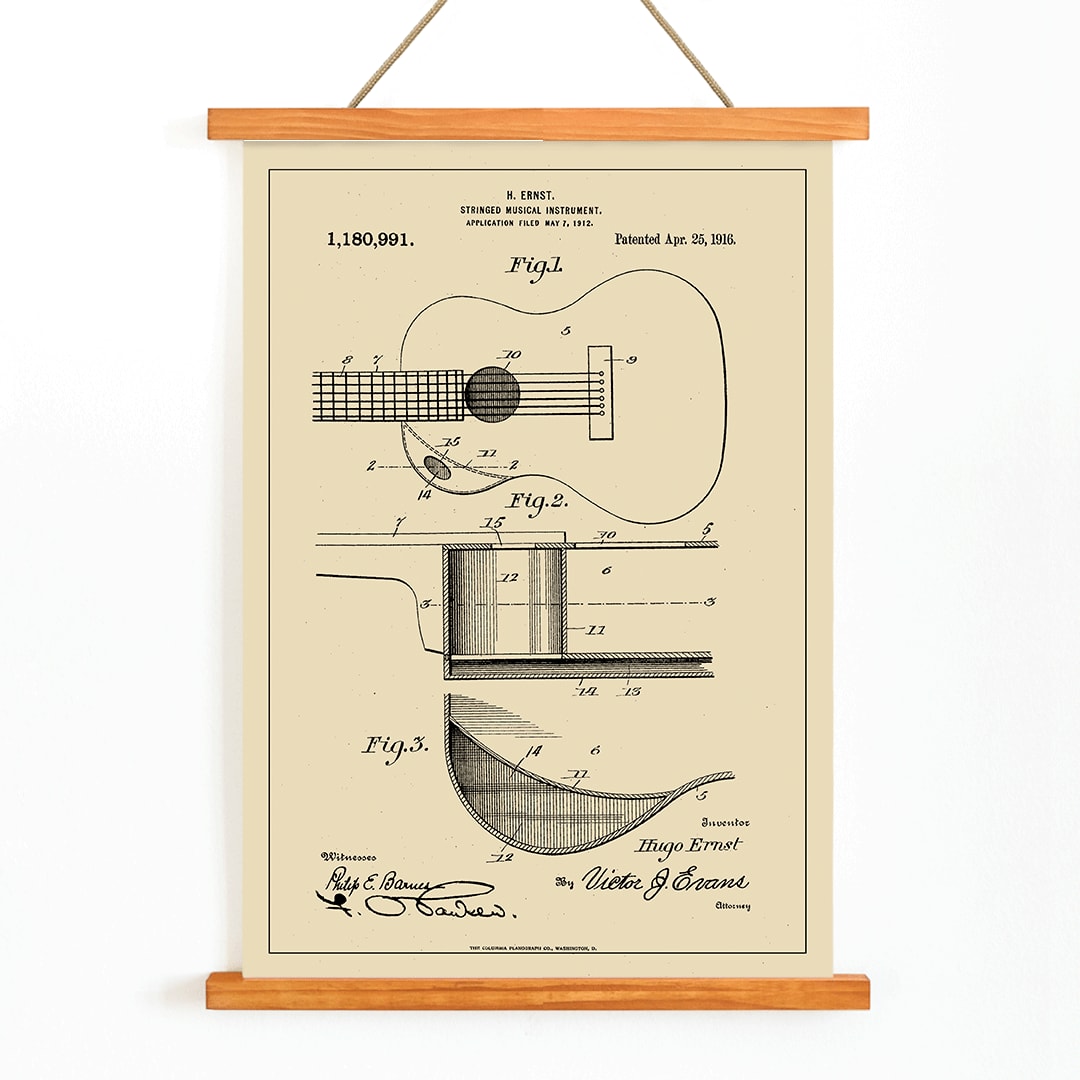
H. Ernst is credited as the drafter of this 1916 musical instrument patent plate, exemplifying the era when engineering precision merged with graphic clarity. Patent illustrators like Ernst played a crucial role in visually communicating new inventions, ensuring that each detail was clear for patent examiners and manufacturers alike.
Today, these technical documents are appreciated not only for their historical significance but also for their artistry, bridging the worlds of industrial design and visual culture. They attract collectors interested in music themed posters and prints and those who value the understated elegance of early twentieth-century technical art.
The Artwork
This patent print captures a pivotal moment in the evolution of musical instruments, when innovation was formally documented to protect inventors' rights during a period of rapid industrial and cultural change. The artwork reflects how invention was systematically recorded, making complex ideas accessible and preserving them for future generations.
Beyond its legal function, the print serves as a historical artifact, illustrating the intersection of craftsmanship, technology, and the growing popularity of music in everyday life. It stands as a testament to the ingenuity and methodical thinking of its time.
Style & Characteristics
The composition is arranged in the style of a technical blueprint, featuring multiple precise diagrams of a guitar with numbered callouts and labeled components. Black ink lines are rendered crisply against a warm beige background, giving the print a classic, archival feel.
The measured curves, fine contours, and balanced layout create a focused, analytical atmosphere. This calm, structured aesthetic is well-suited for display alongside scientific and technical wall art, emphasizing clarity and order.
In Interior Design
This musical instrument patent print is ideal for music rooms, studios, offices, or libraries where understated, conversation-worthy art is desired. Its neutral palette complements minimalist, industrial, and mid-century interiors.
Pair it with wood accents, black metal, or neutral textiles to echo its vintage tone, or combine it with black and white prints for a refined, cohesive gallery wall. It appeals to musicians, inventors, and design enthusiasts alike.