


You may also like
-

Coffee Making Machine Patent Poster
J.C. Martin · 1965 · Detailed coffee maker patent vintage print with precise line diagrams on warm beige
Poster from £9 · Framed from £16
-

Coffee Maker Patent Poster
F.E. Wolcott · 1934 · Technical coffee maker patent vintage print with crisp blueprint linework on warm beige
Poster from £9 · Framed from £16
-

Coffee filter pot patent Poster
Peter Schlumbohm · 1958 · Patent-style vintage print of the Chemex coffeemaker with crisp technical line drawings
Poster from £9 · Framed from £16
-

Coffee Mill Patent Poster
C. Morgan · 1891 · Detailed coffee mill patent poster with crisp technical linework on warm beige
Poster from £9 · Framed from £16


-

"Very nice Posters. The quality is amazing and we received it very quickly !"
-

"A shop to visit absolutely. Huge selection of posters. We spent more than an hour there !"
-

"Perfect to find gift. Price are very good. An they can frame and pack it on site"


About the Artist
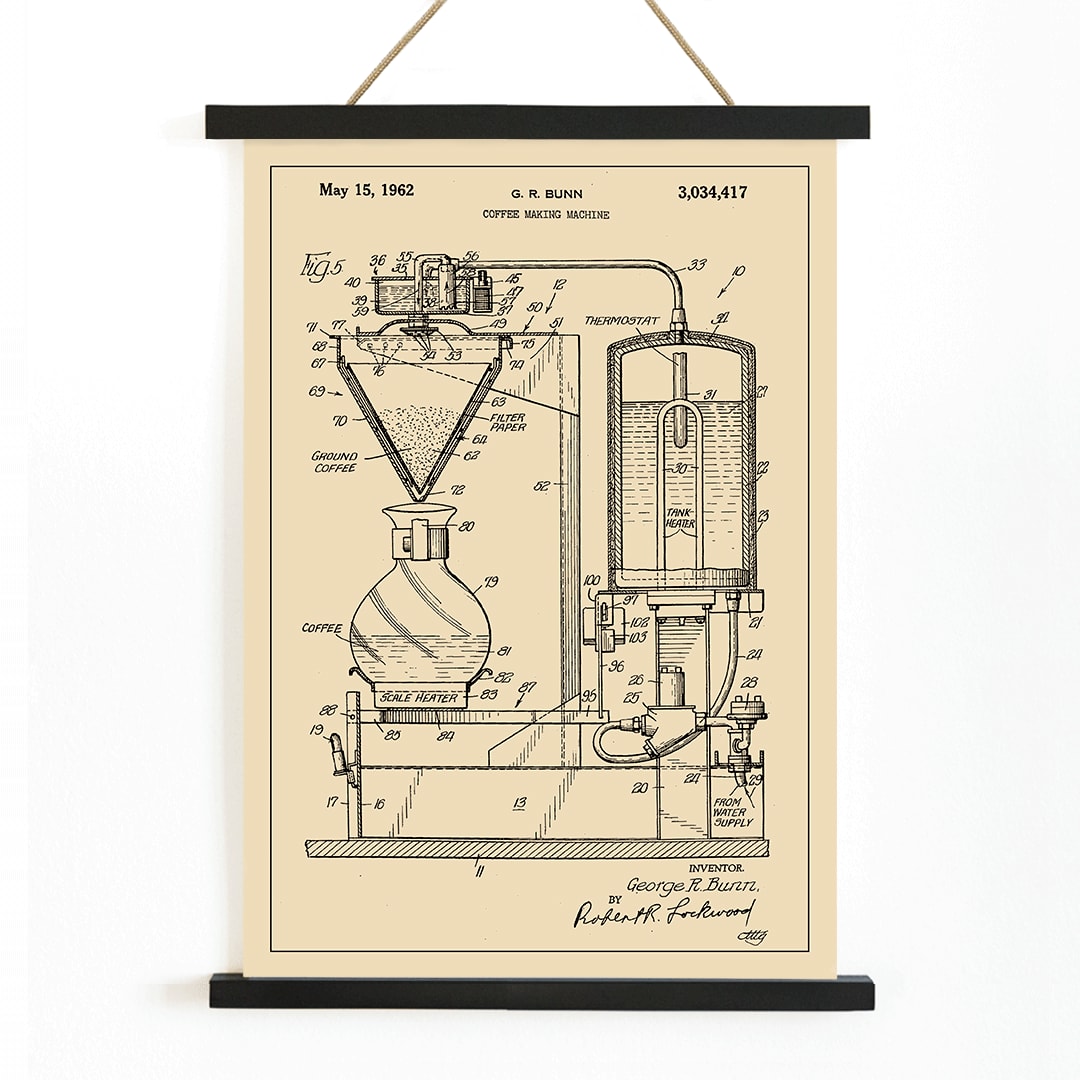
G.R. Bunn is credited as the inventor on this 1962 patent for a coffee making machine, a testament to the era's spirit of innovation in everyday appliances. Patent illustrators like Bunn played a unique role at the intersection of engineering and visual communication, producing documents that were both legally rigorous and visually precise. This vintage patent print reflects the mid-century drive to improve daily rituals through thoughtful design and mechanical ingenuity.
Collectors and design enthusiasts value such works for their blend of technical clarity and understated artistry, making them a natural fit for science inspired prints and archival-themed interiors.
The Artwork
Created during a period when coffee consumption was becoming increasingly automated, this patent drawing was intended to support a legal claim for a new brewing device. The illustration details the machine's components and their interactions, serving as a visual argument for the invention's novelty and utility. It captures a moment in history when the ritual of coffee was shifting from artisanal tradition to engineered consistency, reflecting broader trends in postwar domestic and commercial life.
This document preserves the narrative of technological progress and the desire to make everyday experiences more efficient and reliable.
Style & Characteristics
The print features classic patent-style draftsmanship: crisp black linework, multiple schematic views, and numbered callouts arranged for clarity. The composition is orderly and diagrammatic, with wide margins and a prominent typographic header that reinforces its archival quality. The palette is minimal, dominated by black ink on a warm beige background, lending the piece a timeless, analytical feel.
Its clean, technical aesthetic makes it a versatile addition to modern interiors, especially those with a black and white wall art sensibility or an interest in minimalist design.
In Interior Design
This vintage print is well-suited to kitchens, coffee nooks, offices, or dining spaces where a touch of industrial history is desired. It pairs seamlessly with stainless steel, dark woods, or concrete surfaces, and complements neutral palettes from cream to taupe. Framed in black, oak, or brushed metal, it adds a curated, intellectual accent without overwhelming the room.
For a cohesive gallery wall, consider combining it with other culinary or technical themes from the kitchen poster collection or similar document-style artworks for a refined, industrial look.