


You may also like
-
Nude from the Back Poster
Amedeo Modigliani · 1917 · Sensual nude art print with elongated back and warm earthy tones
Poster from £9 · Framed from £16
Regular price From £6.00Regular price -
Nu couché Poster
Amedeo Modigliani · 1917 · Sensual reclining nude art print with sculptural contours against rich red and blue tones
Poster from £9 · Framed from £16
Regular price From £6.00Regular price -
Sleeping beauty Poster
Unknown artist · 1872 · Romantic reclining figure poster framed by flowers and drapery in warm pink tones
Poster from £9 · Framed from £16
Regular price From £6.00Regular price -
Before going to bed Poster
Michael Heumuller · 1950 · Intimate black-and-white bedroom poster with poised figure and cinematic evening shadows
Poster from £9 · Framed from £16
Regular price From £6.00Regular price


-

"Very nice Posters. The quality is amazing and we received it very quickly !"
-

"A shop to visit absolutely. Huge selection of posters. We spent more than an hour there !"
-

"Perfect to find gift. Price are very good. An they can frame and pack it on site"


About the Artist
Isidore Pils (1813–1875) was a French painter who emerged from the academic tradition of Paris, where rigorous training in drawing and anatomy was central to an artist’s development. After winning the prestigious Prix de Rome in 1838, Pils became known for his history paintings, religious works, and public commissions, always maintaining a deep respect for the discipline of the atelier.
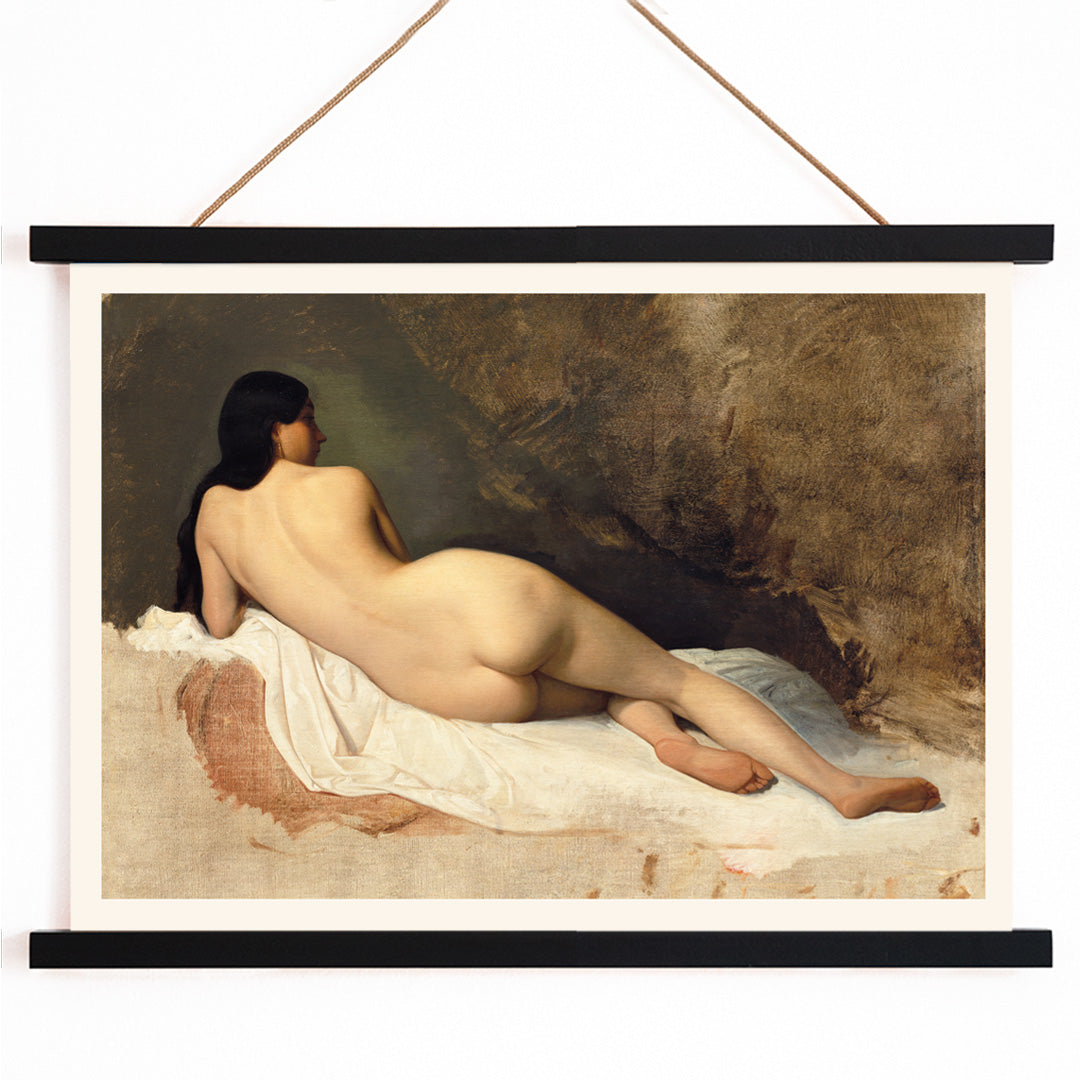
This 1841 study reflects a formative period in French art, when artists honed their skills through careful observation of the human form. Such academic exercises were foundational for painters preparing for larger narrative compositions and Salon exhibitions, and they continue to influence the appreciation of classic art and its legacy in modern printmaking.
The Artwork
Reclining Nude was created as part of the academic practice of studying the nude figure, a cornerstone of nineteenth-century European art education. In the studio, artists would produce such studies to master proportion, anatomy, and the effects of light on the body, often using live models in natural, unposed positions.
This particular work moves beyond technical exercise to evoke a sense of quiet introspection. The relaxed pose and gentle rendering suggest a private moment, inviting viewers to appreciate the subject’s humanity rather than viewing the figure as an object. For those interested in erotic art prints, this piece stands out for its understated elegance and contemplative mood.
Style & Characteristics
The drawing features a horizontal composition with a single nude figure reclining across the page. Executed in graphite or charcoal on warm-toned paper, the artist employs confident outlines and subtle shading to convey the weight and softness of the body. The palette is minimal, focusing on the interplay of light and shadow rather than color.
The atmosphere is serene and intimate, with the figure’s pose and the gentle gradations of tone creating a sense of calm. This refined academic study exemplifies the quiet sophistication of nineteenth-century French figure drawing, making it a timeless addition to any curated collection of art prints.
In Interior Design
This vintage nude drawing lends an air of calm sophistication to bedrooms, dressing areas, or quiet reading spaces. Its understated palette and elegant lines pair well with linen textiles, plaster walls, and walnut or dark wood furnishings, bridging the gap between Parisian classicism and contemporary minimalism.
For framing, a slim black or dark brown frame with a generous off-white mat will highlight the artwork’s warmth and subtlety. Explore more options in frames. The piece also harmonizes beautifully with beige, cream, and charcoal color schemes, anchoring a thoughtful wall arrangement without overwhelming the room.