


You may also like
-

Gertrude Poster
Egon Schiele · 1910 · Expressive nude figure art print with spare linework and warm earthy tones
Poster from £9 · Framed from £16
-

Standing Nude woman Poster
Egon Schiele · 1917 · Expressive standing nude art print with angular linework on warm beige paper
Poster from £9 · Framed from £16
-

Female in Orange-Red Dress Poster
Egon Schiele · 1910 · Expressive figure art print of a kneeling woman in an orange-red dress
Poster from £9 · Framed from £16
-

Seated nude back view Poster
Egon Schiele · 1917 · A vintage poster art print of a seated nude in expressive contour lines
Poster from £9 · Framed from £16


-

"Very nice Posters. The quality is amazing and we received it very quickly !"
-

"A shop to visit absolutely. Huge selection of posters. We spent more than an hour there !"
-

"Perfect to find gift. Price are very good. An they can frame and pack it on site"


About the Artist
Egon Schiele was a pivotal figure in Austrian Expressionism, working in Vienna during a period of intense artistic innovation. Closely associated with Gustav Klimt, Schiele forged his own path, using the human figure to explore psychological depth and the complexities of modern life. His work often challenged social norms, reflecting the shifting attitudes of early twentieth-century Europe.
This drawing is characteristic of Schiele's approach to the nude, where observation is transformed into a powerful statement about vulnerability and self-awareness. For more from this influential artist, see our Egon Schiele prints and browse the famous artists wall art collection.
The Artwork
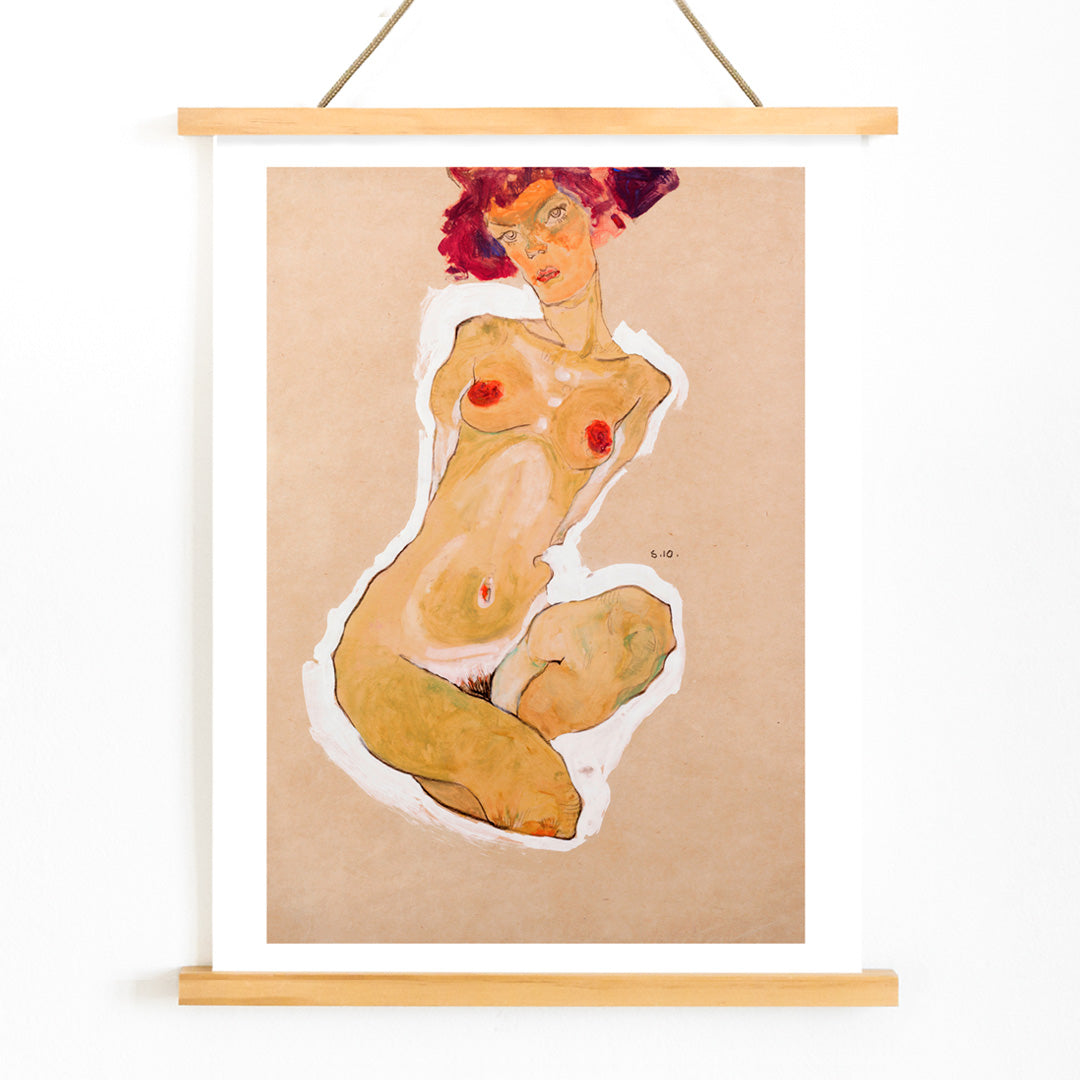
Created in 1910, this study of a squatting female nude marks a turning point in Schiele's career, as he moved away from academic tradition toward a more personal and expressive vision. The work reflects the era's debates about sexuality, identity, and the boundaries of artistic representation, themes that were especially charged in Vienna's avant-garde circles.
Schiele's nudes from this period were often seen as provocative, confronting viewers with the unidealized reality of the human body. This drawing embodies that spirit, offering a glimpse into the artist's studio and the cultural climate that encouraged experimentation and self-exploration. For those interested in similar themes, explore our erotic vintage prints.
Style & Characteristics
The composition features a nude figure in a squatting pose, set against a plain, unadorned background that emphasizes the subject's form. Schiele's distinctive line is sharp and angular, capturing the tension and immediacy of the pose. The use of negative space heightens the sense of isolation and focus on the body.
The color palette is understated, with the natural beige of the paper dominating and subtle touches of red and yellow accentuating the figure. Light washes and exposed paper contribute to an intimate, candid mood, characteristic of Schiele's fine art prints from this era.
In Interior Design
This expressive art print is well-suited to minimalist interiors, modern gallery walls, or personal spaces where thoughtful, evocative art is appreciated. Its uncluttered composition and raw energy make it a striking focal point in bedrooms, studies, or creative studios.
Pair with neutral tones such as sand, linen, or pale wood for harmony, and consider muted terracotta or ochre accents for warmth. An understated frame from our frames collection will highlight the drawing's unique character, lending a curated and sophisticated feel to your space.