


You may also like
-

Georgia O'Keeffe - Breasts Poster
Alfred Stieglitz · 1919 · Intimate black and white nude poster with sculptural curves and soft studio light
Poster from £9 · Framed from £16
-

Georgia O'Keeffe - Torso Poster
Alfred Stieglitz · 1918 · Cropped black and white torso art print shaped by soft light and modernist intimacy
Poster from £9 · Framed from £16
-

Georgia O'Keeffe - Hips Poster
Alfred Stieglitz · 1918 · Intimate modernist nude print with sculptural cropping and velvety black-and-white tones
Poster from £9 · Framed from £16
-

Rebecca Salsbury Strand Poster
Alfred Stieglitz · 1922 · Intimate black and white portrait art print with quiet modernist intensity
Poster from £9 · Framed from £16


-

"Very nice Posters. The quality is amazing and we received it very quickly !"
-

"A shop to visit absolutely. Huge selection of posters. We spent more than an hour there !"
-

"Perfect to find gift. Price are very good. An they can frame and pack it on site"


About the Artist
Alfred Stieglitz was a pivotal American photographer who helped establish photography as fine art in the early twentieth century. Through the Photo-Secession movement and his New York gallery 291, he championed modernist experimentation and introduced audiences to new ideas in art and design.
Stieglitz’s work is renowned for its exploration of intimacy and abstraction, especially in his photographic studies of Georgia O Keeffe. His influence continues to shape the appreciation of photography as an expressive and conceptual medium, as seen in many photography wall art collections today.
The Artwork
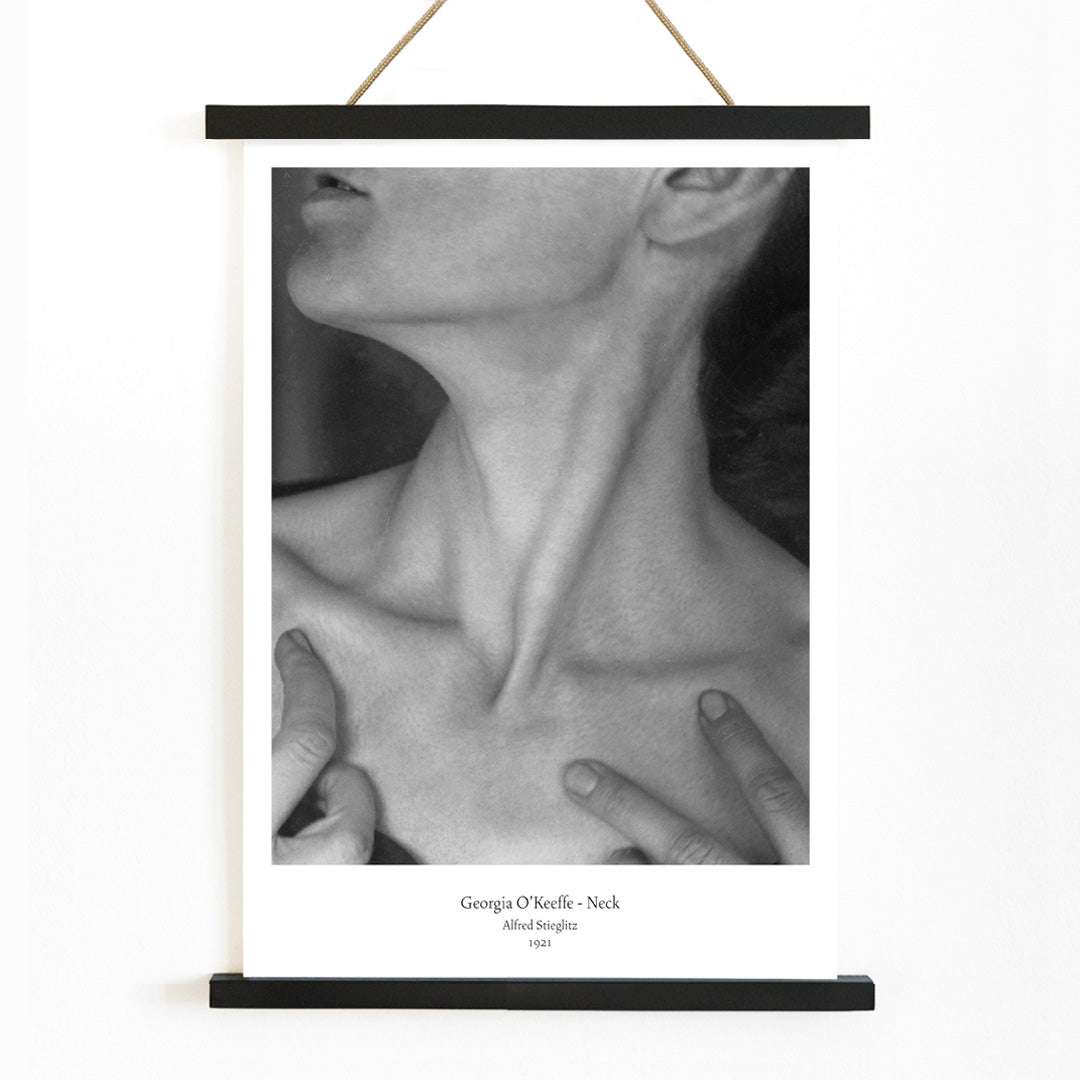
Created in 1921, Georgia O Keeffe Neck is part of Stieglitz’s celebrated series of portraits of Georgia O Keeffe, his partner and muse. This body of work marked a turning point in portrait photography, focusing on fragments of the human form to evoke emotion and identity. The series reflects the era’s modernist ideals, where artists sought to reveal deeper truths through abstraction and close observation.
In this context, the photograph stands as both a personal gesture and a statement about the evolving language of art. It highlights how photography began to claim its place alongside painting and sculpture in the world of fine art, resonating with other works found in the black and white art print tradition.
Style & Characteristics
This black and white photograph features a tightly cropped composition, centering on the graceful curve of a neck and the edge of a jaw. The plain background and soft, controlled lighting create smooth transitions between luminous highlights and gentle shadows, lending the image a sculptural quality.
The mood is quiet and contemplative, with a sense of intimacy and restraint. The use of negative space and subtle tonal gradations draws attention to form and texture, embodying the minimalist elegance of early twentieth-century modernist photography.
In Interior Design
This fine art photograph print lends a serene and sophisticated atmosphere to bedrooms, reading nooks, or dressing areas. Its meditative focus makes it ideal for spaces designed for reflection and calm, while its abstracted form can add visual interest to a minimal gallery wall.
Pair with white or grey walls, natural wood, or black accents for a refined look. A simple mat and a slim frame from the frames collection will enhance its understated, museum-like presence.