


You may also like
-

Daybreak over Lake Yamanaka Poster
Kawase Hasui · 1931 · Serene Mount Fuji sunrise print with still lake reflections in cool blues
Poster from £9 · Framed from £16
-

Mount Fuji from Lake Yamanaka Poster
Hiroaki Takahashi · 1929 · Serene Japanese landscape art print with sailboats on Lake Yamanaka beneath snow-capped Fuji
Poster from £9 · Framed from £16
-

Katsuyama Neighborhood Poster
Hiroaki Takahashi · 1930 · Serene winter landscape art print with sunrise glow over a quiet mountain neighborhood
Poster from £9 · Framed from £16
-

View of Fuji from the Coast of Kiyomigata Poster
Kobayashi Kiyochika · 1896 · Quiet coastal poster with Mount Fuji beyond sailboats and misty blue water
Poster from £9 · Framed from £16


-

"Very nice Posters. The quality is amazing and we received it very quickly !"
-

"A shop to visit absolutely. Huge selection of posters. We spent more than an hour there !"
-

"Perfect to find gift. Price are very good. An they can frame and pack it on site"


About the Artist
Takahashi Hiroaki, also known as Shotei, was a prominent figure in Japan's shin hanga movement, which revitalized traditional woodblock printing in the early twentieth century. Collaborating with skilled carvers and printers, he created works that bridged the elegance of Edo-period techniques with modern sensibilities.
Shotei's prints became widely collected both in Japan and abroad, admired for their tranquil moods and masterful handling of light. His legacy remains central to the appreciation of Japanese landscape art. Discover more in our Japanese and Oriental art collection.
The Artwork
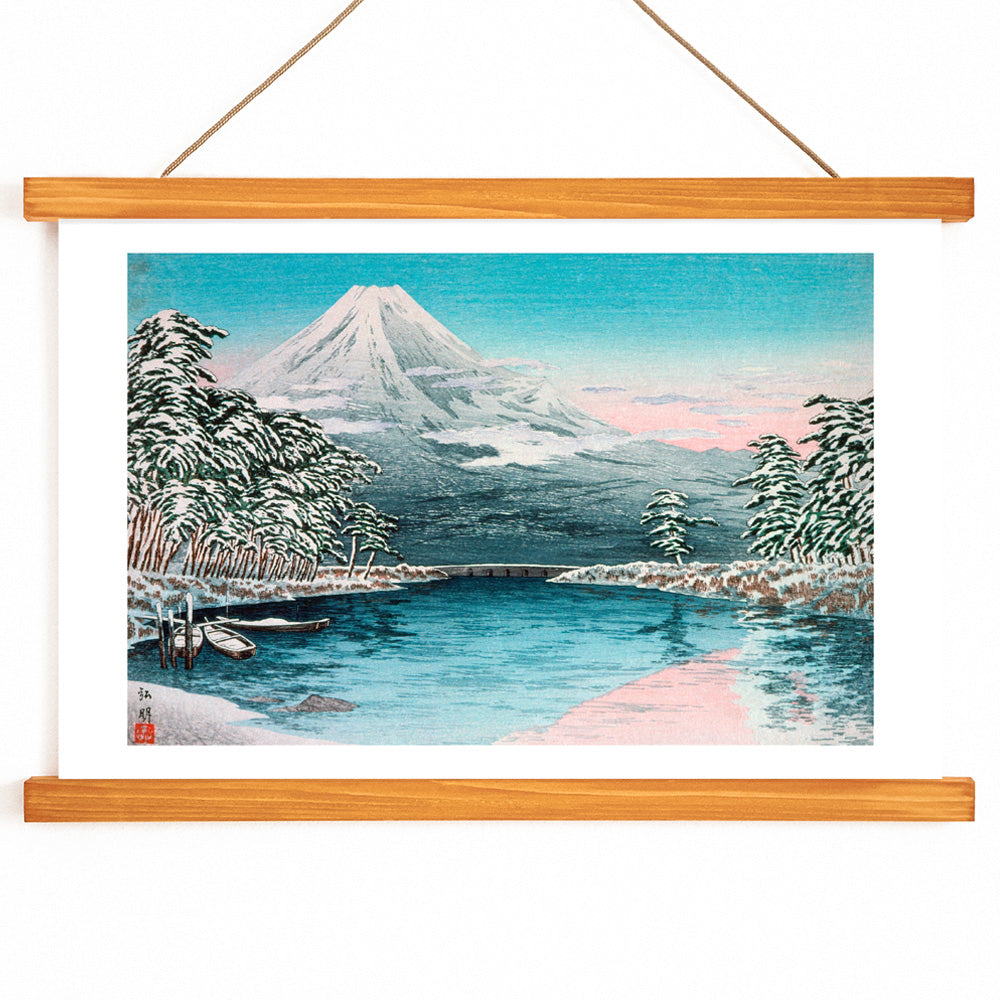
Mt. Fuji from Tagonoura depicts Japan’s revered mountain as seen from the shores of Suruga Bay, a location celebrated in poetry and pilgrimage for centuries. Created during the 1930s, this work reflects a cultural longing for stability and harmony amid a rapidly changing society.
Intended for the shin hanga market, the print transforms a familiar view into a contemplative scene, blending national symbolism with the quiet rhythms of daily life along the coast. The enduring image of Mt. Fuji serves as a reminder of resilience and renewal in Japanese visual culture.
Style & Characteristics
The print features the snow-capped peak of Fuji rising above calm waters, its reflection mirrored perfectly below. Broad expanses of blue and white dominate the scene, with soft gradations in the sky and sea created using bokashi, a signature woodblock shading technique.
Touches of pink illuminate the horizon, while gentle greens trace the shoreline, contributing to a serene and restorative mood. The composition’s clarity and subtlety make it a quintessential example of Japanese landscape woodblock art. For more tranquil vistas, explore our landscape wall art and blue tone prints.
In Interior Design
This art print brings a sense of calm to interiors, ideal for living rooms, bedrooms, or workspaces seeking a peaceful atmosphere. Its balanced geometry pairs well with minimalist frames and uncluttered decor.
The cool palette harmonizes with white, grey, pale wood, and sea-glass tones, fitting seamlessly into Japandi, modern, or classic interiors. Whether displayed alone or within a curated gallery wall, it offers understated elegance and a connection to Japanese tradition.