


You may also like
-

Enoshima in Sagami Province Poster
Katsushika Hokusai · 1831 · Tranquil coastal art print with Enoshima cliffs and rolling waves
Poster from £9 · Framed from £16
-

The Great Wave Poster
Katsushika Hokusai · 1831 · Iconic Japanese wave poster with Mount Fuji and boats under towering surf
Poster from £9 · Framed from £16
-

Shimotsuke Kurokami-Yama Kurifuri no Taki Poster
Katsushika Hokusai · 1832 · Dramatic waterfall vintage print with travelers dwarfed by rushing vertical cascades
Poster from £9 · Framed from £16
-

Yoro Waterfall Poster
Katsushika Hokusai · 1832 · Iconic Japanese vintage print of Yoro Waterfall with sweeping cascade and quiet mountain setting
Poster from £9 · Framed from £16


-

"Very nice Posters. The quality is amazing and we received it very quickly !"
-

"A shop to visit absolutely. Huge selection of posters. We spent more than an hour there !"
-

"Perfect to find gift. Price are very good. An they can frame and pack it on site"


About the Artist
Katsushika Hokusai was a pioneering Japanese ukiyo-e artist of the Edo period, renowned for transforming landscape art with his inventive compositions and narrative flair. His woodblock prints made scenes of daily life and iconic locations accessible to a broad urban audience, influencing both Japanese and Western art traditions.
Throughout his prolific career, Hokusai developed a distinctive visual language marked by bold shapes, rhythmic patterns, and dramatic perspectives. His legacy endures in the work of later artists worldwide, and his prints remain essential for those interested in iconic masters and the evolution of Japanese printmaking.
The Artwork
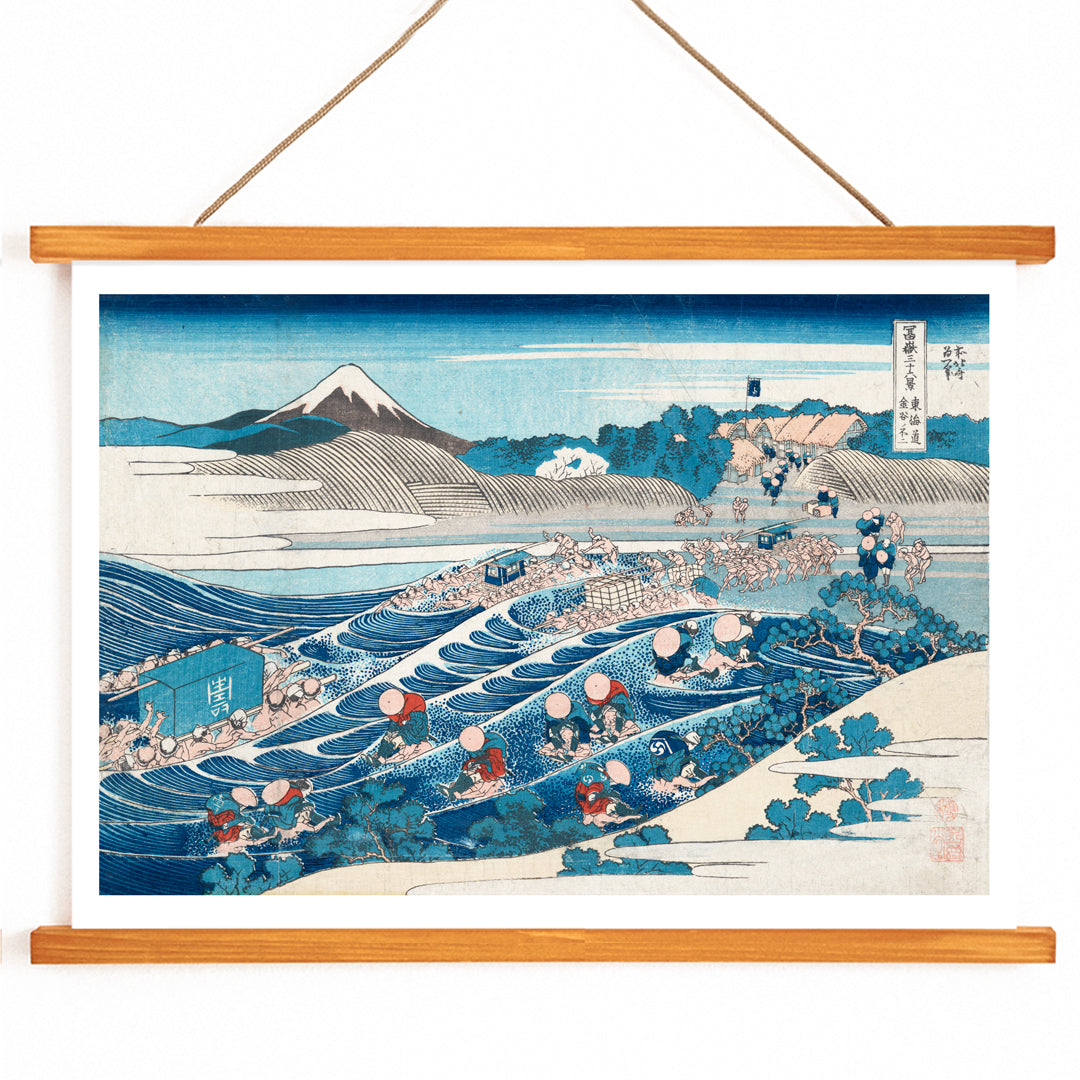
This artwork, Tōkaidō kanaya no fuji, was created as part of Hokusai's celebrated landscape series, capturing the challenges and rituals of travel along the historic Tōkaidō road between Edo and Kyoto. The scene depicts travelers crossing the broad Ōi River near Kanaya, a crossing famous for its unpredictability and the teamwork required to traverse it.
Mount Fuji rises in the distance, serving as both a geographical anchor and a symbol of endurance and spiritual significance. Originally produced as a woodblock print for popular circulation, the image offered viewers a vivid reminder of the journeys and landscapes that shaped Japanese identity. For collectors of Japanese prints, it stands as a testament to the era's fascination with place and movement.
Style & Characteristics
The composition features a sweeping river in the foreground, with travelers carried across on platforms, while Mount Fuji stands serene and distant. The arrangement creates a dynamic contrast between the bustling human activity and the calm permanence of the mountain.
Hokusai employs cool blue and off-white hues set against warm beige paper, characteristic of Edo period printing. Crisp outlines and flat color fields give the scene a graphic clarity, while the rhythmic procession of figures adds a sense of movement. The overall mood is expansive and lively, making it a striking choice for those who appreciate blue-toned wall art with a refined, tranquil presence.
In Interior Design
This vintage Japanese print brings a sense of openness and calm to living rooms, hallways, or workspaces. Its broad horizon and balanced composition complement Japandi, minimalist, and classic interiors, pairing beautifully with natural woods, linen, and stone textures.
For a harmonious look, combine it with soft whites, sand, and indigo accents, or curate a collection of Japanese prints for a cohesive display. A simple mat and slender black or oak frames enhance the artwork's clarity while maintaining a serene atmosphere.