


You may also like
-

Valley of the Mississippi River Poster
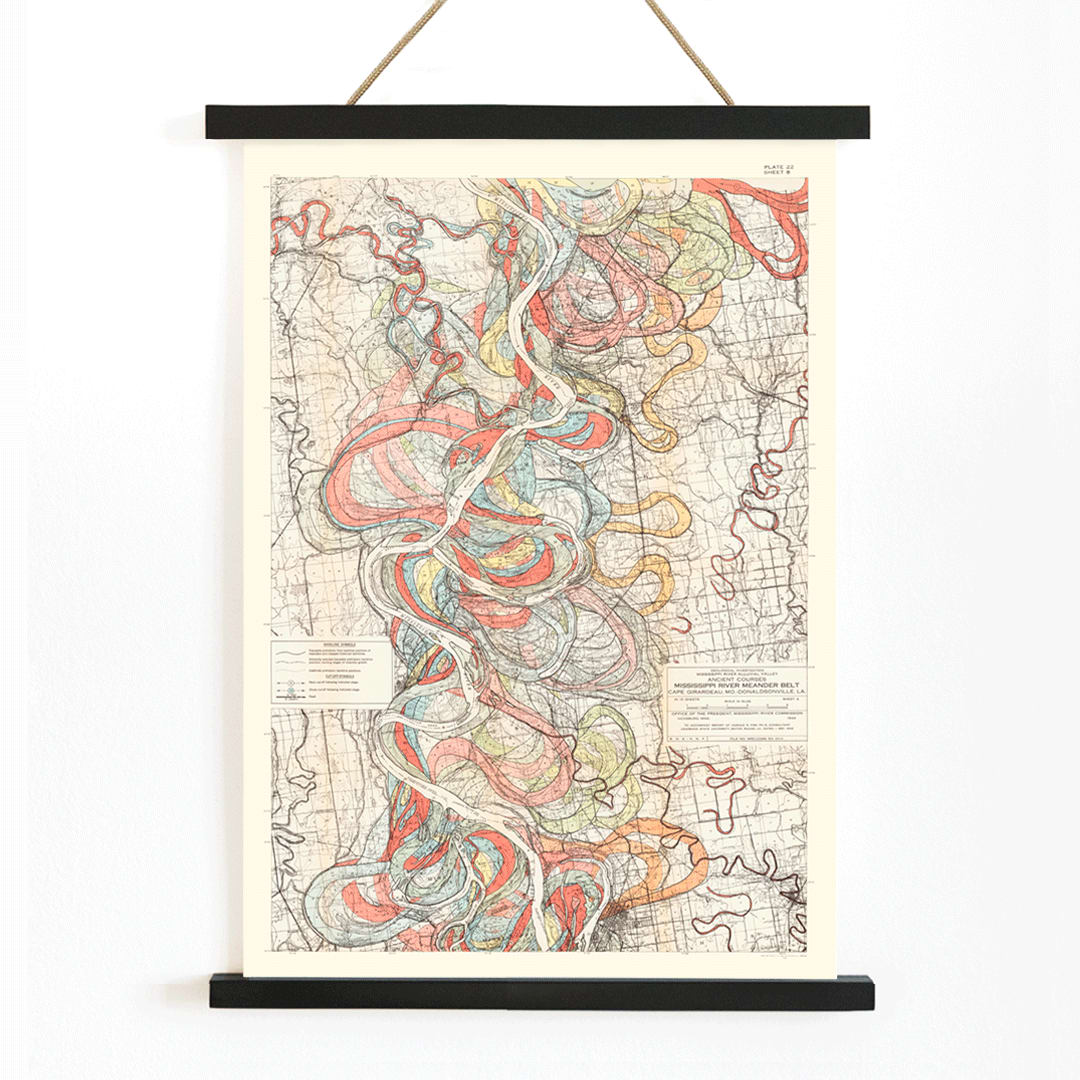
Harold Fisk · 1946 · Color-coded Mississippi meander map poster combining geological insight with modern graphic clarity
Poster from £9 · Framed from £16
-

Rivers and Lakes Poster
James Reynolds · 1851 · Panoramic rivers and lakes comparison poster blending cartography with early infographic clarity
Poster from £9 · Framed from £16
-

Antique map of Mexico Poster
Institute of Liepzig · 1887 · Detailed Mexico vintage print featuring crisp borders and classic atlas typography
Poster from £9 · Framed from £16
-

Physical map of the World Poster
James Reynolds · 1850 · Detailed world physical map vintage print with shaded relief and crisp place names
Poster from £9 · Framed from £16


-

"Very nice Posters. The quality is amazing and we received it very quickly !"
-

"A shop to visit absolutely. Huge selection of posters. We spent more than an hour there !"
-

"Perfect to find gift. Price are very good. An they can frame and pack it on site"


About the Artist
Harold Fisk was an American geologist renowned for his groundbreaking research on the Mississippi River. In the 1940s, Fisk was commissioned by the U.S. Army Corps of Engineers to study the river’s shifting channels and flood patterns. His work resulted in a series of detailed maps that not only advanced scientific understanding but also became celebrated for their striking visual beauty. Fisk’s legacy endures at the intersection of science, engineering, and art.
For those fascinated by cartography and river history, this piece naturally complements our map wall art and other analytical designs.
The Artwork
Created in 1946, Courses of the Mississippi River documents the river’s historical migrations over centuries. Fisk’s map was designed to inform flood control, navigation, and land management, illustrating the dynamic nature of the Mississippi as it carved new paths and abandoned old ones. The artwork stands as a testament to a period when mapping was crucial for both public safety and environmental stewardship, reflecting the era’s drive to harness natural forces through scientific insight.
Today, it serves as a vintage print that bridges technical achievement and visual storytelling, inviting viewers to consider the ever-changing relationship between people and landscape.
Style & Characteristics
This map poster features a complex web of overlapping river courses, rendered in sweeping, curvilinear lines across a pale background. The composition is organized by vivid bands of red, blue, green, yellow, and pink, each color representing a different historical channel. The result is a rhythmic, almost abstract pattern that balances scientific clarity with decorative appeal.
The interplay of color and line creates a sense of movement and depth, making the print both informative and visually engaging. It pairs seamlessly with other analytical works in our science prints collection.
In Interior Design
This Harold Fisk art print brings a sense of discovery and sophistication to studies, hallways, or living spaces where its intricate details can be appreciated up close. Its tall, vertical format is ideal for narrow walls or as a statement piece in a gallery arrangement of travel, landscape, or cartographic art.
For a serene interior, coordinate its cool palette with off-white walls and light woods, or highlight one accent color in your decor. For a bolder look, combine it with selections from our blue tone posters to create a harmonious display.