


You may also like
-

Malus Domestica Poster
Amanda Almira Newton · 1908 · Refined apple botanical print with luminous red fruit and crisp leaves on white
Poster from £9 · Framed from £16
-

Persimmons Poster
Amanda Almira Newton · 1923 · Delicate botanical print of ripe persimmons on a leafy branch against clean white space
Poster from £9 · Framed from £16
-

Malus Domestica Poster
Amanda Almira Newton · 1913 · Delicate apple botanical print with whole fruit, leafy stem, and a sliced cross section
Poster from £9 · Framed from £16
-

Cherry Crab Poster
Ellen Isham Schutt · 1905 · Delicate crab apple botanical print with ruby fruit and crisp leaves on white ground
Poster from £9 · Framed from £16


-

"Very nice Posters. The quality is amazing and we received it very quickly !"
-

"A shop to visit absolutely. Huge selection of posters. We spent more than an hour there !"
-

"Perfect to find gift. Price are very good. An they can frame and pack it on site"


About the Artist
Mary Daisy Arnold was an early 20th-century botanical illustrator whose work contributed to the documentation and appreciation of cultivated plants. Working at a time when scientific accuracy and aesthetic appeal were equally valued, Arnold’s illustrations supported horticultural research and education, making them valuable references for growers and botanists. Her legacy endures in the tradition of botanical art that bridges science and visual culture.
Collectors and enthusiasts of natural history continue to appreciate Arnold’s ability to render everyday fruits with both scholarly precision and quiet charm.
The Artwork
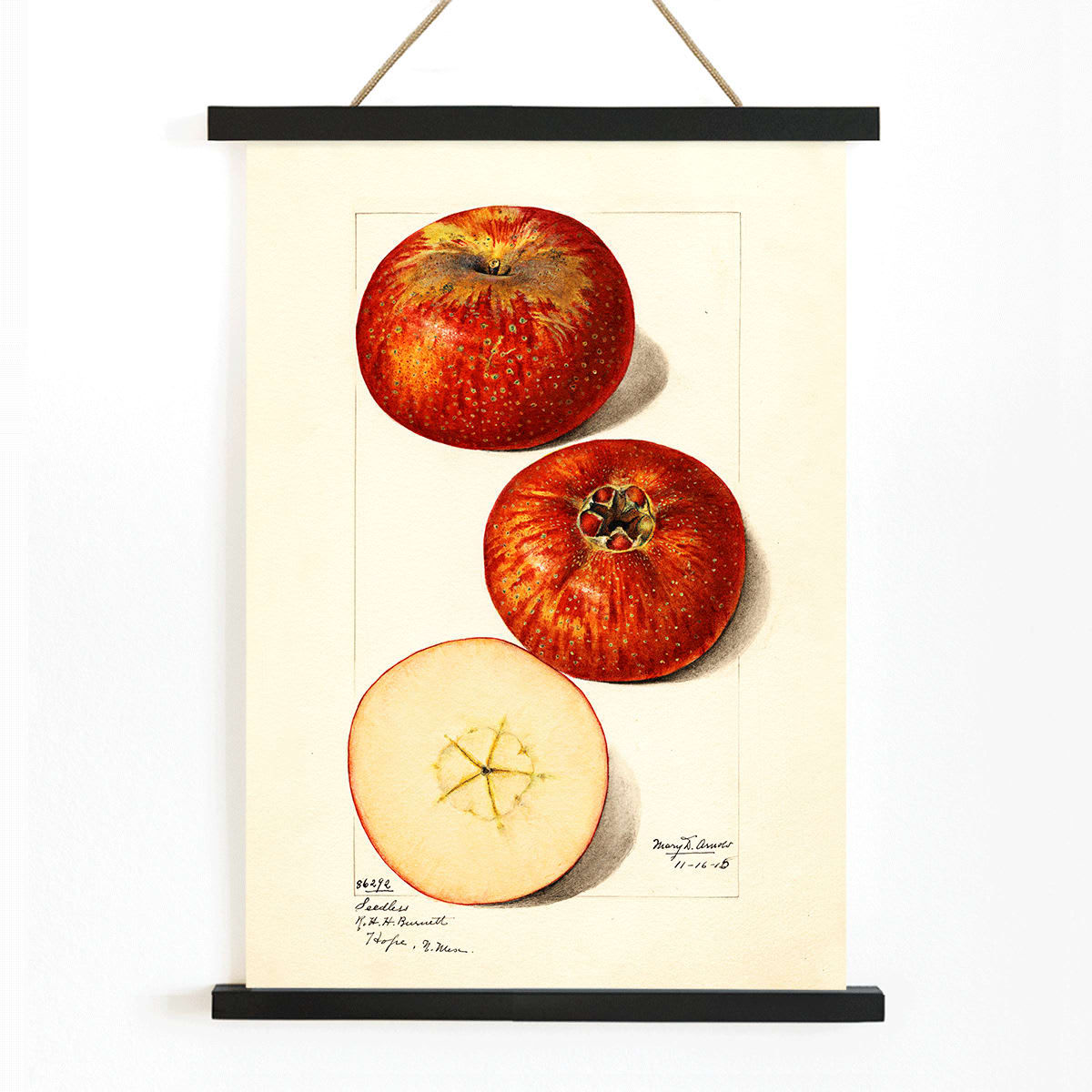
This illustration of Malus domestica, the domestic apple, reflects the early 1900s movement to catalog and standardize fruit varieties for agricultural and educational purposes. Such prints were essential tools for pomologists and farmers, helping to identify and preserve important cultivars. By presenting the apple in both whole and cross-section views, the artwork invites viewers to appreciate its structure and diversity, reinforcing the apple’s role as a symbol of abundance and home.
As a historical document, it offers insight into the era’s dedication to careful observation and the celebration of everyday nature.
Style & Characteristics
The composition is straightforward and focused, featuring a single apple rendered in naturalistic reds and yellows, with a sliced cross section revealing the interior. The warm, lightly textured paper background enhances the fruit’s colors and gives the print a gentle, vintage character. Subtle shading and precise linework highlight the apple’s form and details, creating a serene, instructive mood typical of early 20th-century botanical illustration.
Discover more nature-inspired works in our botanical prints and science wall art collections.
In Interior Design
This apple botanical print is a natural fit for kitchens, dining areas, and home offices, where its subject brings warmth and a sense of tradition. It pairs well with light wood finishes, linen textiles, and classic ceramics, and complements deeper reds or neutral palettes. For a cohesive look, combine it with other red tone wall art or vintage botanical studies to create a timeless gallery wall.
Its understated elegance makes it versatile for both modern and traditional interiors.