


You may also like
-

Collection of leaves Poster
Shirley Hibberd · 1855 · Delicate botanical print presenting varied leaf forms with fine veins on warm ivory paper
Poster from £9 · Framed from £16
-

Adelaster Albivenis Poster
Shirley Hibberd · 1855 · Elegant botanical print of a single green leaf with purple veins on white
Poster from £9 · Framed from £16
-

King Solomon Poster
Pierre-Joseph Redouté · 1805 · Graceful King Solomon's Seal botanical print with arching green leaves and white bell flowers
Poster from £9 · Framed from £16
-

Smilacina stellata Poster
Pierre-Joseph Redouté · 1805 · Delicate botanical print of Smilacina stellata with airy white blossoms and slender leaves
Poster from £9 · Framed from £16


-

"Very nice Posters. The quality is amazing and we received it very quickly !"
-

"A shop to visit absolutely. Huge selection of posters. We spent more than an hour there !"
-

"Perfect to find gift. Price are very good. An they can frame and pack it on site"


About the Artist
Shirley Hibberd was a prolific Victorian horticulturist and garden writer whose work helped bring plant knowledge into everyday homes. Active in mid 19th-century Britain, he translated the era’s fast-expanding botanical science into practical guidance for amateur growers and enthusiasts.
This kind of refined botanical wall art reflects a period when printed plant images were both educational tools and decorative art. If you enjoy historically rooted florals, explore more in our botanical prints collection.
The Artwork
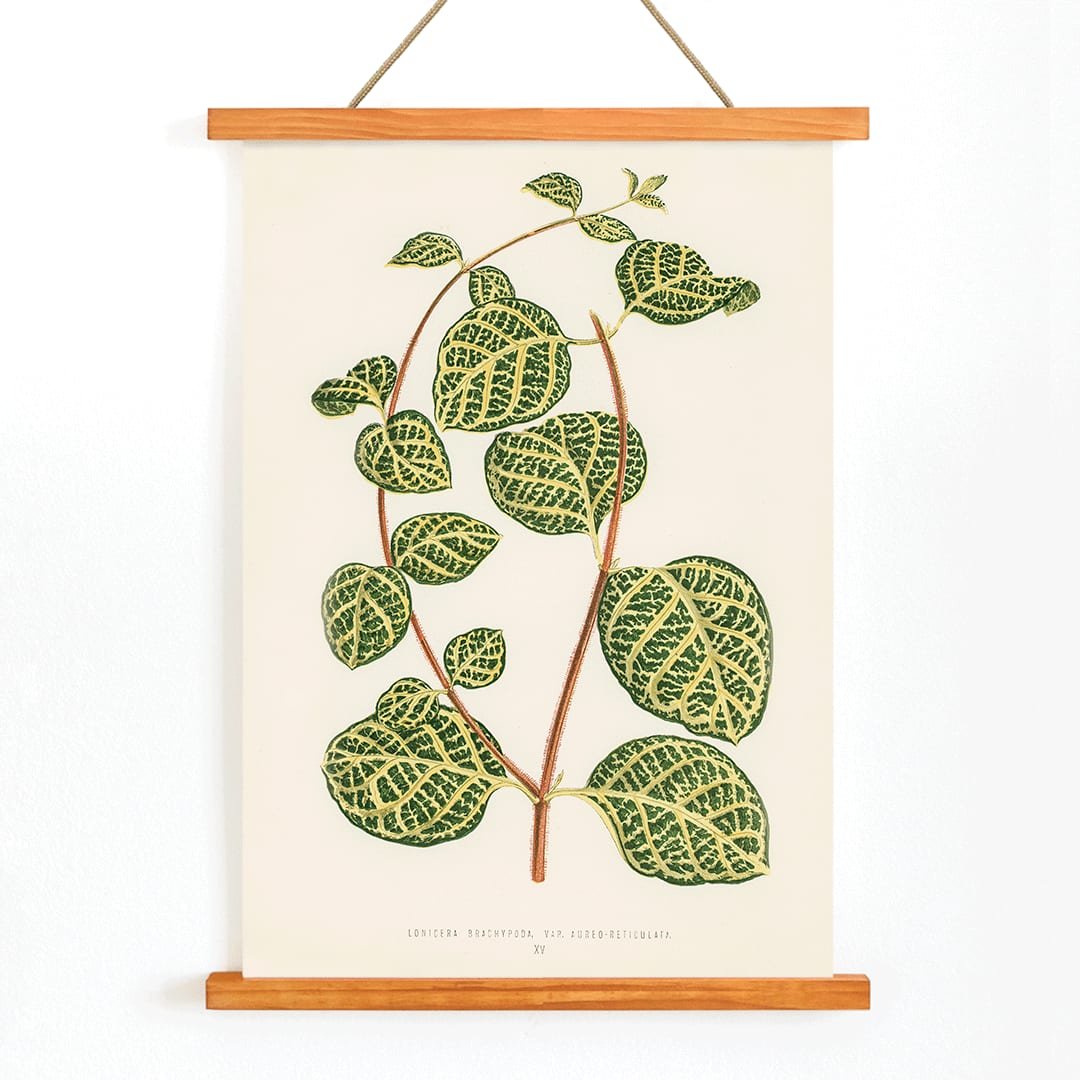
Created in the 1850s, this illustration of Lonicera brachypoda reflects the Victorian fascination with cataloguing and cultivating exotic and native plants. During this era, botanical prints played a crucial role in spreading horticultural knowledge, especially as new plant varieties became accessible to a wider public through nurseries and garden societies. Hibberd’s work bridged the gap between scientific study and the domestic enjoyment of nature, making botanical art both informative and aesthetically pleasing.
Honeysuckle, shown here, was valued not only for its ornamental beauty but also for its associations with English hedgerows and the changing seasons. This print would have served as both a reference for gardeners and a decorative object for the Victorian home.
Style & Characteristics
The composition presents a detailed study of the honeysuckle plant, with its arching stems, elongated leaves, and delicate blossoms carefully rendered. Fine linework and subtle shading define the botanical features, while the plant is set against a warm beige background that evokes aged paper.
The color palette features naturalistic greens for the foliage, soft yellows for the flowers, and gentle brown accents along the stems. The overall effect is calm and archival, giving the print a timeless quality. For more artwork in similar tones, explore our green wall art and beige vintage prints.
In Interior Design
This botanical print brings a sense of cultivated tranquility to kitchens, bedrooms, hallways, or home offices. Its classic style suits both traditional and modern interiors, especially those that blend antique references with clean lines or natural textures.
Pair with wood frames and neutral textiles for a gallery wall, or display alongside other vintage botanical studies for a curated, herbarium-inspired look. This piece especially appeals to plant lovers and those seeking a touch of Victorian charm in their living spaces.