


You may also like
-

Blue Tail Lizard Poster
Mark Catesby · 1754 · Lively natural history print of a lizard with vivid blue tail and poised stance
Poster from £9 · Framed from £16
-

Green Lizard Poster
Mark Catesby · 1754 · Natural history vintage print featuring a green lizard poised among leafy branches
Poster from £9 · Framed from £16
-

Pilchard Poster
Mark Catesby · 1754 · Natural history pilchard vintage print pairing a silvery fish with coastal greenery
Poster from £9 · Framed from £16
-

Pawpaw Poster
Mark Catesby · 1754 · Graceful pawpaw botanical print with broad green leaves and ripening fruit on ivory ground
Poster from £9 · Framed from £16


-

"Very nice Posters. The quality is amazing and we received it very quickly !"
-

"A shop to visit absolutely. Huge selection of posters. We spent more than an hour there !"
-

"Perfect to find gift. Price are very good. An they can frame and pack it on site"


About the Artist
Mark Catesby was an English naturalist and illustrator whose pioneering expeditions in North America during the early 18th century greatly advanced European understanding of the continent's flora and fauna. His detailed studies bridged art and science, providing foundational knowledge for naturalists and collectors alike. Catesby's work introduced many previously unknown species to European audiences, shaping the course of natural history illustration.
This 1754 plate was created during the Enlightenment, a period when scientific exploration and classification flourished. Catesby's publications were intended for scholars, collectors, and curious readers eager to learn about the natural world beyond Europe. His legacy endures in the tradition of classic natural history illustration, valued by those who appreciate both scientific heritage and artistic craftsmanship.
The Artwork
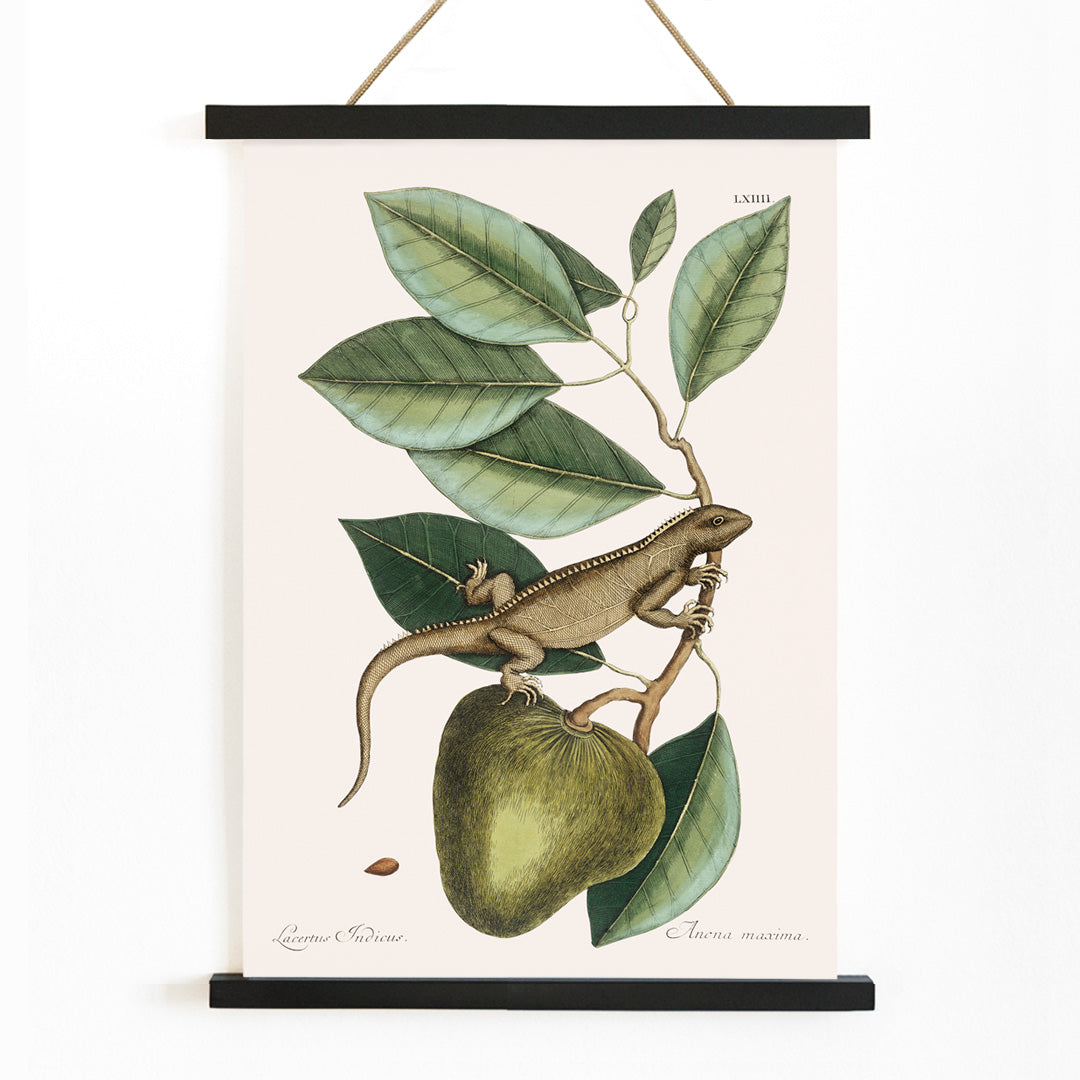
This depiction of an iguana reflects the era's fascination with cataloging the biodiversity encountered through travel and colonial exploration. Rather than presenting the animal as exotic or fantastical, Catesby rendered it with accuracy and respect, inviting viewers to study and appreciate its unique features. The print served as a visual record for naturalists and collectors, helping to expand scientific knowledge and spark conversation in intellectual circles.
Originally published in a series of illustrated volumes, the image exemplifies how art and observation worked together to document and share discoveries across continents. Today, it stands as a testament to the spirit of inquiry that defined Enlightenment science and natural history publishing, resonating with those interested in science wall decor.
Style & Characteristics
The composition features a single iguana poised along a slender branch, set against a pale, unadorned background that highlights the animal's form. Delicate linework captures the texture of scales and the contours of the body, while subtle hand-colored washes in green and brown bring the creature to life without overwhelming the eye.
The restrained palette and ample white space create a calm, archival atmosphere, emphasizing observation over embellishment. The overall mood is quietly inquisitive, making this piece especially appealing to admirers of animal art prints and those drawn to the aesthetics of 18th-century scientific illustration.
In Interior Design
This vintage iguana print lends a refined, scholarly touch to studies, libraries, or living rooms where natural materials and thoughtful decor prevail. It harmonizes beautifully with wood frames, linen accents, and collections of curiosities, contributing to a layered and intellectual ambiance.
For a cohesive look, pair the print with green plants, olive or sage textiles, and rich wood tones such as walnut or oak. It also complements botanical prints on a gallery wall, blending scientific illustration with timeless decorative art.