


You may also like
-

Lippincott May Poster
William Carqueville · 1895 · Airy Belle Époque poster of a woman gathering spring flowers in a white dress
Poster from £9 · Framed from £16
-

Lippincott Poster
William Carqueville · 1895 · Serene Belle Epoque poster of a woman reading by the water in bold blues
Poster from £9 · Framed from £16
-

Lippincott June Poster
William Carqueville · 1895 · Art Nouveau magazine cover poster of a woman boating among water lilies
Poster from £9 · Framed from £16
-

Harper for October Poster
Edward Penfield · 1894 · Autumn cyclist poster featuring bold flat colors and hand-lettered Harper's Magazine text
Poster from £9 · Framed from £16


-

"Very nice Posters. The quality is amazing and we received it very quickly !"
-

"A shop to visit absolutely. Huge selection of posters. We spent more than an hour there !"
-

"Perfect to find gift. Price are very good. An they can frame and pack it on site"


About the Artist
William Carqueville was an American illustrator and poster designer active during the 1890s, a period when posters became a key medium for public communication and advertising. Renowned for his refined figures and confident use of typography, Carqueville contributed significantly to the visual identity of American magazine advertising at the turn of the century.
His work reflects the intersection of American publishing and the international poster movement, drawing inspiration from European lithography while addressing the needs of a rapidly modernizing society. To discover more from this era, visit our vintage advertising posters collection.
The Artwork
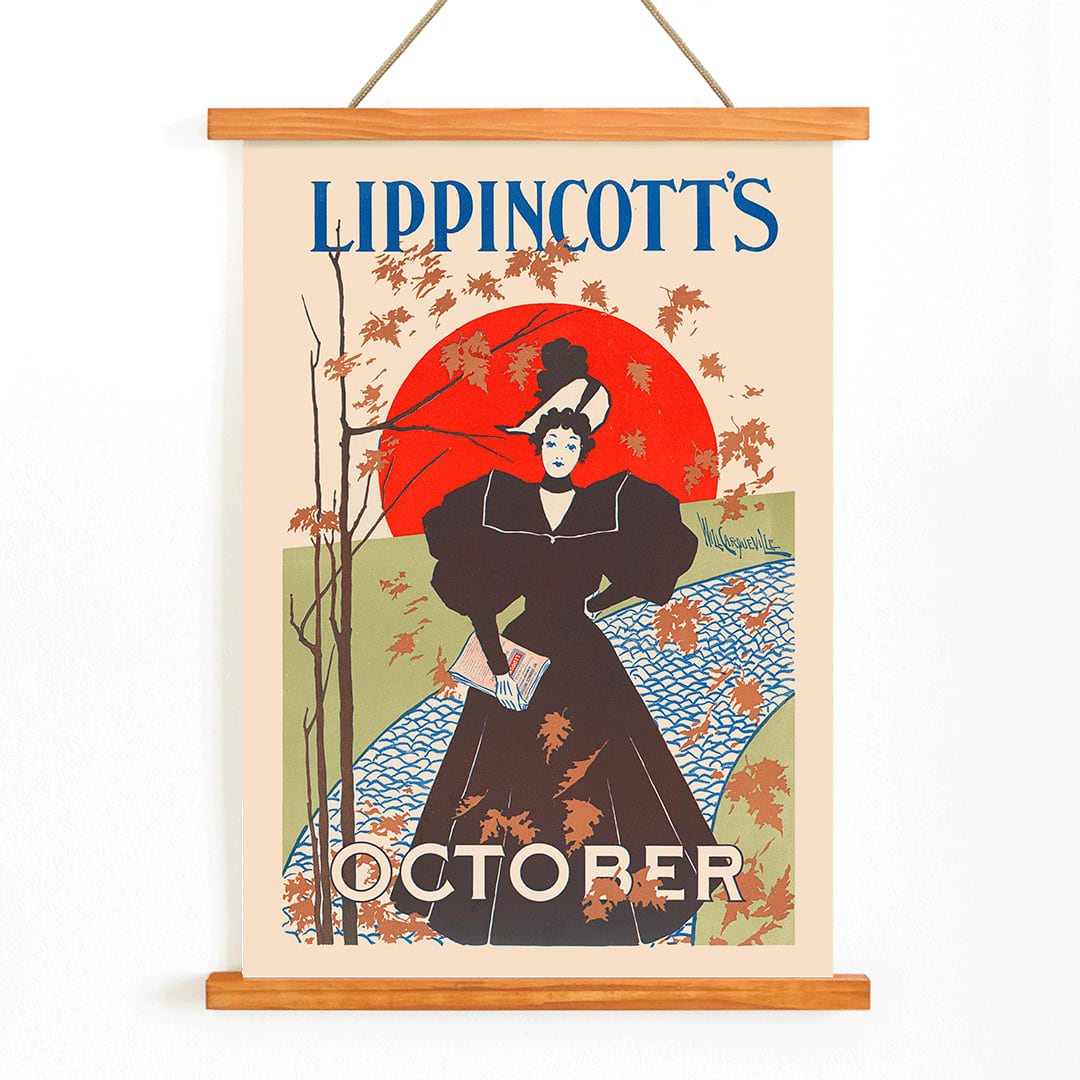
This poster was created to promote the October 1895 issue of Lippincotts Magazine, a prominent literary monthly of its time. During the fin de siècle, publishers used striking posters to attract readers and establish a magazine's cultural presence in a competitive market. Such campaigns helped transform magazines into symbols of taste and aspiration, connecting readers with the evolving ideals of sophistication and modern life.
The central figure—a poised woman—embodies the era's fascination with the modern, educated woman as both consumer and cultural icon, reflecting the magazine's appeal to a discerning audience.
Style & Characteristics
The composition centers on an elegantly dressed woman, rendered in a clean, vertical format that commands attention. Carqueville employs bold, clear letterforms and simplified shapes, creating a strong visual impact while maintaining a sense of refinement.
The color palette features striking contrasts of blue, red, black, green, and white, which sharply define the figure, background, and text. The overall mood is urbane and slightly theatrical, making this work a decorative statement piece that complements other blue tone wall art and curated vertical posters in a gallery setting.
In Interior Design
This vintage magazine poster brings a touch of literary glamour to living rooms, hallways, studies, or library nooks. Its figure-focused design pairs well with mid-century furnishings, Parisian-inspired interiors, or contemporary spaces that favor clean lines and statement art.
It works beautifully against off-white walls, walnut wood, or brass accents to evoke classic print-era elegance, or with deep navy and crimson for bold contrast. This piece is especially suited for readers, fashion history enthusiasts, and collectors of late 19th-century decorative art.