


You may also like
-

Lippincott May Poster
William Carqueville · 1895 · Airy Belle Époque poster of a woman gathering spring flowers in a white dress
Poster from £9 · Framed from £16
-

Lippincott October Poster
William Carqueville · 1895 · Elegant magazine poster featuring a stylish woman in dress and bold blue accents
Poster from £9 · Framed from £16
-

Lippincott Poster
William Carqueville · 1895 · Serene Belle Epoque poster of a woman reading by the water in bold blues
Poster from £9 · Framed from £16
-

Livorno stagione balneare Poster
Leonetto Cappiello · 1901 · Spirited seaside poster with a green figure and glowing lanterns against deep night
Poster from £9 · Framed from £16


-

"Very nice Posters. The quality is amazing and we received it very quickly !"
-

"A shop to visit absolutely. Huge selection of posters. We spent more than an hour there !"
-

"Perfect to find gift. Price are very good. An they can frame and pack it on site"


About the Artist
William Carqueville was an American illustrator active at the turn of the twentieth century, recognized for his role in bringing Art Nouveau sensibilities to American magazine and poster design. His work flourished during a period when illustrated covers shaped public taste and reflected the era’s fascination with modernity and elegance.
Carqueville’s illustrations are part of the same international movement that elevated Parisian poster art, appealing to collectors interested in vintage advertising posters that blend decorative artistry with literary sophistication.
The Artwork
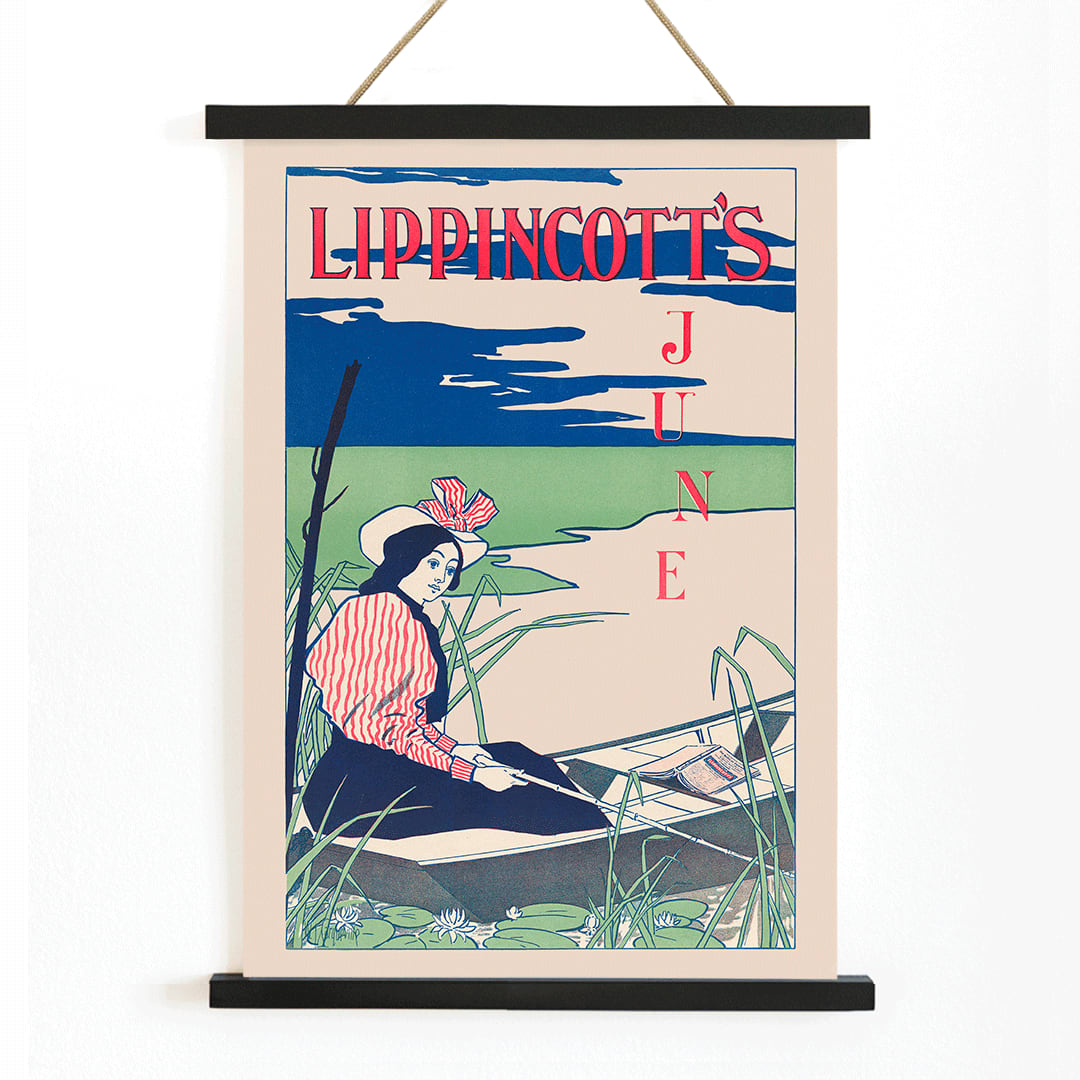
Lippincott June from 1895 was created as a magazine cover during the golden age of illustrated periodicals, when such imagery served both as branding and as a window into contemporary culture. This artwork was designed to attract attention on newsstands, suggesting a leisurely, cultured lifestyle to its viewers.
The boating scene, with its tranquil water lilies and poised figure, reflects the era’s ideals of refined recreation and the allure of summer escapes. The image embodies the period’s fascination with modern femininity and the emerging visual language of Art Nouveau, making it a lasting piece of aspirational design. For those interested in similar works, the Alphonse Mucha collection offers further exploration of this style.
Style & Characteristics
This Art Nouveau composition features a graceful woman seated in a boat surrounded by water lilies, rendered with flowing lines and a strong decorative silhouette. The harmonious palette includes soft reds, blues, greens, pinks, and whites, balancing botanical delicacy with graphic clarity.
Designed for mass reproduction, the artwork employs crisp outlines and clear forms, giving it the striking presence of a classic poster while maintaining a gentle, dreamy atmosphere. The interplay of illustration and design is characteristic of the era’s most celebrated magazine covers.
In Interior Design
This vintage poster brings a serene focal point to living rooms, bedrooms, reading nooks, or home offices, especially in spaces seeking a touch of historical charm. It complements classic interiors, eclectic vintage decor, and minimalist rooms that benefit from a lyrical statement piece.
For a cohesive look, echo the artwork’s greens and blues with plants or ceramics, and use pink or red accents for warmth. A light mat and framing options in natural wood or black can further refine the mood, from soft romantic to boldly graphic.