


You may also like
-
Twee zilverreigers Poster
Theo van Hoytema · 1892 · Elegant egret print with delicate linework and dramatic black background
Poster from £9 · Framed from £16
Regular price From £6.00Regular price -
Egret Poster
Ohara Koson · 1910 · Serene egret art print with rain-streaked atmosphere and striking black-white contrast
Poster from £9 · Framed from £16
Regular price From £6.00Regular price -
Group of Egrets Poster
Ohara Koson · 1925 · Tranquil egret print in winter stillness with soft blue shadows and crisp black accents
Poster from £9 · Framed from £16
Regular price From £6.00Regular price -
White Chinese Geese Poster
Ohara Koson · 1928 · Serene wildlife print of two white geese gliding beside reeds on calm water
Poster from £9 · Framed from £16
Regular price From £6.00Regular price


-

"Very nice Posters. The quality is amazing and we received it very quickly !"
-

"A shop to visit absolutely. Huge selection of posters. We spent more than an hour there !"
-

"Perfect to find gift. Price are very good. An they can frame and pack it on site"


About the Artist
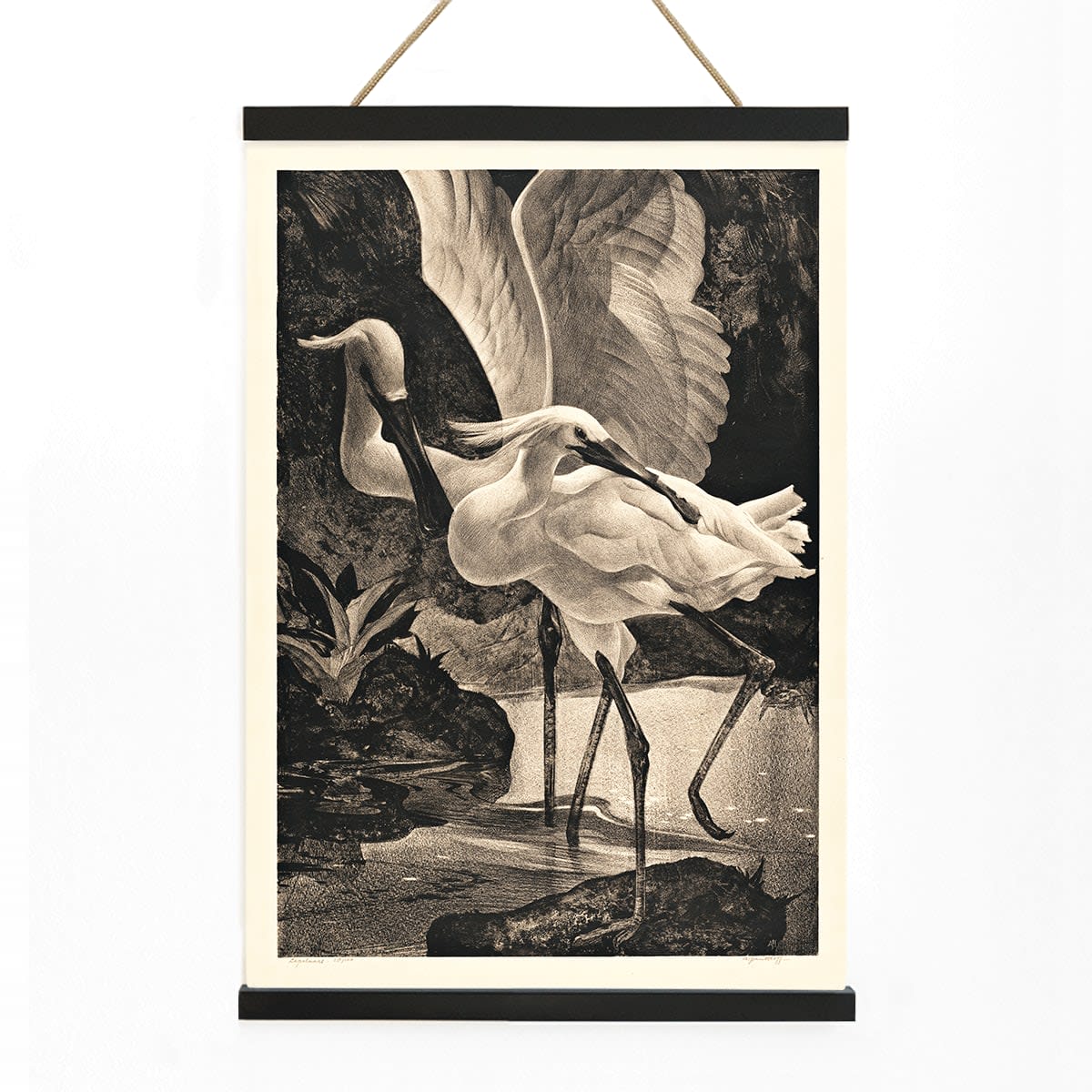
Adriaan van Hoff is associated with early twentieth-century Dutch graphic design, a period when poster art merged modern clarity with evocative subjects. Although little is known about van Hoff’s personal biography, his work reflects the influence of the interwar years, when artists across Europe sought to distill nature and culture into visually compelling forms. Lepelaars, created in 1923, exemplifies the Dutch tradition of uniting natural themes with innovative design, echoing the era’s fascination with both progress and heritage.
During this time, the Netherlands experienced a renewed interest in its native landscapes and wildlife, often as a response to rapid modernization. Designers like van Hoff contributed to this cultural movement by creating images that celebrated the beauty and tranquility of local species, making them accessible and meaningful to a broad audience through decorative art.
The Artwork
Lepelaars, meaning spoonbills in Dutch, centers on these elegant wetland birds, which are closely tied to the Netherlands’ marshes and waterways. The artwork was conceived not as a scientific illustration, but as a visual homage to the spoonbill’s serene presence and distinctive silhouette. In the context of the 1920s, such images subtly encouraged viewers to appreciate and preserve their natural environment, blending artistry with a sense of place.
This print transforms the spoonbill into a symbol of calm and continuity, reflecting a broader trend in vintage poster art to elevate everyday subjects into icons of national identity and aesthetic pleasure.
Style & Characteristics
The composition is defined by striking black and white contrasts, with the spoonbills rendered in bold, simplified shapes against a stark background. Their elongated bills and poised stances are captured with minimal detail, emphasizing clarity and instant recognition. The use of negative space and flat tones suggests an Art Deco influence, where elegance is achieved through structure and restraint rather than ornamentation.
This graphic approach creates a tranquil, contemplative mood, making the print both visually impactful and soothing. Its monochrome palette and refined lines make it a timeless choice for interiors that value both vintage charm and modern simplicity.
In Interior Design
This bird poster brings understated sophistication to living rooms, hallways, or offices, especially when paired with light woods, chrome, or linen textures. It harmonizes beautifully with black and white posters, enhancing modern spaces with its serene presence.
For those curating a nature-inspired decor, it complements animal art prints and fits seamlessly among minimalist posters. Framed in black or natural oak, it lends vintage character while maintaining a crisp, contemporary feel.