


You may also like
-

La Fuen de Munia Poster
Charles Hamilton Smith · 1835 · Serene sunset village poster with rolling hills and softly fading Mediterranean sky
Poster from £9 · Framed from £16
-

Hermitage of St Trinidad Poster
Charles Hamilton Smith · 1835 · Romantic mountain landscape poster featuring a small hermitage beneath dramatic Montserrat peaks
Poster from £9 · Framed from £16
-

Bridge of Martorelle Poster
Charles Hamilton Smith · 1835 · Romantic landscape poster featuring a stone bridge over a tranquil river and distant hills
Poster from £9 · Framed from £16
-

Friendly Cove Poster
Charles Hamilton Smith · 1830 · Serene coastal art print with anchored sailboats, wooded hills, and soft sea light
Poster from £9 · Framed from £16


-

"Very nice Posters. The quality is amazing and we received it very quickly !"
-

"A shop to visit absolutely. Huge selection of posters. We spent more than an hour there !"
-

"Perfect to find gift. Price are very good. An they can frame and pack it on site"


About the Artist
Charles Hamilton Smith, active during the early nineteenth century, was known for his contributions to both topographical art and natural history illustration. His work reflects a time when travel imagery and printed landscapes allowed viewers to experience distant places from the comfort of their homes. Smith’s disciplined approach bridged scientific observation and artistic sensibility, making his works valued references for collectors and enthusiasts of the period.
Collectors interested in notable artist wall art and classic art prints often appreciate how Smith’s landscapes combine documentary precision with a subtle poetic atmosphere, offering a window into the rural environments of his era.
The Artwork
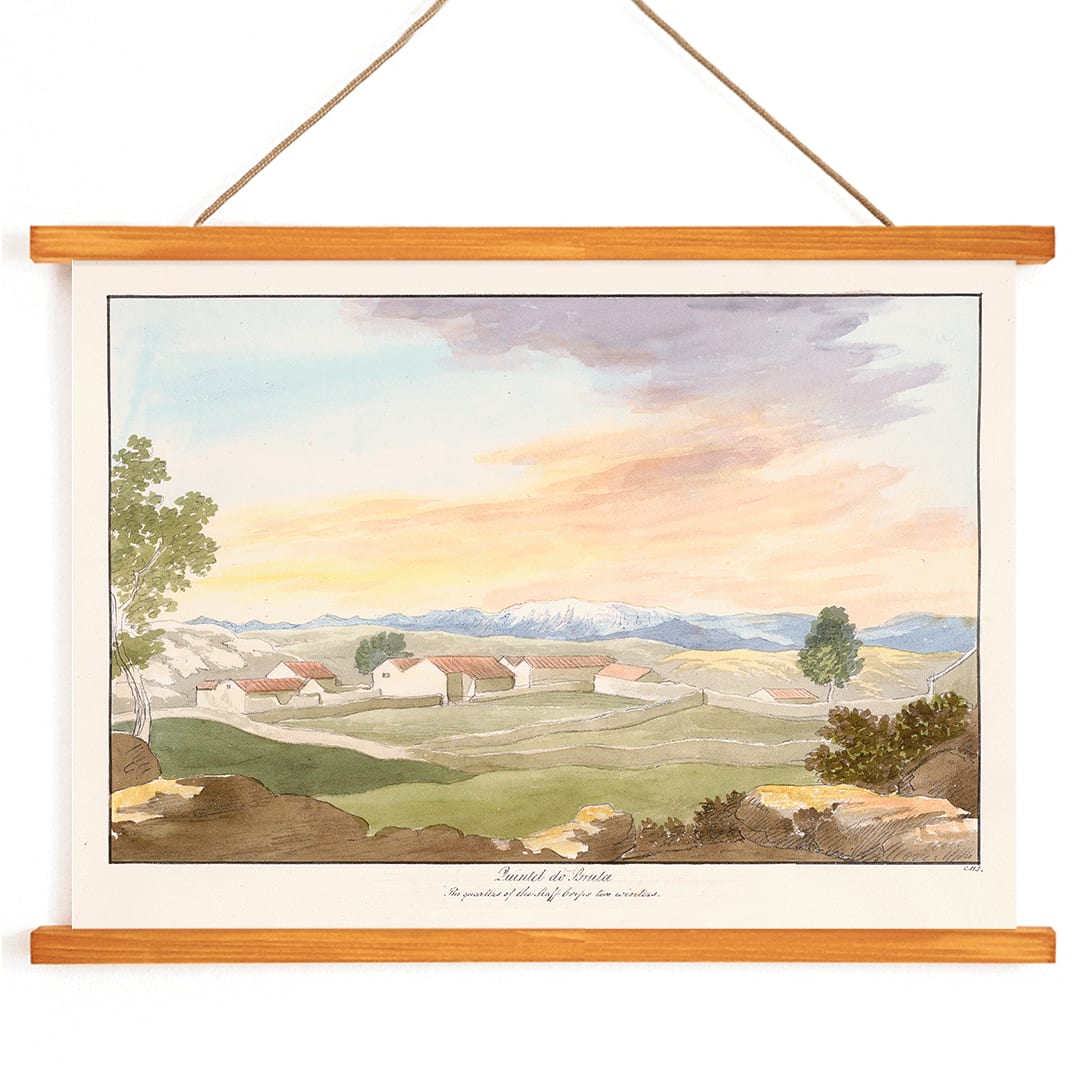
Created in 1835, Quintel do Brula captures the essence of a cultivated estate landscape during a period when such views were popular as souvenirs and aids to armchair travel. The artwork reflects the nineteenth-century fascination with documenting localities and rural life, serving as both a record and an imaginative portal to another place and time. It embodies the desire to preserve the character of specific regions amid the broader changes brought by industrialization and expanding travel networks.
The scene invites viewers to consider the relationship between land, labor, and weather, presenting a harmonious vision of coexistence between people and nature. As a landscape print, it stands as a testament to the era’s interest in mapping and memorializing the countryside.
Style & Characteristics
The composition unfolds as a panoramic view, with textured foreground fields leading the eye toward distant buildings and a softly rendered horizon. Smith’s fine linear technique, characteristic of nineteenth-century printmaking, lends clarity and calm to the scene. The palette is grounded in natural greens and browns, complemented by a luminous blue sky and gentle touches of warm light that suggest a tranquil, sunlit day.
The atmosphere is serene and restorative, evoking a sense of peace and spaciousness. This artwork fits naturally among pieces in the green poster collection, and its balanced tones make it appealing for those seeking vintage landscape art with a historical sensibility.
In Interior Design
This vintage landscape print brings depth and calm to living rooms, hallways, or studies, especially when paired with natural materials like oak, walnut, or linen. Its soothing color scheme complements both traditional and minimalist interiors, adding a sense of openness and connection to nature.
For harmonious styling, consider sage or olive accents, light neutral walls, and subtle blue details to echo the artwork’s palette. Displayed alongside maps, etchings, or other tranquil scenes, it creates a cohesive gallery wall, especially when finished with a simple frame from the frames collection.