


You may also like
-

Japanese Toys 1 Poster
Kawasaki Kyosen · 1919 · Playful festival mask vintage print with bold lines and cheerful folk character
Poster from £9 · Framed from £16
-

Cats Poster
Utagawa Kuniyoshi · 1849 · Playful ukiyo-e cats print showing varied poses with crisp ink lines and red accents
Poster from £9 · Framed from £16
-

Black Cat 4 Poster
Unknown artist · 1750 · Striking black cat vintage print with bold silhouette on warm beige ground
Poster from £9 · Framed from £16
-

Azuma nishikie Poster
Unknown artist · 1860 · Striking ukiyo-e print of a kimono-clad figure confronting a dramatic tiger head
Poster from £9 · Framed from £16


-

"Very nice Posters. The quality is amazing and we received it very quickly !"
-

"A shop to visit absolutely. Huge selection of posters. We spent more than an hour there !"
-

"Perfect to find gift. Price are very good. An they can frame and pack it on site"


About the Artist
Kawasaki Kyosen was a Japanese artist active during the late Meiji and Taisho periods, known for his sensitive depictions of everyday objects and folk toys. His work reflects a fascination with the artistry found in daily life, bridging the worlds of popular illustration and traditional printmaking in early 20th-century Japan.
Kyosen’s prints are valued by collectors for their ability to capture the spirit of a rapidly changing society, preserving the charm of handmade objects at a time when industrialization was reshaping Japanese culture. His focus on toys reveals a deeper appreciation for the cultural stories embedded in simple forms.
The Artwork
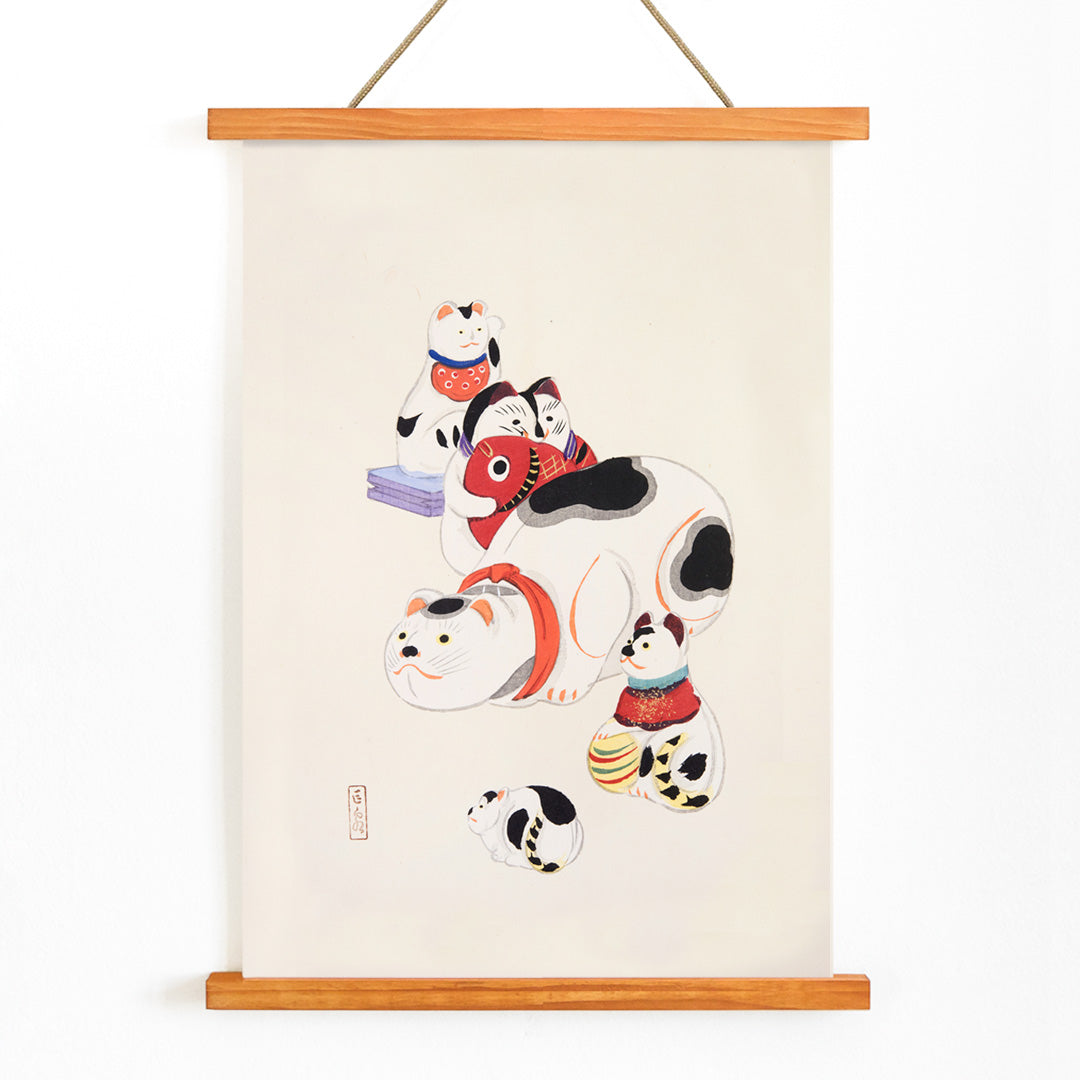
Created in 1919, Japanese Toys 2 centers on traditional toy cats, which in Japanese culture are often associated with good fortune, protection, and a joyful home. This print was made during a period of growing nostalgia for handcraft and folk traditions, as urbanization transformed daily life. The artwork serves as both a celebration of childhood and a record of cultural symbolism, inviting viewers to reflect on the enduring appeal of these playful figures.
By highlighting these familiar toys, Kyosen’s work connects viewers to a sense of collective memory and the enduring value of handcrafted design in Japanese art history.
Style & Characteristics
The composition features a clean, graphic layout with bold outlines and flat areas of color that make the toy cats instantly recognizable. The background is a soft, light hue, allowing the figures to stand out, while accents of red, yellow, and purple add a festive, lively touch. The simplified forms and expressive faces evoke a cheerful, nostalgic mood, characteristic of early 20th-century Japanese poster and print design.
Kyosen’s technique balances clarity with warmth, using minimal detail to convey personality and charm. The overall effect is playful yet refined, making the print suitable for both vintage and contemporary settings.
In Interior Design
This Japanese toy cat print brings a playful accent to entryways, kitchens, or home offices, adding personality without overwhelming the space. It pairs well with pale walls, light woods, and subtle pops of color in decor elements.
For a cohesive look, combine it with Oriental wall art or create a themed display with animal posters. It also fits beautifully in playful environments, such as kids room prints, where its storybook quality shines.