


You may also like
-

Woman After a Bath Poster
Goyō Hashiguchi · 1920 · Serene bijin art print capturing a private bathing ritual in delicate shin hanga tones
Poster from £9 · Framed from £16
-

Woman Applying Powder Poster
Goyō Hashiguchi · 1918 · Elegant bijin-ga art print of a woman powdering her face in quiet morning light
Poster from £9 · Framed from £16
-

Woman Applying Rouge Poster
Goyō Hashiguchi · 1920 · Intimate bijin ga print of a woman applying rouge in a quiet daily ritual
Poster from £9 · Framed from £16
-

Yokugo no onna Poster
Goyō Hashiguchi · 1915 · Refined bathing beauty art print with pale skin, dark hair, and vermilion accents
Poster from £9 · Framed from £16


-

"Very nice Posters. The quality is amazing and we received it very quickly !"
-

"A shop to visit absolutely. Huge selection of posters. We spent more than an hour there !"
-

"Perfect to find gift. Price are very good. An they can frame and pack it on site"


About the Artist
Kotondo Torii was a Japanese printmaker associated with the shin hanga movement, which revitalized traditional woodblock printing in early twentieth-century Japan. He is renowned for his bijin ga, or portraits of women, which merge classical elegance with a sense of contemporary life. His work reflects the Torii school’s legacy of refined figure drawing, updated with a modern sensitivity to mood and atmosphere.
Kotondo’s prints were highly sought after by collectors during the shin hanga era, representing a bridge between Edo-period traditions and the tastes of a new urban audience. His contributions helped define the visual language of Japanese woodblock art in the modern age, making his prints enduring favorites among connoisseurs.
The Artwork
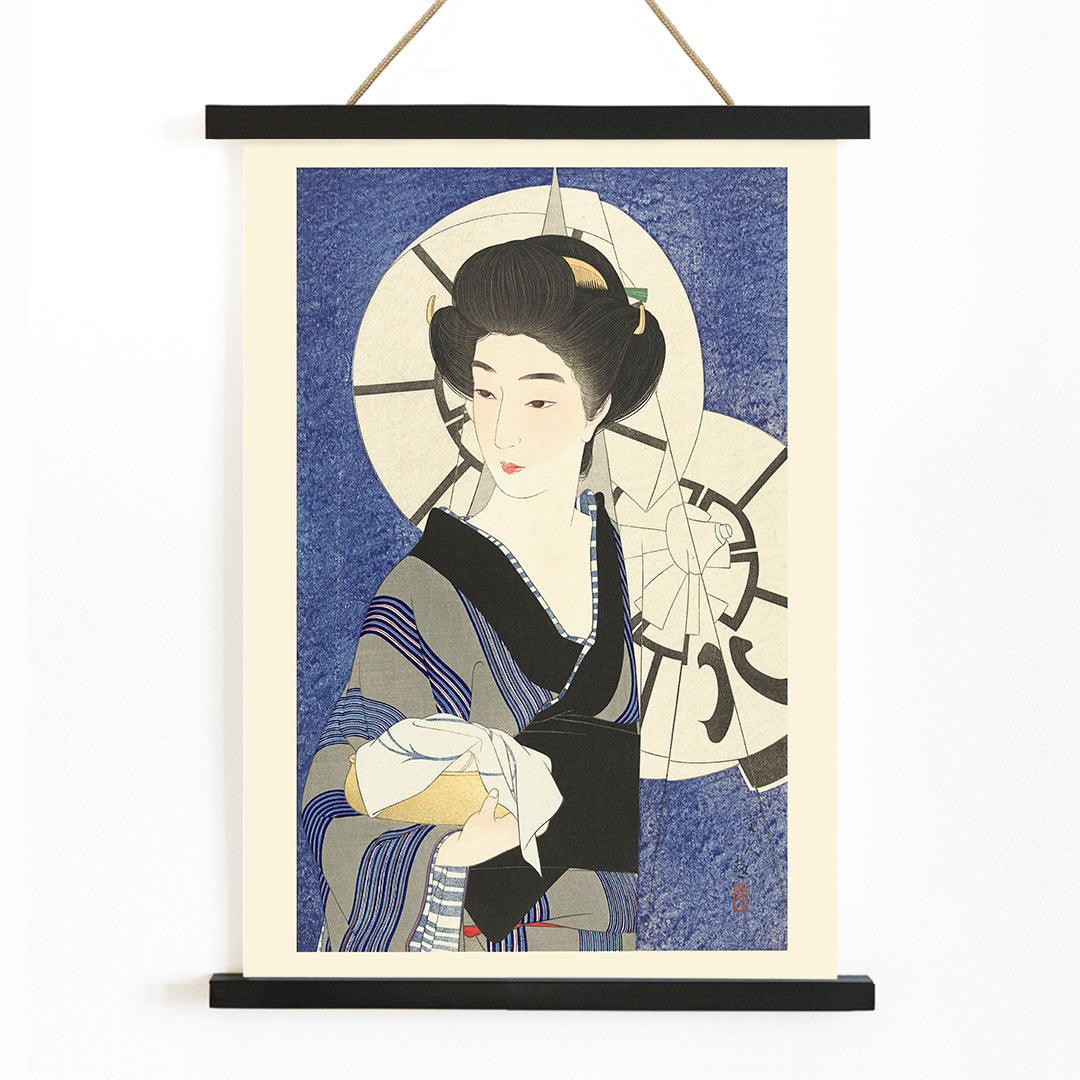
After visiting the bathhouse captures a quiet moment in urban Japanese life, when public bathhouses served as essential spaces for relaxation and social ritual. This 1933 work transforms an everyday scene—the transition from the warmth of the bathhouse to the coolness of the street—into a contemplative interlude. The print reflects the shin hanga movement’s aim to elevate daily experiences through art, blending nostalgia with a modern sensibility.
Created at a time when such prints were collected as both fine art and cherished mementos, this image stands as a testament to the enduring beauty of ordinary moments. For further exploration of similar themes, see our oriental collection and discover more vertical posters that capture the poetry of daily life.
Style & Characteristics
The composition features a solitary woman in a kimono, holding an umbrella as she steps into gentle rain. Cool blue and white tones dominate the palette, accented by touches of red and yellow, creating a serene and balanced atmosphere. The use of clean lines, subtle gradations, and flat color fields exemplifies the shin hanga woodblock technique.
The mood is introspective and tranquil, evoking the quiet pause between shelter and exposure. Delicate patterns in the kimono and the soft rendering of rain add visual interest, while the vertical format enhances the elegance of the figure and the scene’s sense of calm.
In Interior Design
This poster is well suited to entryways, bedrooms, or bathrooms, where its theme of transition and reflection resonates naturally. It complements Japandi, minimalist, and mid-century interiors, offering a narrative focal point without overwhelming the space.
Pair its cool hues with indigo ceramics, off-white walls, or subtle red accents in textiles. For a harmonious gallery wall, combine it with other blue toned prints and additional vertical posters for a serene, cohesive arrangement.