


You may also like
-

A Group of Carnations Poster
Robert John Thornton · 1807 · Romantic botanical print of carnations with vivid reds, lush greens, and crisp whites
Poster from £9 · Framed from £16
-

The Blue Egyptian Water-Lily Poster
Robert John Thornton · 1807 · Dramatic blue water-lily botanical print with luminous petals on a deep shadowed ground
Poster from £9 · Framed from £16
-

Ripe Sunflower Poster
Robert John Thornton · 1799 · Dramatic ripe sunflower botanical print with curling petals and lush green leaves
Poster from £9 · Framed from £16
-

Irises Poster
Ohara Koson · 1925 · Serene blue iris botanical print with slender leaves and airy Japanese composition
Poster from £9 · Framed from £16


-

"Very nice Posters. The quality is amazing and we received it very quickly !"
-

"A shop to visit absolutely. Huge selection of posters. We spent more than an hour there !"
-

"Perfect to find gift. Price are very good. An they can frame and pack it on site"


About the Artist
Robert John Thornton was an English physician and botanist who played a pivotal role in the golden age of British botanical illustration. His most celebrated achievement, The Temple of Flora, was conceived as an ambitious project to unite scientific accuracy with the grandeur of fine art, making botanical studies objects of beauty and fascination.
Thornton collaborated with renowned engravers and colorists to produce plates that appealed to both scholars and aesthetes. His work remains a testament to the Enlightenment spirit, where curiosity about the natural world was matched by a desire for artistic excellence.
The Artwork
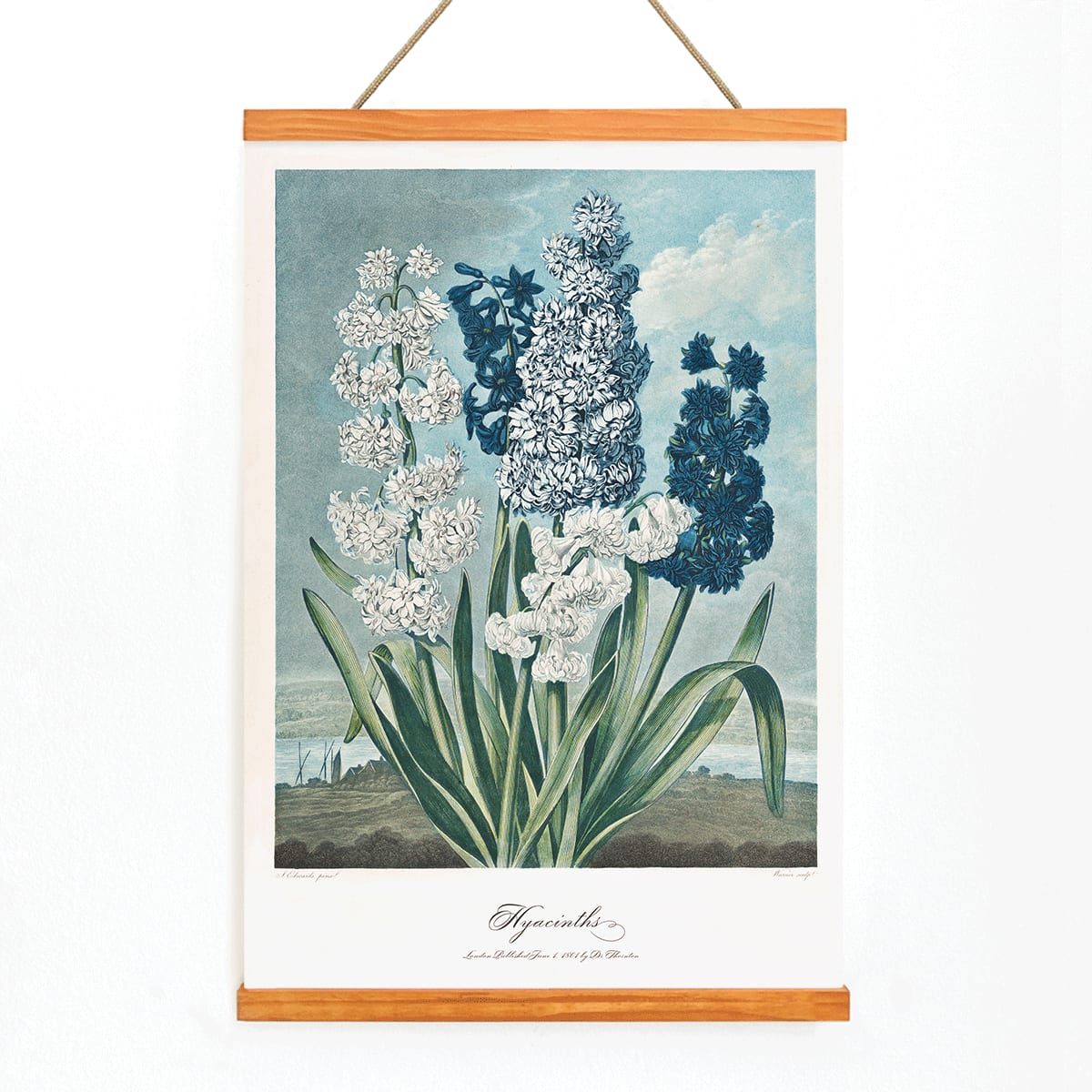
This depiction of hyacinths is drawn from The Temple of Flora, published in 1807 during a period when botanical pursuits were both intellectually rigorous and socially fashionable. The era saw a surge in plant collecting, garden design, and the publication of lavish botanical folios that allowed enthusiasts to admire rare and exotic species from home.
Thornton’s hyacinth plate reflects the flower’s status as a cherished symbol of spring and renewal. The artwork captures the cultural fascination with classification and the cultivation of beauty, offering a glimpse into the values and passions of early nineteenth-century Britain. For modern viewers, it stands as a historical document and a celebration of botanical artistry.
Style & Characteristics
The composition centers on several hyacinth flower spikes, each rendered with meticulous detail and surrounded by long, sculptural green leaves. The artist employs delicate linework and subtle shading to create a sense of depth and velvety texture in the blossoms, hallmarks of high-quality botanical illustration.
A gentle palette of pale white, soft blue, and fresh green gives the print a calm, luminous quality. The balance of scientific precision and decorative elegance makes it a versatile addition to interiors, especially when combined with other botanical prints or classic art for a refined gallery display.
In Interior Design
This botanical print lends a serene, structured presence to bedrooms, reading nooks, or entryways. Its cool floral tones pair effortlessly with light woods, linen fabrics, and ceramics, and it integrates beautifully with blue toned wall art for an airy, cohesive look.
Displayed alone above a console or grouped with other floral studies, it appeals to gardeners, design minimalists seeking a natural accent, and anyone curating interiors with a sense of history and quiet sophistication.