


You may also like
-
Musical Instrument Patent Poster
H. Ernst · 1916 · Intricate guitar patent print with precise diagrams and numbered callouts on warm beige
Poster from £9 · Framed from £16
Regular price From £6.00Regular price -
Turntable Patent Poster
Robert M. Like · 1977 · Technical turntable patent poster with labeled diagrams and clean black linework
Poster from £9 · Framed from £16
Regular price From £6.00Regular price -
Cassette Player Patent Poster
Sujanani · 1985 · Crisp cassette player patent poster with precise black linework on warm beige background
Poster from £9 · Framed from £16
Regular price From £6.00Regular price -
Audio Tape Patent Poster
US Patents · 1969 · Cassette tape vintage print featuring precise technical diagrams and labeled components
Poster from £9 · Framed from £16
Regular price From £6.00Regular price


-

"Very nice Posters. The quality is amazing and we received it very quickly !"
-

"A shop to visit absolutely. Huge selection of posters. We spent more than an hour there !"
-

"Perfect to find gift. Price are very good. An they can frame and pack it on site"


About the Artist
G.B. Durkee worked in the specialized field of late 19th-century patent drafting, where technical skill and artistic clarity were essential. Draftspeople of this era bridged the gap between invention and communication, producing precise illustrations that became part of the official record for new devices and mechanisms.
Patent illustrators like Durkee contributed to a visual language that helped shape the modern world, as their drawings guided both legal decisions and future innovations. For those interested in the intersection of music and design, you may also enjoy our music wall art collection.
The Artwork
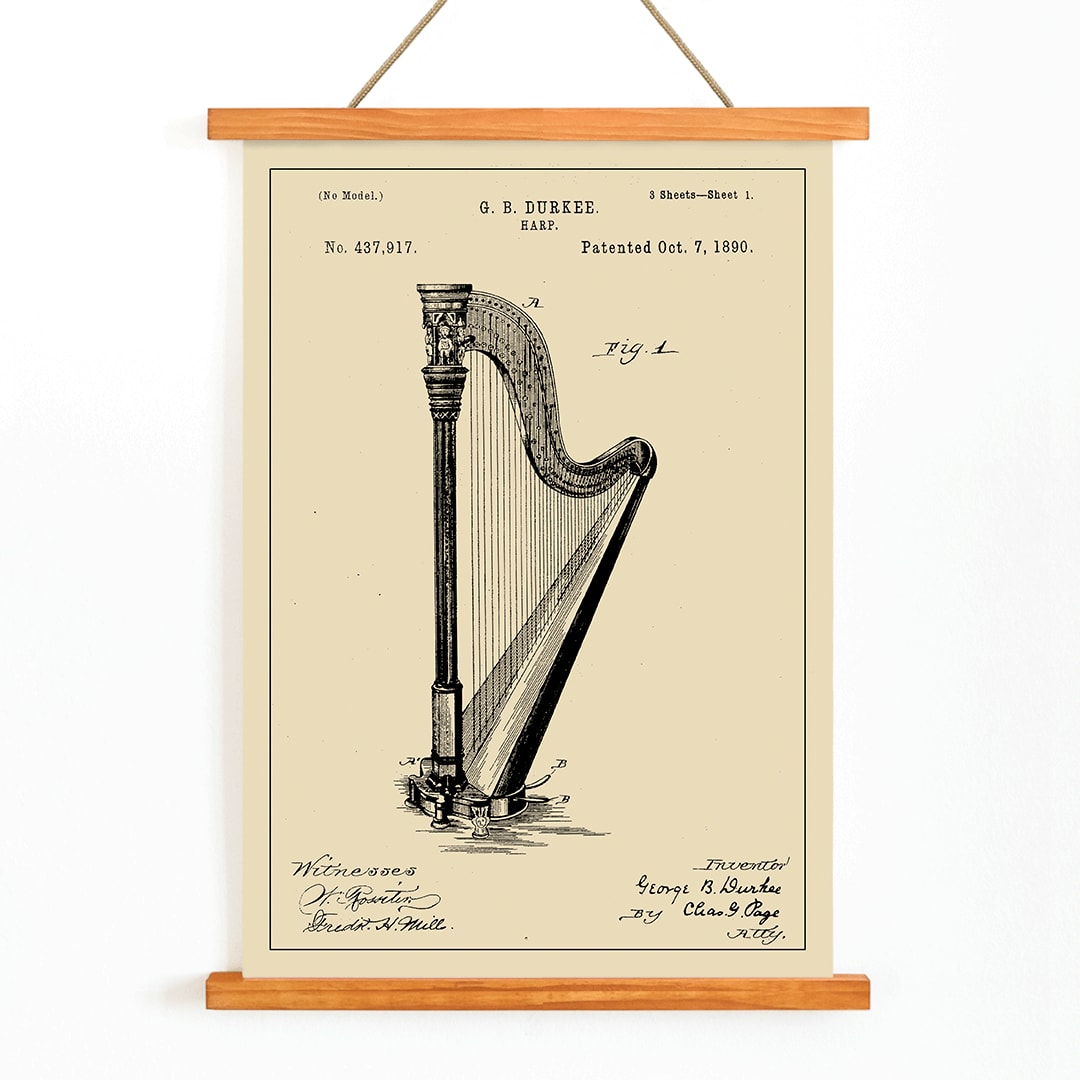
Created in 1890, this harp patent print captures a moment when instrument makers sought to refine and protect their innovations through the patent system. The harp, an instrument with ancient roots, was being reimagined for contemporary audiences and manufacturing processes. This document served as a formal submission to the patent office, providing clear visual evidence of the proposed improvements.
Beyond its original legal function, the print now stands as a testament to the era's inventive spirit and the collaboration between artistry and engineering. It offers a glimpse into the workshop culture of the late 1800s, where technical drawings became enduring artifacts of creativity and progress.
Style & Characteristics
The artwork is arranged in the manner of a classic patent sheet: a prominent central harp rendered in crisp black lines, surrounded by smaller technical diagrams and sectional views. Each figure is carefully labeled, with accompanying blocks of text and numbering, all set against a warm beige background that evokes aged paper.
The monochrome palette and meticulous linework create a refined, scholarly atmosphere, making it an appealing choice for lovers of historical documents and minimalist design. For more works in this style, explore our science prints and black and white posters.
In Interior Design
This vintage print lends a sense of order and history to studies, music rooms, libraries, or creative workspaces. Its neutral tones and structured layout pair well with wood, leather, and metal finishes, fitting seamlessly into classic, industrial, or modern interiors.
Whether displayed alone or as part of a gallery wall, it complements neutral palettes and textured materials like linen and brass. A simple black or light wood frame enhances its archival quality, making it a subtle yet distinctive addition to any thoughtful interior.