


You may also like
-

Blue Tail Lizard Poster
Mark Catesby · 1754 · Lively natural history print of a lizard with vivid blue tail and poised stance
Poster from £9 · Framed from £16
-

Guana Poster
Mark Catesby · 1754 · Elegant iguana print perched on a branch with natural history precision
Poster from £9 · Framed from £16
-

Pawpaw Poster
Mark Catesby · 1754 · Graceful pawpaw botanical print with broad green leaves and ripening fruit on ivory ground
Poster from £9 · Framed from £16
-

Pilchard Poster
Mark Catesby · 1754 · Natural history pilchard vintage print pairing a silvery fish with coastal greenery
Poster from £9 · Framed from £16


-

"Very nice Posters. The quality is amazing and we received it very quickly !"
-

"A shop to visit absolutely. Huge selection of posters. We spent more than an hour there !"
-

"Perfect to find gift. Price are very good. An they can frame and pack it on site"


About the Artist
Mark Catesby was an English naturalist and illustrator whose pioneering work in the eighteenth century bridged scientific inquiry and artistic expression. His expeditions to North America and the Caribbean resulted in detailed studies of regional flora and fauna, making his publications foundational for early zoological and botanical knowledge in Europe.
Catesby's prints were valued not only as scientific documentation but also as objects of beauty, reflecting a time when natural history illustration was central to both research and refined taste. For more discoveries from this era, explore our science posters and prints.
The Artwork
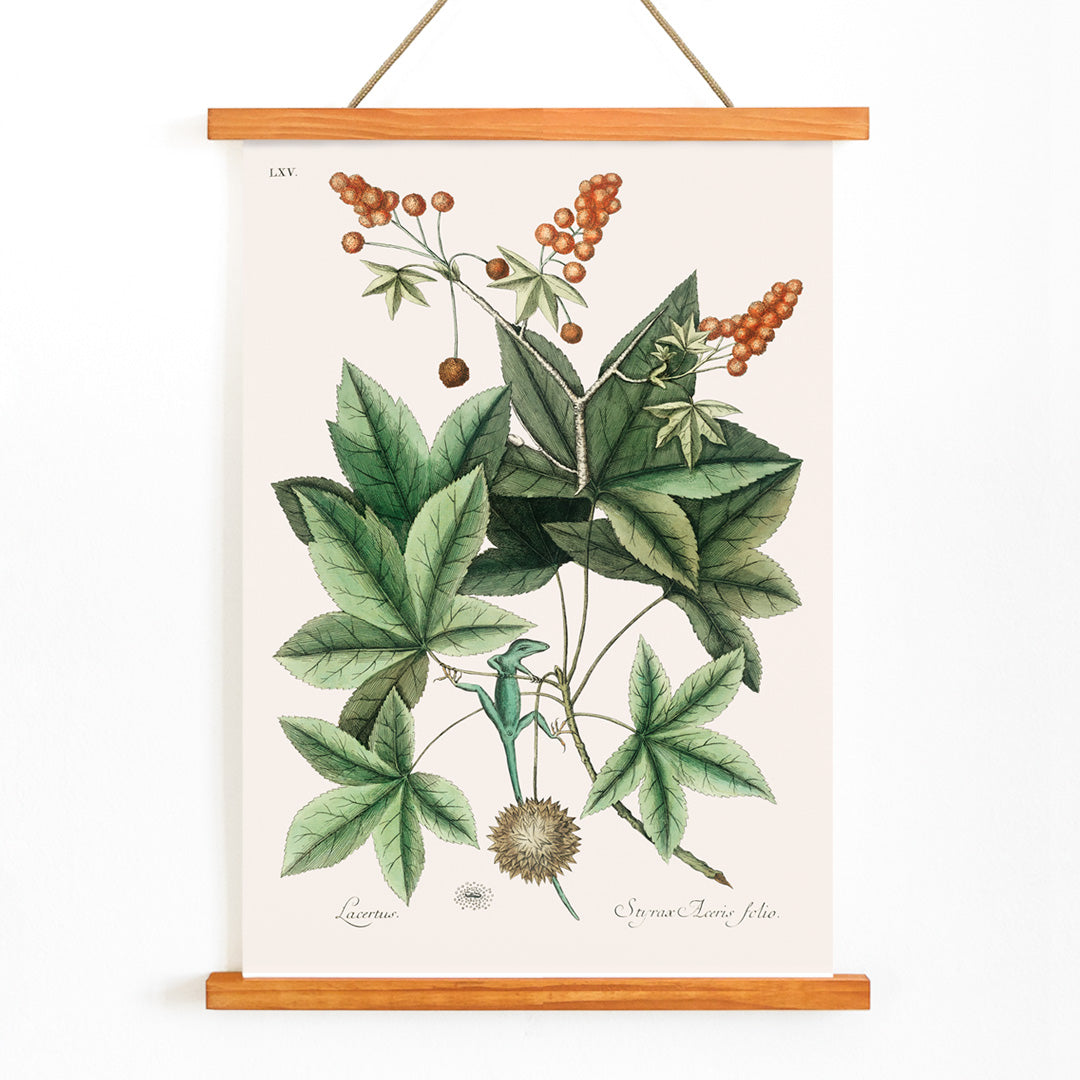
This depiction of a green lizard was created during a period of intense curiosity about the natural world beyond Europe. In 1754, such illustrations served as vital records for scholars and collectors, providing visual access to exotic species encountered during transatlantic exploration. Catesby's work helped establish a visual taxonomy, making distant creatures accessible and understandable to a wider audience.
The print embodies the Enlightenment spirit of cataloguing and sharing knowledge, transforming firsthand observation into a resource for learning and appreciation. Its historical context lies in the intersection of art, science, and the expanding global imagination of the eighteenth century.
Style & Characteristics
The artwork centers a vivid green lizard stretched along a slender branch, surrounded by large, textured leaves and subtle earthy details. The composition is set against a pale, neutral background that highlights the subject's form and color.
Fine linework and hand-applied watercolor washes give the print a luminous, lifelike quality, characteristic of eighteenth-century natural history illustration. The mood is attentive and serene, appealing to admirers of botanical wall art and collectors of animal prints seeking a touch of historical elegance.
In Interior Design
This green lizard vintage print adds a refined focal point to studies, hallways, or living rooms, especially where a sense of history and curiosity is desired. It pairs well with natural materials like wood, rattan, or linen, and complements both traditional and contemporary interiors.
To enhance its palette, consider accents in sage, olive, or warm neutrals. Framed with a generous mat, it becomes a sophisticated statement piece for those who appreciate the intersection of art, science, and timeless design.