


You may also like
-

Exposition Bonnard Poster
Unknown artist · 1947 · Sunlit still life poster balancing bold color blocks and elegant exhibition typography
Poster from £9 · Framed from £16
-

Salon des Cent Poster
Eugène Grasset · 1898 · Art Nouveau poster with a red-haired muse and pale flowers
Poster from £9 · Framed from £16
-

International exhibition of water colors Poster
Arlington Gregg · 1939 · Graphic exhibition poster with primary-color blocks and a paintbrush poised in a glass
Poster from £9 · Framed from £16
-

Paris-Paris 1937-1957 Poster
Roman Cieślewicz · 1981 · Paris poster with mirrored Eiffel Tower graphics and bold yellow contrast
Poster from £9 · Framed from £16


-

"Very nice Posters. The quality is amazing and we received it very quickly !"
-

"A shop to visit absolutely. Huge selection of posters. We spent more than an hour there !"
-

"Perfect to find gift. Price are very good. An they can frame and pack it on site"


About the Artist
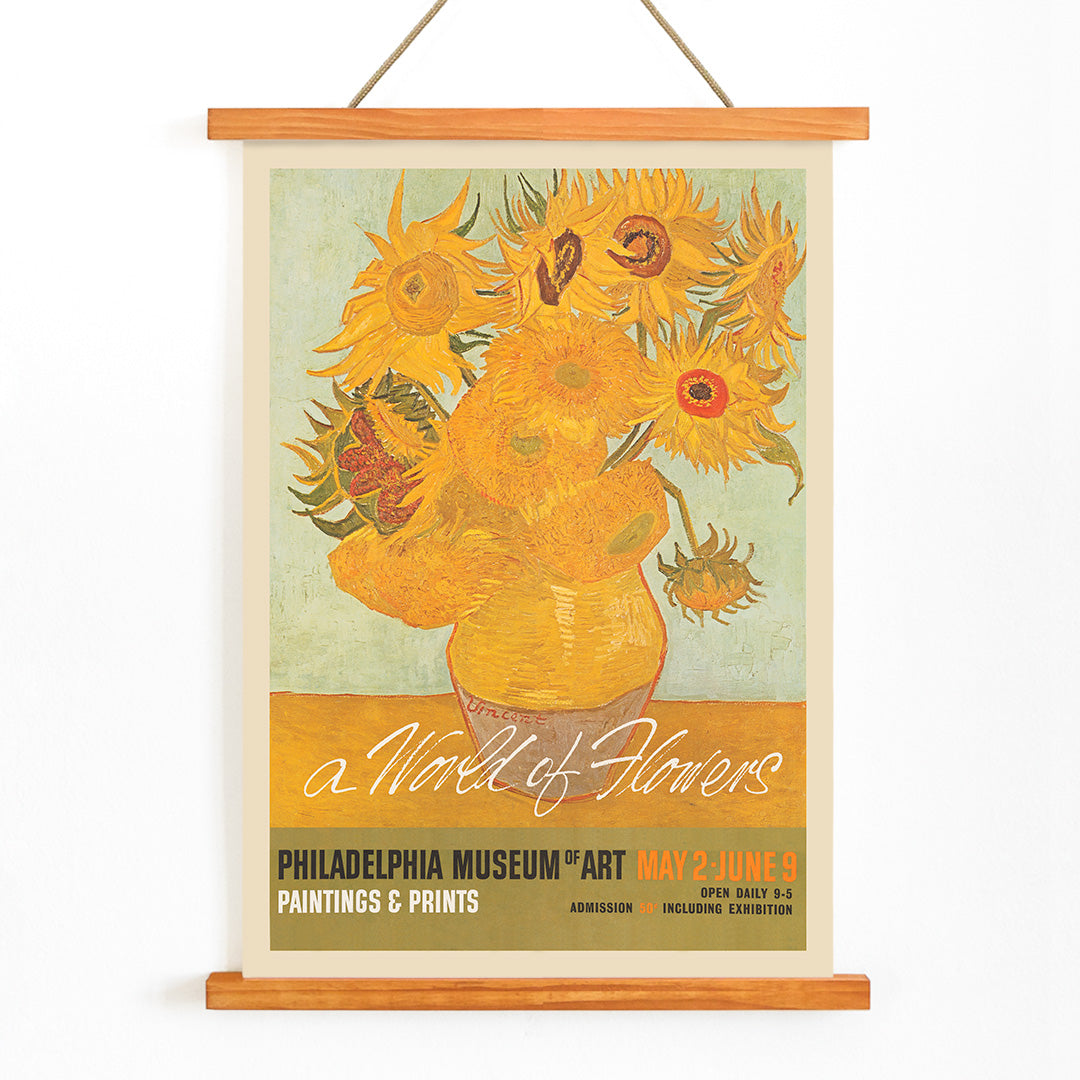
Created by an anonymous artist, this 1964 floral poster reflects the mid-century enthusiasm for bold, accessible design in everyday life. During this era, many decorative prints were produced for mass enjoyment, often without crediting individual creators. The anonymity of such works speaks to a collective spirit in design, where the focus was on visual impact and universal appeal rather than personal authorship.
Floral motifs in the 1960s became symbols of optimism and renewal, resonating with a generation eager for freshness and color in their homes. This poster embodies that spirit, capturing the era’s embrace of decorative art as a vital part of modern living.
The Artwork
Rather than serving as a scientific study, this artwork presents flowers as a joyful theme, inviting viewers into a world of color and energy. In 1964, such imagery reflected a growing desire to bring nature-inspired motifs into urban interiors, making art approachable and uplifting. The poster’s subject matter aligns with the decade’s trend of transforming simple themes into expressive, decorative statements for the home.
Its creation coincided with a period when design was democratized, and affordable art prints became a staple of contemporary decor, offering emotional warmth and visual delight to a broad audience.
Style & Characteristics
The composition features a vibrant arrangement of stylized flowers and leaves, rendered in a graphic, poster-like manner. Dominant hues include bright yellows, vivid reds, and fresh greens, set against a pale background with dark accents for contrast. The forms are simplified and bold, emphasizing clarity and immediate visual impact over intricate detail.
This cheerful and modern aesthetic makes the piece a natural fit for botanical wall art enthusiasts. Its structured yet lively design also complements collections such as yellow-toned prints and green wall decor.
In Interior Design
This vintage floral poster enlivens spaces that benefit from a burst of color and positivity, such as kitchens, entryways, or creative studios. It pairs beautifully with light woods, rattan, and white walls, and can also brighten darker interiors by serving as a vibrant focal point.
To create a cohesive look, echo one of the print’s accent colors in your textiles or ceramics, and consider pairing it with other mid-century or botanical pieces for a harmonious gallery wall.