


You may also like
-

Wey Poster
William Morris · 1882 · Arts and Crafts floral print in cool blue tones with lively botanical rhythm
Poster from £9 · Framed from £16
-

Blue marigold Poster
William Morris · 1875 · Intricate blue floral art print with marigold blooms in rhythmic Arts and Crafts pattern
Poster from £9 · Framed from £16
-

Wild Tulip Poster
William Morris · 1875 · Dense tulip and leaf botanical print in Arts and Crafts rhythm for a gallery wall
Poster from £9 · Framed from £16
-

Violet and Columbine Poster
William Morris · 1883 · Ornamental floral print weaving violets and columbine into a dense garden pattern
Poster from £9 · Framed from £16


-

"Very nice Posters. The quality is amazing and we received it very quickly !"
-

"A shop to visit absolutely. Huge selection of posters. We spent more than an hour there !"
-

"Perfect to find gift. Price are very good. An they can frame and pack it on site"


About the Artist
William Morris was a leading figure in the British Arts and Crafts movement, renowned for his commitment to craftsmanship and the integration of art into everyday life. As a designer, writer, and social thinker, Morris championed the value of handmade beauty in an era of rapid industrialization. His work inspired a return to traditional techniques and a deep appreciation for natural forms, influencing generations of artists and designers. This 1890 pattern reflects his mature vision, where art and utility become inseparable.
Discover more from this influential designer in our William Morris collection and explore additional inspirations in our classic art prints.
The Artwork
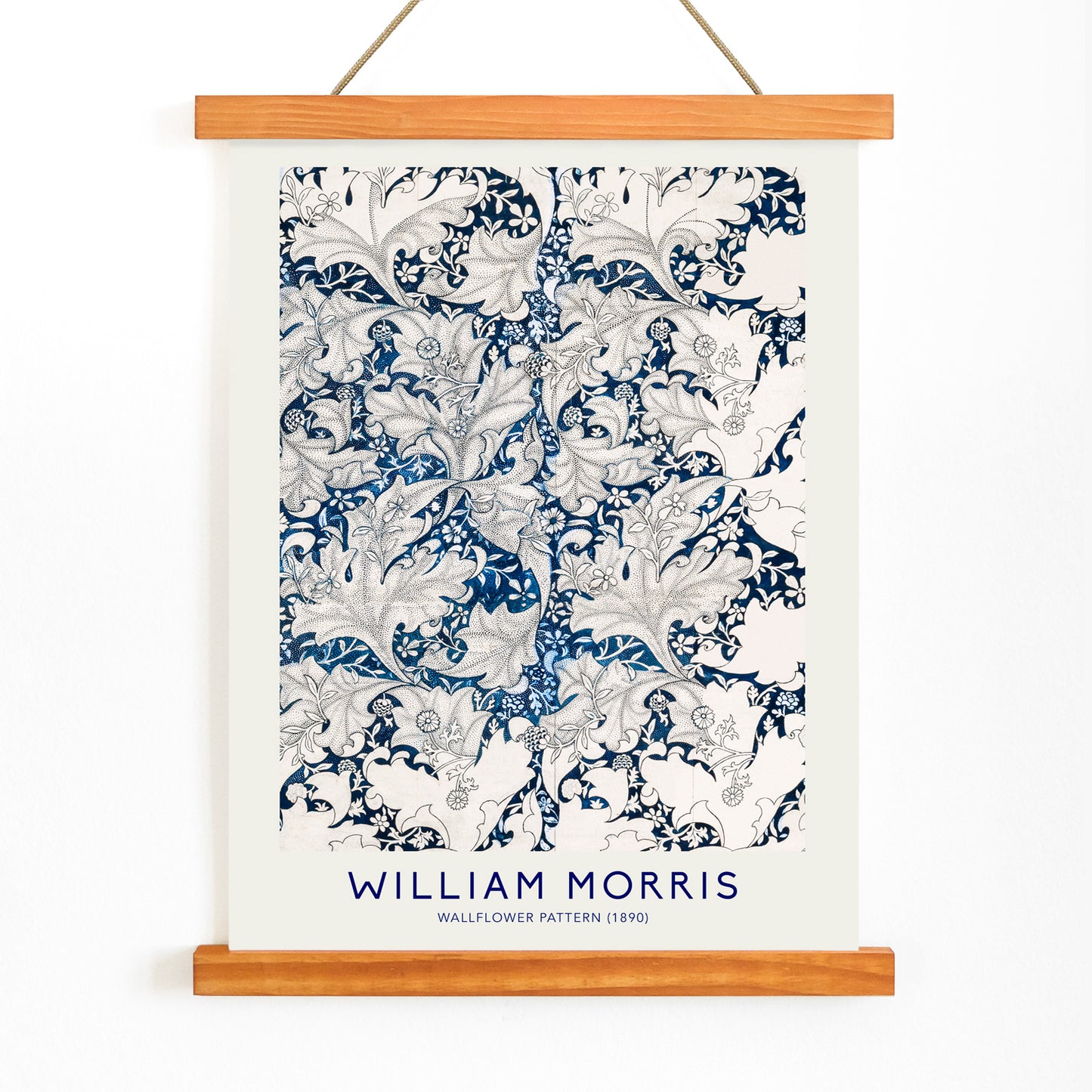
Created during the late Victorian period, Wallflower Pattern exemplifies Morris's belief that decorative arts could elevate daily living. At a time when wallpapers and textiles signified personal taste and cultural ideals, Morris envisioned patterns as a means to foster harmony and well-being in the home. This design was intended to be both functional and uplifting, surrounding inhabitants with a sense of order and connection to nature.
The pattern also reflects the Arts and Crafts ethos that beauty and meaning should be accessible, not reserved for the elite, and that thoughtful design can enrich ordinary environments.
Style & Characteristics
This artwork displays a dense, repeating floral motif with stylized blossoms, leaves, and intertwining vines forming a seamless lattice. The composition is rendered in a crisp blue-on-white palette, emphasizing clarity of line and the interplay of positive and negative space. The design achieves a sense of calm movement, balancing intricate detail with overall harmony.
The mood is serene and structured, making it suitable for both traditional and contemporary interiors. For more artwork in similar hues, browse our blue wall art.
In Interior Design
This Arts and Crafts print brings subtle elegance to living rooms, bedrooms, or hallways, where its rhythmic pattern can soften architectural lines and introduce quiet sophistication. The blue-and-white color scheme pairs well with natural woods, linen, and ceramics, and can serve as a gentle focal point in minimalist or eclectic spaces.
Display it above a console, in a reading nook, or as part of a gallery wall with other botanical or design-focused pieces. Framing in light wood, white, or black enhances its refined character without overwhelming the pattern.