


You may also like
-

Squatting Female Nude Poster
Egon Schiele · 1910 · Taut squatting nude art print with angular pose and spare, intimate negative space
Poster from £9 · Framed from £16
-

Female in Orange-Red Dress Poster
Egon Schiele · 1910 · Expressive figure art print of a kneeling woman in an orange-red dress
Poster from £9 · Framed from £16
-

Seated nude back view Poster
Egon Schiele · 1917 · A vintage poster art print of a seated nude in expressive contour lines
Poster from £9 · Framed from £16
-

Standing Nude woman Poster
Egon Schiele · 1917 · Expressive standing nude art print with angular linework on warm beige paper
Poster from £9 · Framed from £16


-

"Very nice Posters. The quality is amazing and we received it very quickly !"
-

"A shop to visit absolutely. Huge selection of posters. We spent more than an hour there !"
-

"Perfect to find gift. Price are very good. An they can frame and pack it on site"


About the Artist
Egon Schiele was an Austrian modernist and a pivotal figure in Vienna’s Expressionist movement. Around 1910, he began to break away from academic conventions, developing a raw and emotionally charged approach to the human form that would influence generations of artists.
Schiele’s work often explored themes of identity, vulnerability, and psychological depth, challenging viewers to confront the complexities of the self. For more from this era, discover our Egon Schiele collection and other famous artists wall art.
The Artwork
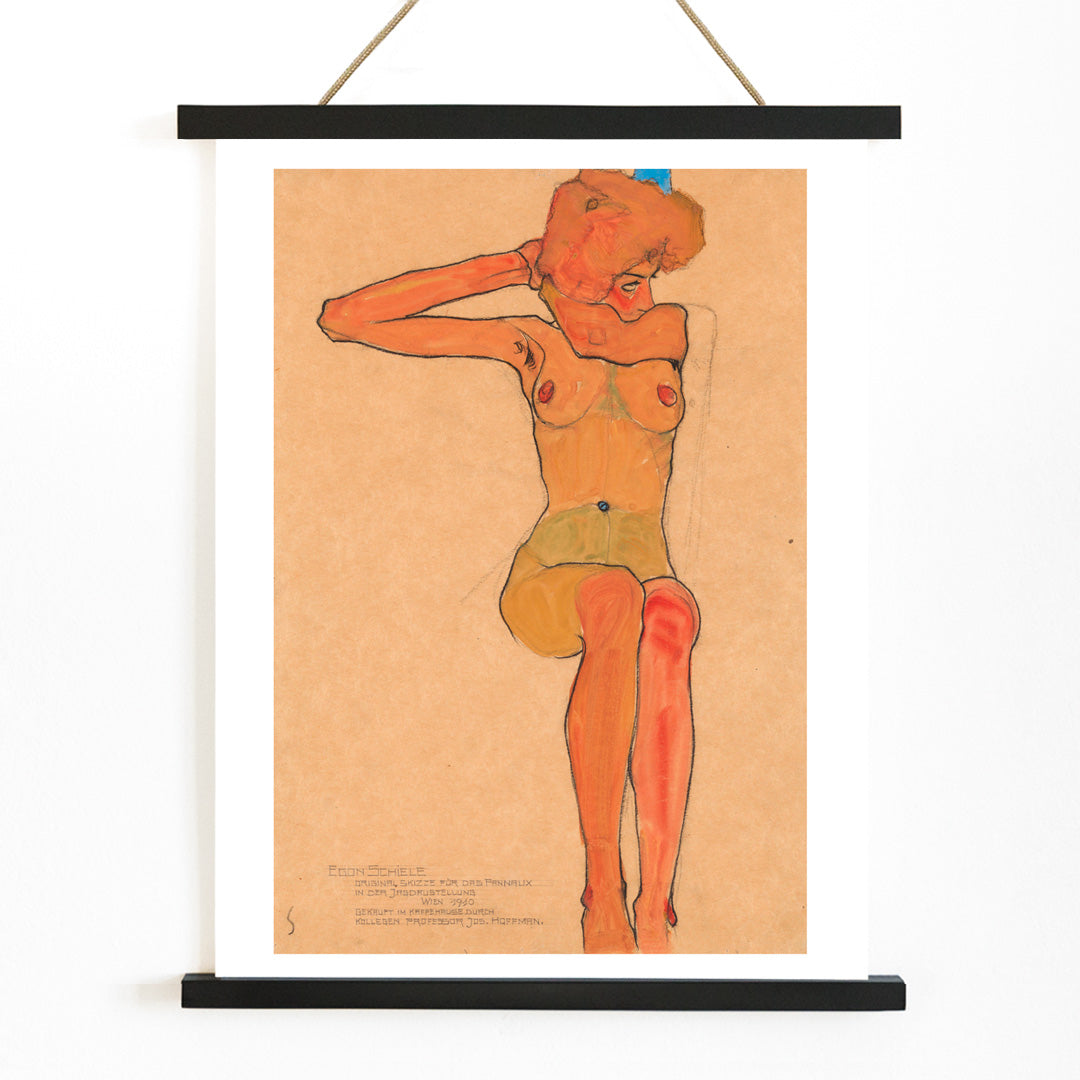
This early study, known as Gertrude, reflects Schiele’s interest in using the nude as a vehicle for exploring the anxieties and shifting values of prewar Central Europe. Created during a period of great cultural change, the piece embodies the artist’s desire to depict the human body not as an ideal, but as a site of emotion and existential questioning.
Such works were often produced in the privacy of Schiele’s studio, intended for close observation and personal reflection rather than public exhibition. The print’s historical context adds depth for collectors interested in the evolution of figurative modernism and the legacy of erotic art.
Style & Characteristics
The composition features a solitary nude figure rendered with bold, angular lines and minimal background detail, drawing the viewer’s attention to the subject’s posture and expression. Schiele’s distinctive contouring and exaggerated anatomy convey a sense of tension and immediacy.
The palette is dominated by warm beige and subtle reddish-orange accents, lending the work a lifelike warmth and intensity. The overall atmosphere is intimate and direct, characteristic of Schiele’s modernist vision and his focus on psychological presence.
In Interior Design
This expressive art print makes a striking focal point in bedrooms, studies, or creative spaces where introspection and individuality are valued. It pairs well with minimalist or mid-century interiors, especially when framed simply in wood or black.
For a harmonious look, combine it with other beige toned prints or artworks from the classic art collection. Its evocative presence appeals to collectors of modernism and those seeking art with emotional resonance.