


You may also like
-

Woman Seated Back Poster
Egon Schiele · 1917 · Expressive figure art print of a seated woman from behind in earthy tones
Poster from £9 · Framed from £16
-

Shaw or Irony Poster
Egon Schiele · 1910 · Expressive lecture poster with angular figure, black linework, and warm orange accents
Poster from £9 · Framed from £16
-

Red Hair Blue Hat Poster
Egon Schiele · 1908 · Expressive portrait art print featuring fiery hair and a cool blue hat
Poster from £9 · Framed from £16
-

Vulgar naked woman Poster
Egon Schiele · 1914 · Raw standing nude art print with orange drapery and wiry black contours
Poster from £9 · Framed from £16


-

"Very nice Posters. The quality is amazing and we received it very quickly !"
-

"A shop to visit absolutely. Huge selection of posters. We spent more than an hour there !"
-

"Perfect to find gift. Price are very good. An they can frame and pack it on site"


About the Artist
Egon Schiele was a pioneering Austrian Expressionist who played a key role in shaping early twentieth-century art in Vienna. Closely linked to Gustav Klimt, Schiele became renowned for his emotionally charged depictions of the human figure, marked by their raw intensity and distinctive linework.
Schiele's influence extended beyond painting and drawing into the realm of graphic design, where he transformed exhibition posters into collectible works of art. To explore more from this influential artist, visit our Egon Schiele posters collection.
The Artwork
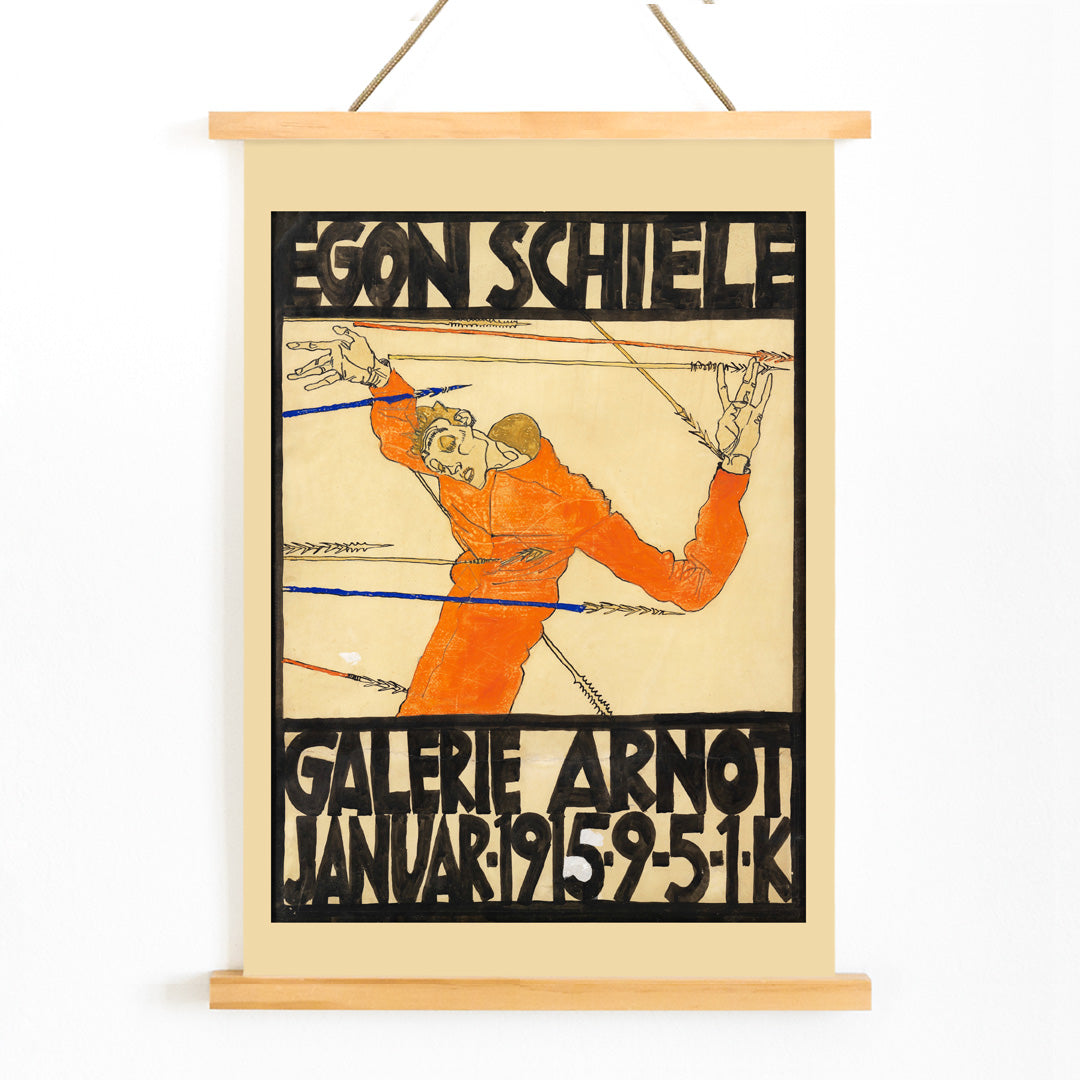
This poster, Schiele-Ausstellung in der Galerie Arnot, was created in 1915 to announce an exhibition of Schiele's work at the Galerie Arnot in Vienna. At a time when Europe was experiencing profound upheaval due to World War I, artists like Schiele used their work to express personal and societal anxieties. The poster served not only as an invitation but also as a statement about the power of modern art to confront and reflect the uncertainties of its era.
As part of the tradition of early twentieth-century gallery promotion, this piece captures the urgency and innovation of Vienna's avant-garde scene. It stands as a historical document of the period, encapsulating the spirit of artistic experimentation and the evolving role of the exhibition poster in cultural life.
Style & Characteristics
The design features a striking, angular figure rendered in Schiele's signature expressive style, set against a spacious beige background. Bold black outlines define the form, while strong blocks of black typography anchor the composition. A vivid orange accent draws the viewer's eye, providing a dynamic contrast to the muted ground.
The overall effect is both raw and sophisticated, with a sense of immediacy that typifies Expressionist poster art. The minimal use of color and generous negative space allow the figure and text to command attention, making this vintage print a compelling visual statement.
In Interior Design
This 1915 exhibition poster brings a sense of history and artistic boldness to contemporary interiors. Its vertical format is ideal for narrow walls, entryways, or as a dramatic focal point in a minimalist living space. The warm beige and orange tones pair beautifully with natural wood, matte black accents, and neutral textiles.
For a curated look, combine this piece with other orange accent wall art or layer it alongside vintage advertising posters and classic modernist prints. Its graphic presence and historical significance make it a versatile addition to any art collection.