


You may also like
-
Milano Poster
Allessandro Pomi · 1920 · Stylized Milano poster featuring the Duomo silhouette beneath a radiant sky
Poster from £9 · Framed from £16
Regular price From £6.00Regular price -
Capital del Mediterraneo Poster
Unknown artist · 1992 · Graphic Barcelona travel poster with stylized cityscape and bold blue, red accents
Poster from £9 · Framed from £16
Regular price From £6.00Regular price -
Come to Tokyo Poster
Unknown artist · 1930 · Vibrant Tokyo travel poster with red lantern and cherry blossoms on deep blue
Poster from £9 · Framed from £16
Regular price From £6.00Regular price -
Cheverny Poster
René Roussel · 1952 · Elegant château travel poster balancing beige architecture with bold blue sky and warm highlights
Poster from £9 · Framed from £16
Regular price From £6.00Regular price


-

"Very nice Posters. The quality is amazing and we received it very quickly !"
-

"A shop to visit absolutely. Huge selection of posters. We spent more than an hour there !"
-

"Perfect to find gift. Price are very good. An they can frame and pack it on site"


About the Artist
Jupp Wiertz was a German illustrator and poster designer whose influential work in the 1920s and 1930s helped shape the visual identity of interwar Europe. Renowned for his travel and commercial posters, Wiertz combined graphic clarity with a sense of atmosphere, creating images that remain iconic in the history of advertising art.
His 1927 Deutschland poster is a testament to his ability to capture the spirit of a place and era, transforming tourism promotion into a form of modern art. Wiertz's legacy endures among collectors and design enthusiasts who appreciate the elegance and impact of early twentieth-century poster art.
The Artwork
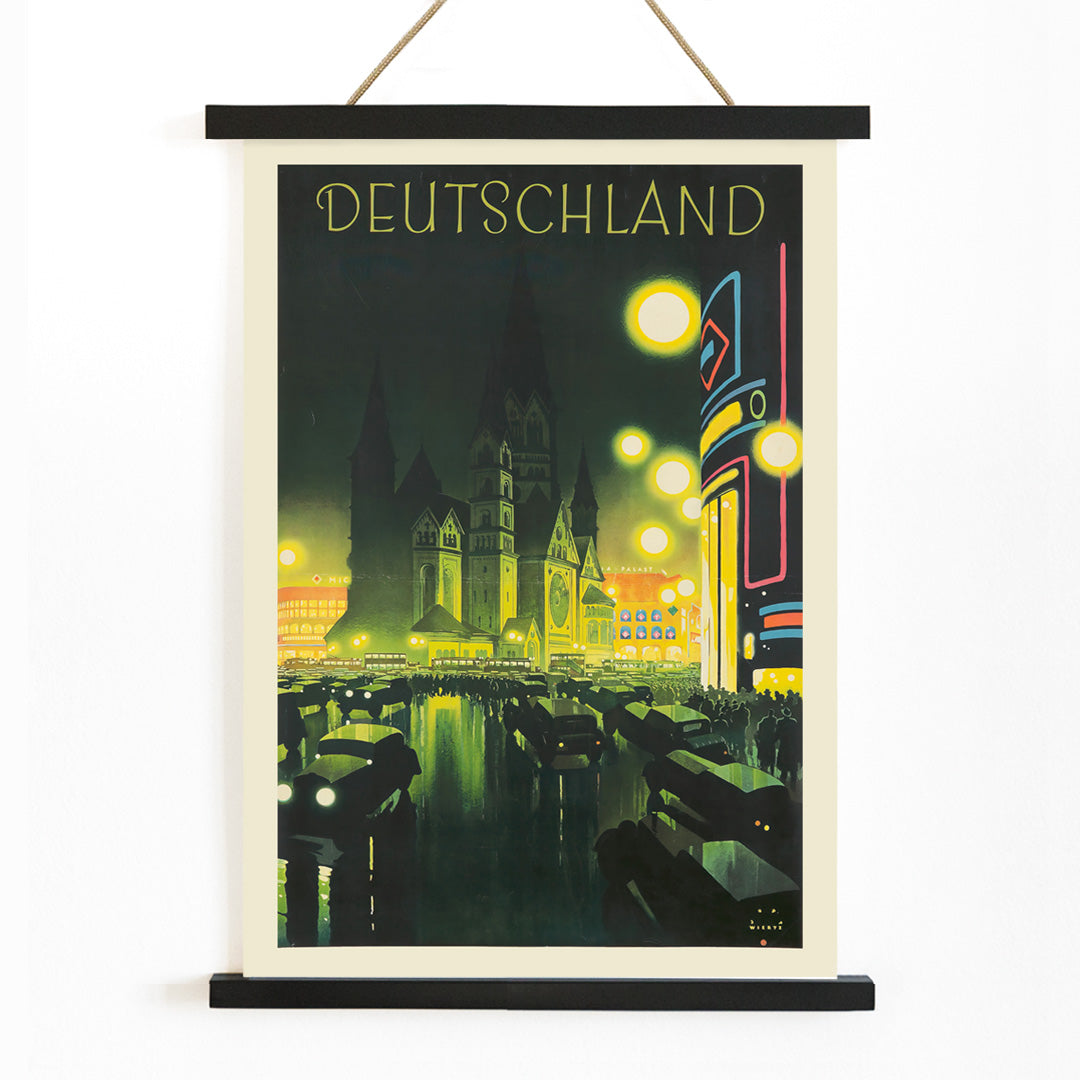
Deutschland, created in 1927, emerged during a period when European cities were actively promoted as destinations through visually compelling posters. This work reflects the optimism and dynamism of Weimar-era Germany, presenting the country as a blend of historical grandeur and contemporary urban excitement.
The poster was designed to entice travelers by evoking the allure of illuminated boulevards and impressive architecture, capturing the promise of discovery and cultural richness. For those interested in vintage advertising posters, it offers a window into the aspirations and identity of 1920s Germany.
Style & Characteristics
The composition features a dramatic vertical layout, drawing the viewer's gaze from the bustling street level up toward a striking cathedral silhouette set against a glowing night sky. Wiertz employs bold contrasts and simplified architectural forms to ensure immediate visual impact, a hallmark of effective poster design.
The color palette is dominated by deep blues and blacks, punctuated by vibrant greenish and yellow lights, with subtle warm accents that add vibrancy. The overall effect is glamorous and theatrical, making it a standout choice for a vertical posters display that emphasizes graphic sophistication.
In Interior Design
This vintage cityscape poster lends a sophisticated, energetic mood to entryways, living rooms, or studies. Its nocturnal palette and architectural focus complement modern, Art Deco, and eclectic interiors, while also providing a bold accent in minimalist spaces.
Pair it with dark wood furnishings, black metal frames, and accents in deep blue or moss green for visual harmony. For a cohesive look, consider combining it with blue tone wall art to create a curated, travel-inspired interior that feels timeless and refined.